Most of what survives a man is paper. A muster roll, a homestead patent, a death certificate, a headstone. Once in a while, something else makes it through - something he actually wore, and put weight into, and counted on to keep him alive. In our family, that thing is a coat.
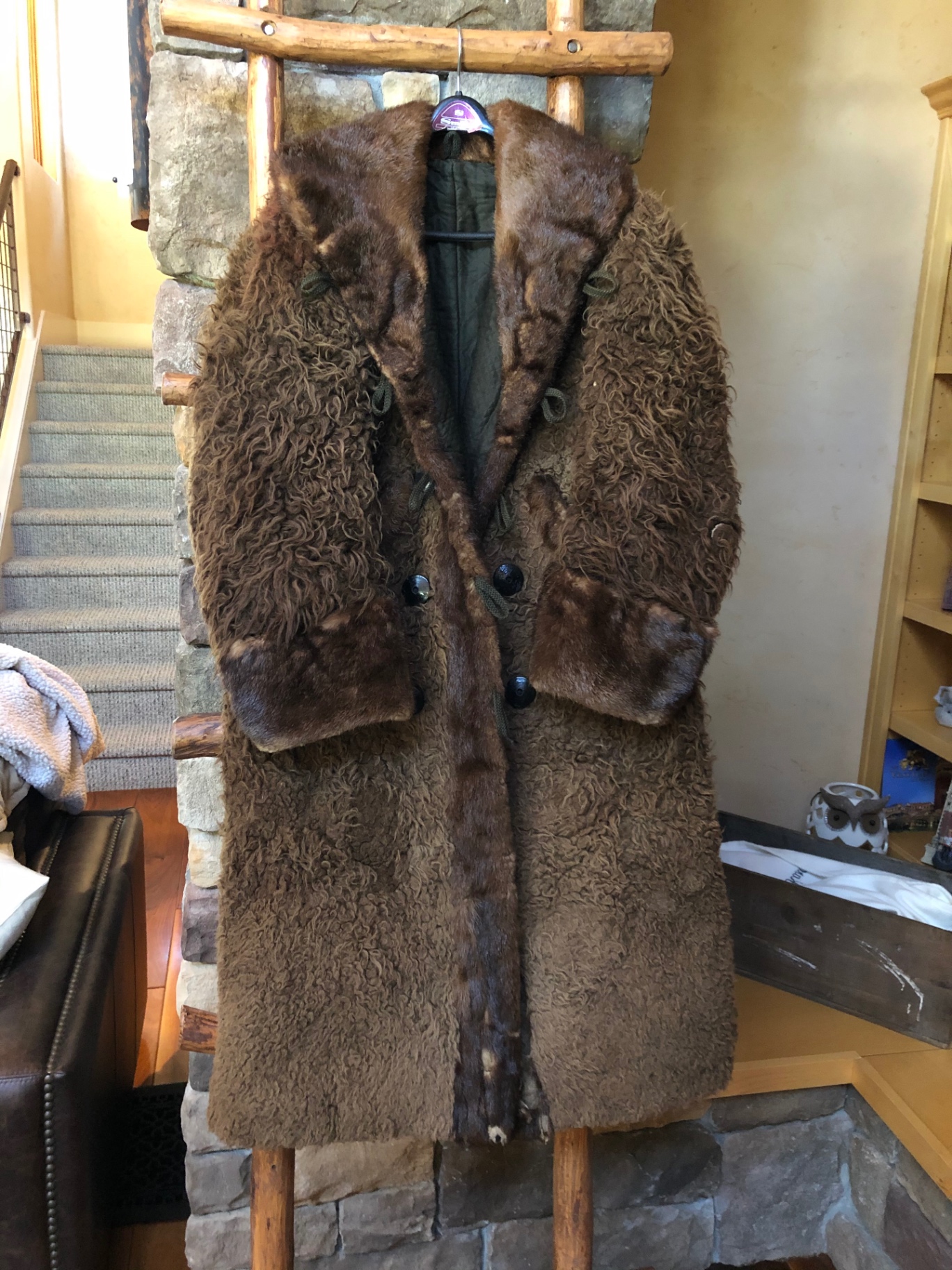
It belonged to my 4th great-grandfather, Perry Engle. It is four feet long, weighs ten pounds, and is built from buffalo hide with beaver fur trim. It is older than the state of Oklahoma. It is older than the electric light bulb in most American homes. It is the only piece of him I can still put my hands on.
The Man in the Frock Coat
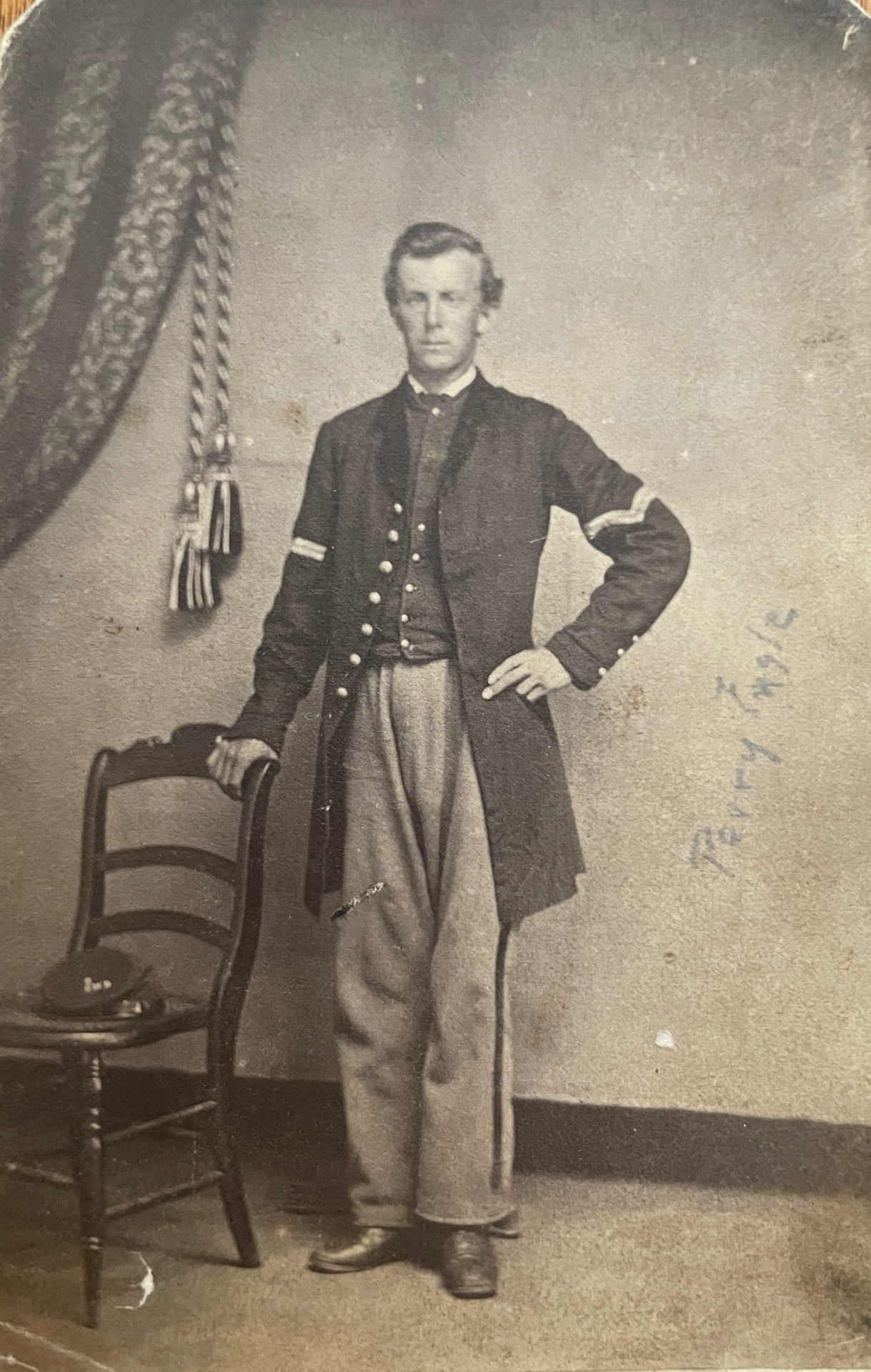
The portrait above is a carte de visite - a small albumen print mounted on card stock, the standard photographic format of the Civil War years. Perry stands with one hand on the back of a studio chair, the other on his hip. A forage cap rests on the seat. He wears a dark, double-breasted frock coat with what appear to be non-commissioned officer's stripes on the sleeves, and the slim trousers with a side stripe that marked Union volunteer infantry.
He looks exactly what he was: a twenty-something farm boy from western Maryland who had put on a uniform.
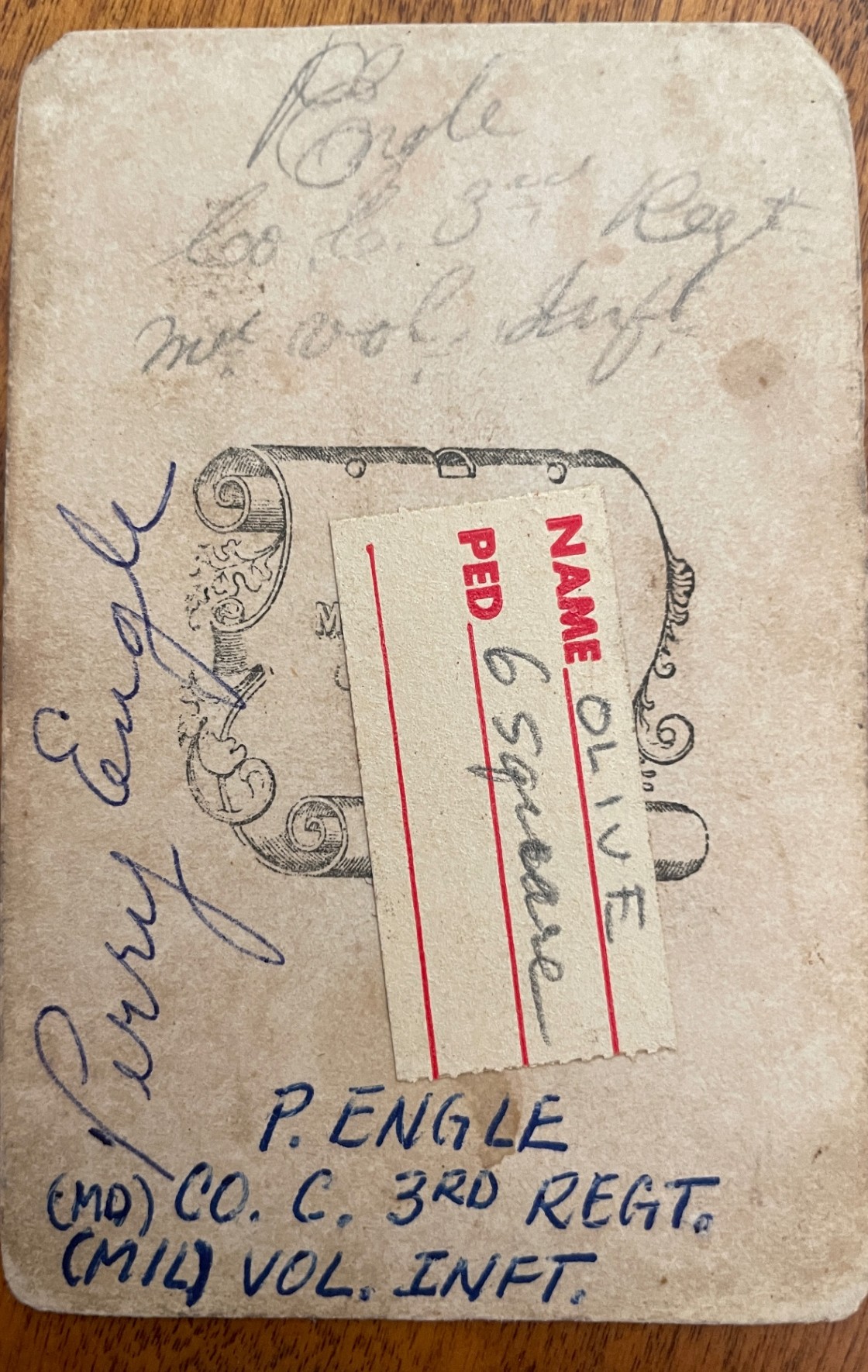
The card's reverse settles any doubt about who he was and where he served. In dark blue ink, in a 20th-century descendant's hand, it reads: P. ENGLE / (MD) CO. C, 3RD REGT. / (MIL.) VOL. INFT. A second descendant's notation - the looped Perry Engle down the left edge - was added later in the same blue ink. Above all of it, in faint pencil from an earlier era, the same unit is written out again. Perry himself never signed the back. The card is identified, not autographed.
He was born August 29, 1842, in Grantsville, Maryland - a village in Garrett County, perched on the National Road where it crests the Allegheny ridge. Grantsville in the 1840s was farms, a tavern, a tollhouse, and not much else. Perry grew up inside the last decades of the old American frontier east of the Mississippi.
Maryland's Third, One Hundred Days
The 3rd Regiment, Maryland Volunteer Infantry (Militia) was a 100-days regiment - one of dozens of short-enlistment units raised by Northern governors in the summer of 1864 to free up seasoned troops for Grant's grinding push on Petersburg and Richmond. The deal was simple: a man volunteered for one hundred days of federal service, almost always for garrison or railroad-guard duty, and went home when his time was up.
Maryland's contribution included the 1st, 3rd, and 11th Volunteer Infantry regiments. The 3rd Maryland was organized in Baltimore, mustered in for one hundred days, and used to guard the Baltimore and Ohio Railroad and the defenses around the city while Confederate cavalry under Jubal Early was probing northern Maryland and threatening Washington itself.
It was not a glamour assignment. It was the work of holding the seams of the Union together while the famous regiments did the killing further south. But for a young man from Grantsville, one hundred days in federal blue meant something specific: a uniform, a rifle, federal pay, and the line in a family ledger that would, fifty years later, get him buried at Leavenworth National Cemetery.
West, After the Powder
When his hundred days were up, Perry Engle went home to Maryland. And then, like a great many veterans of his generation, he went west.
The Homestead Act of 1862 was still wide open. A Union veteran could file on 160 acres of public land, prove it up over five years, and walk away with a patent. By the early 1870s, railroads were laying track across Kansas as fast as they could grade it. The state was being settled at a pace that, in hindsight, looks frantic - sod busted, towns platted, county seats fought over, fences thrown up across what had been open buffalo range less than a decade before.
Perry ended up in Washington County, Kansas, in the north- central part of the state, hard against the Nebraska line. It is high prairie country. Winters there are not metaphorical. Blizzards roll in off the plains with nothing to slow them from the Canadian border to his front door.
The Coat
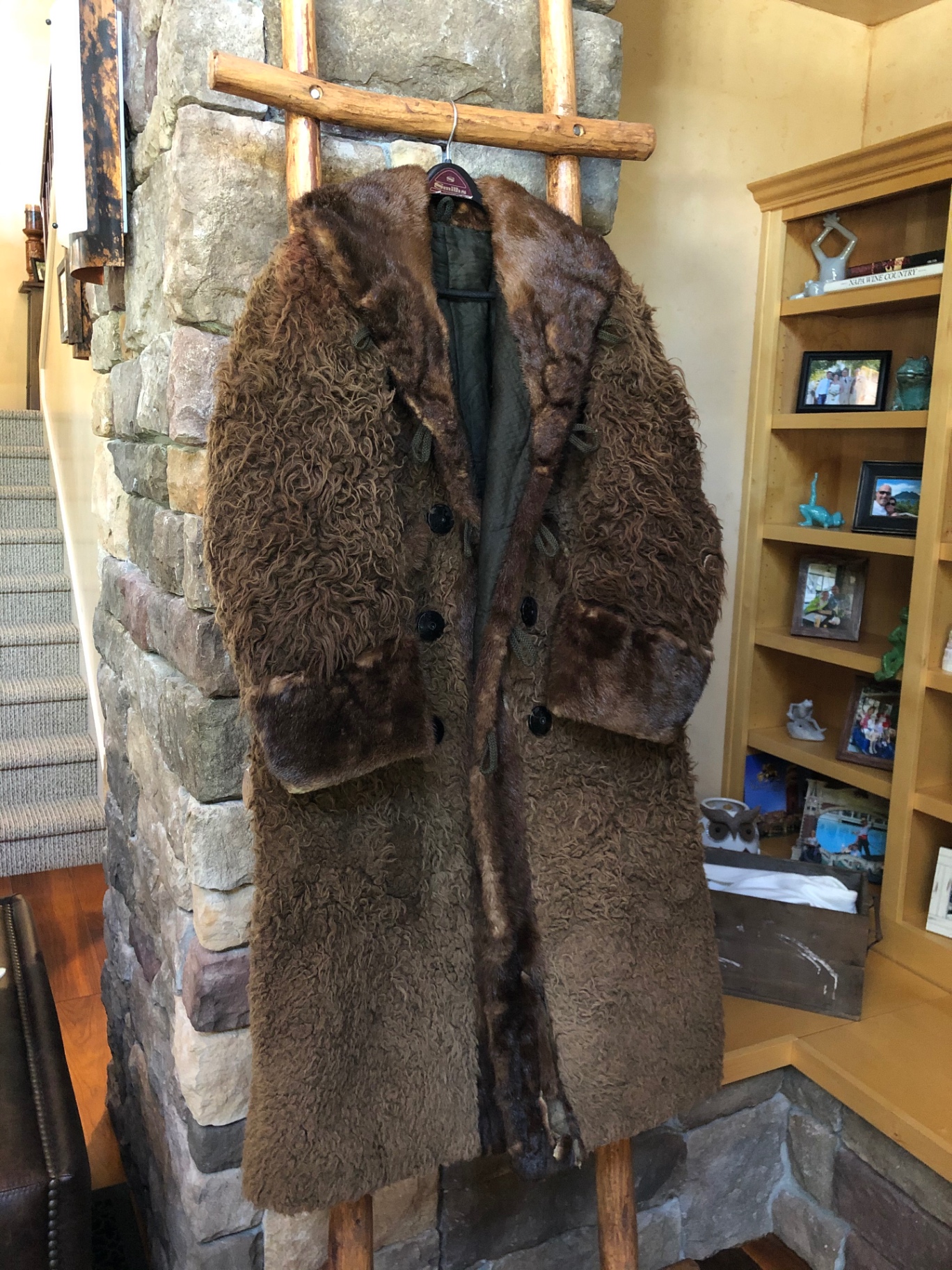
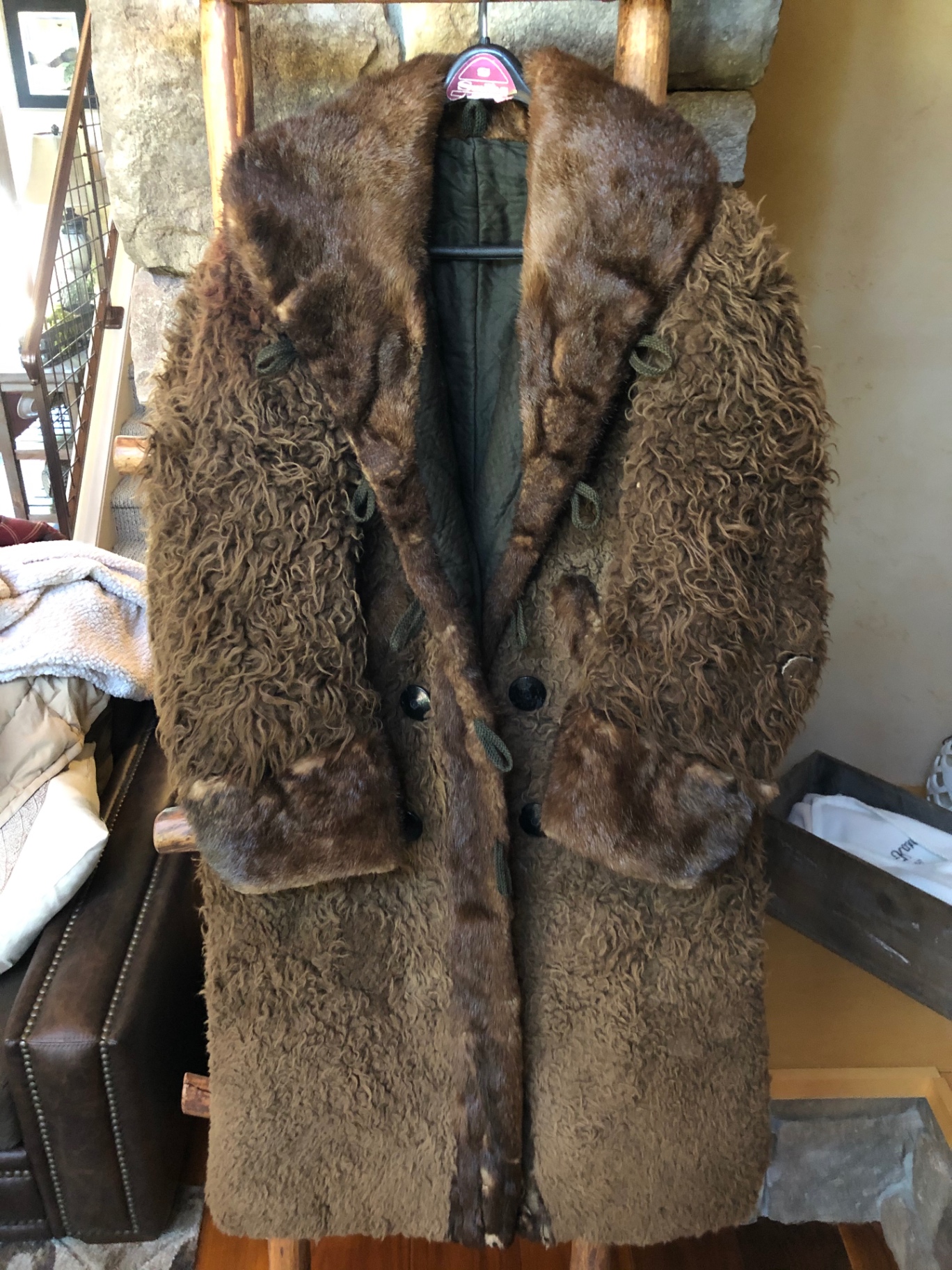
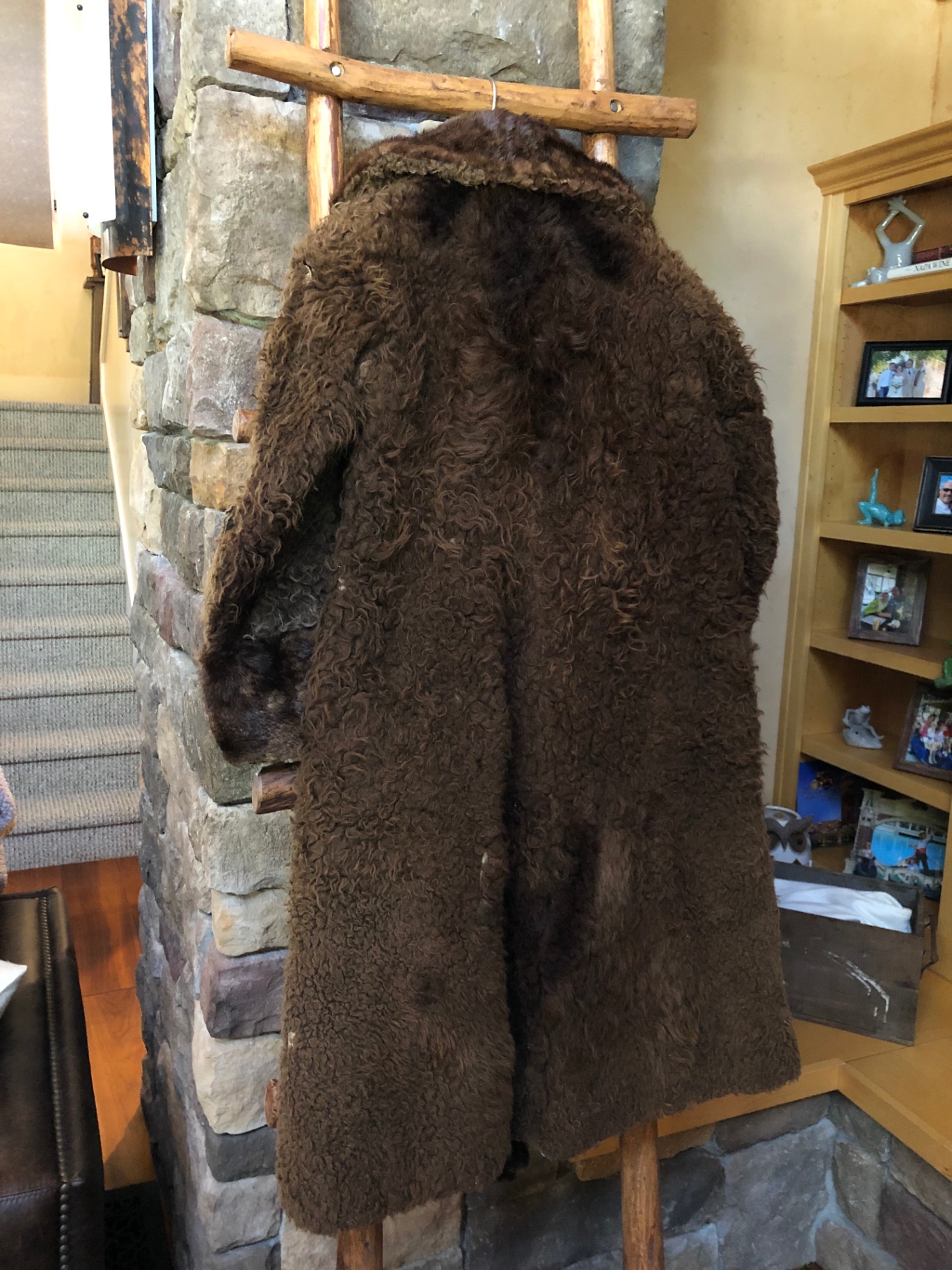
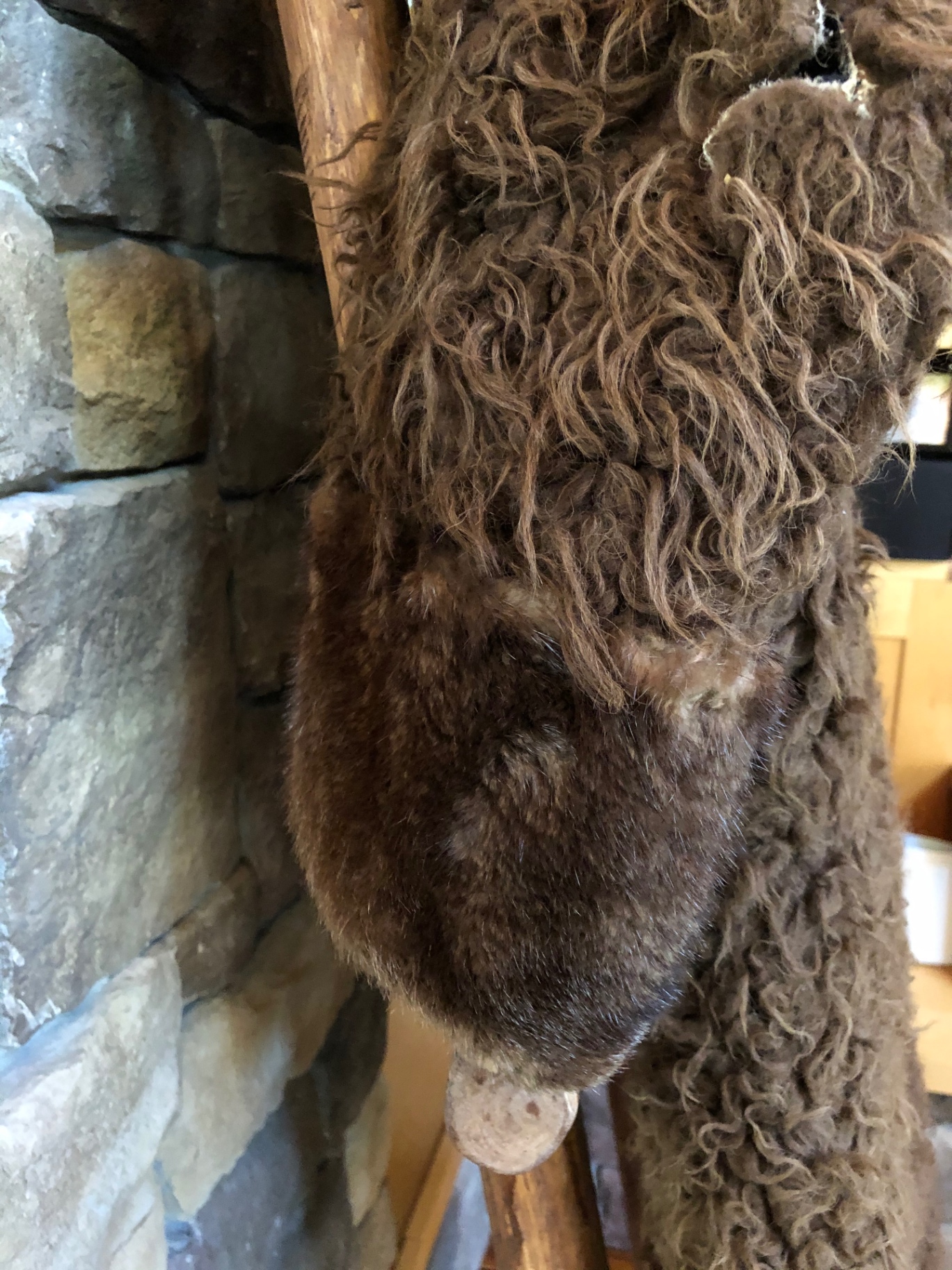
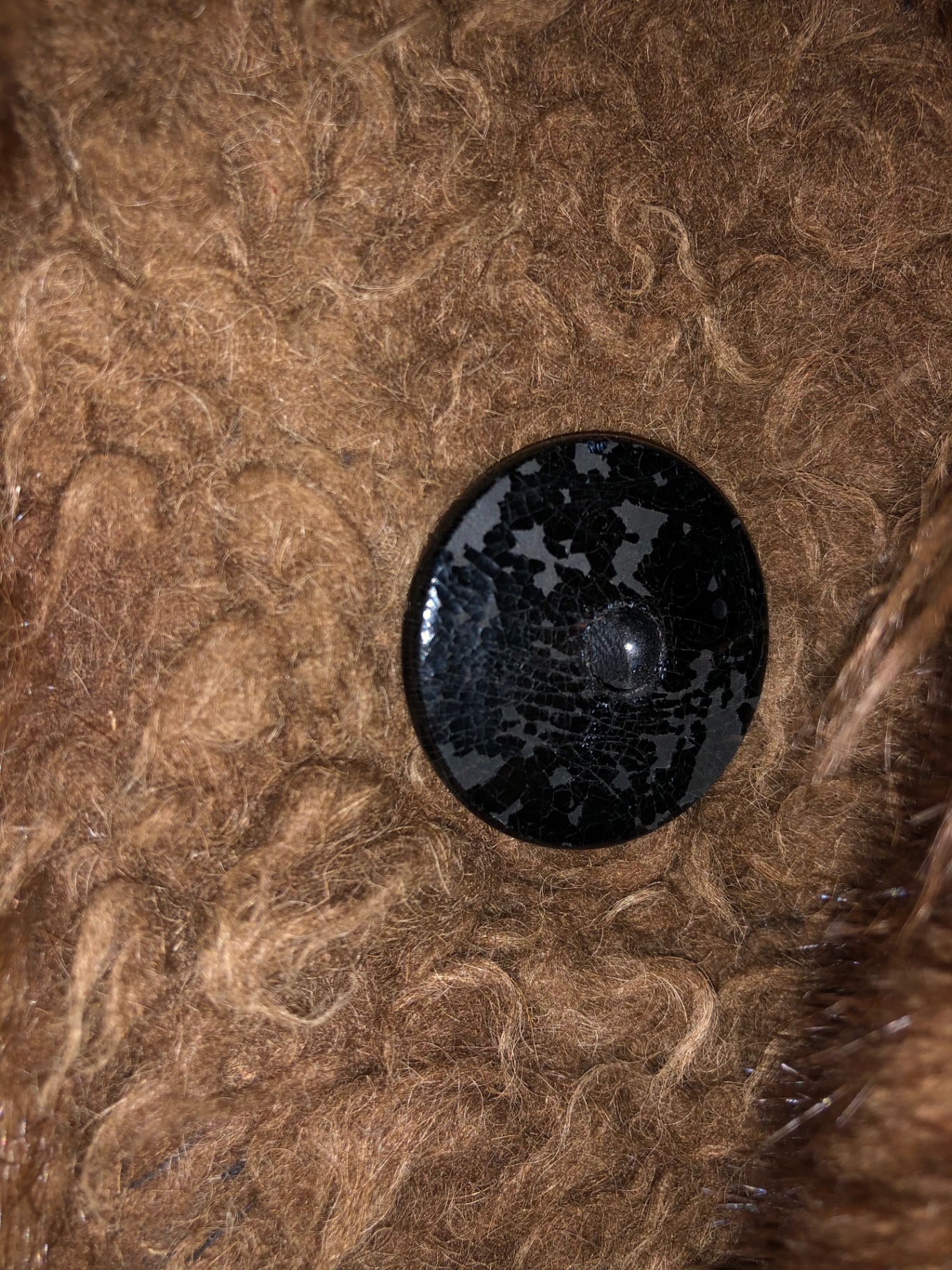
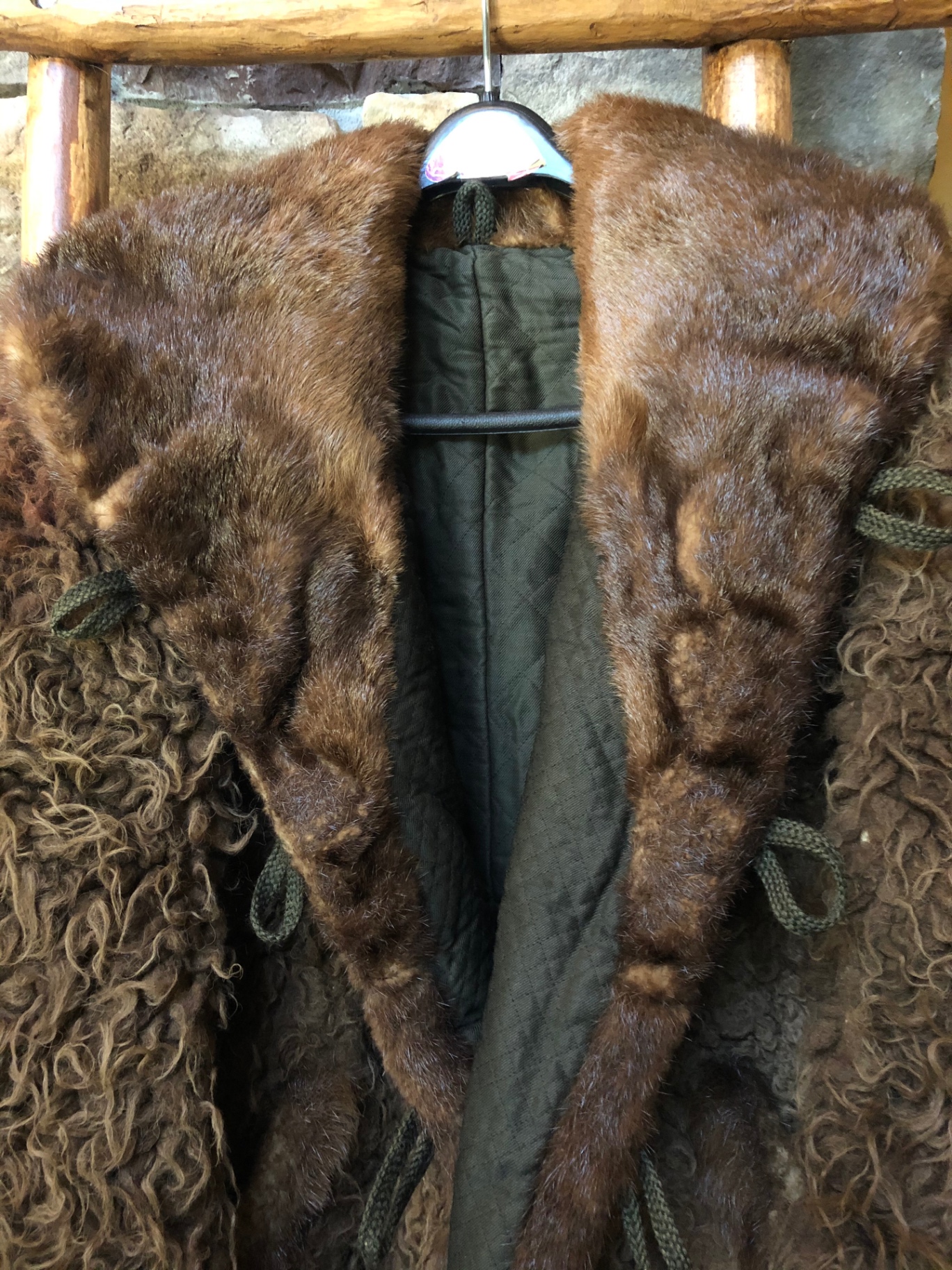
The coat is roughly four feet from collar to hem and weighs about ten pounds. The body and sleeves are buffalo hide, worn pelt-out the way Plains coats were actually worn - a deep, tightly curled brown fur with the heavy nap that only a buffalo robe produces. The shawl collar, the lapel facings, and the sleeve cuffs are beaver pelt - a second, smoother and darker fur, set in as contrasting trim against the heavier buffalo body. Closure is double-breasted, with heavy domed black buttons running down the front and braided olive-green wool frog loops sewn into the lapel as backup catches. The lining is a quilted dark-green cloth, added when the coat was conserved.
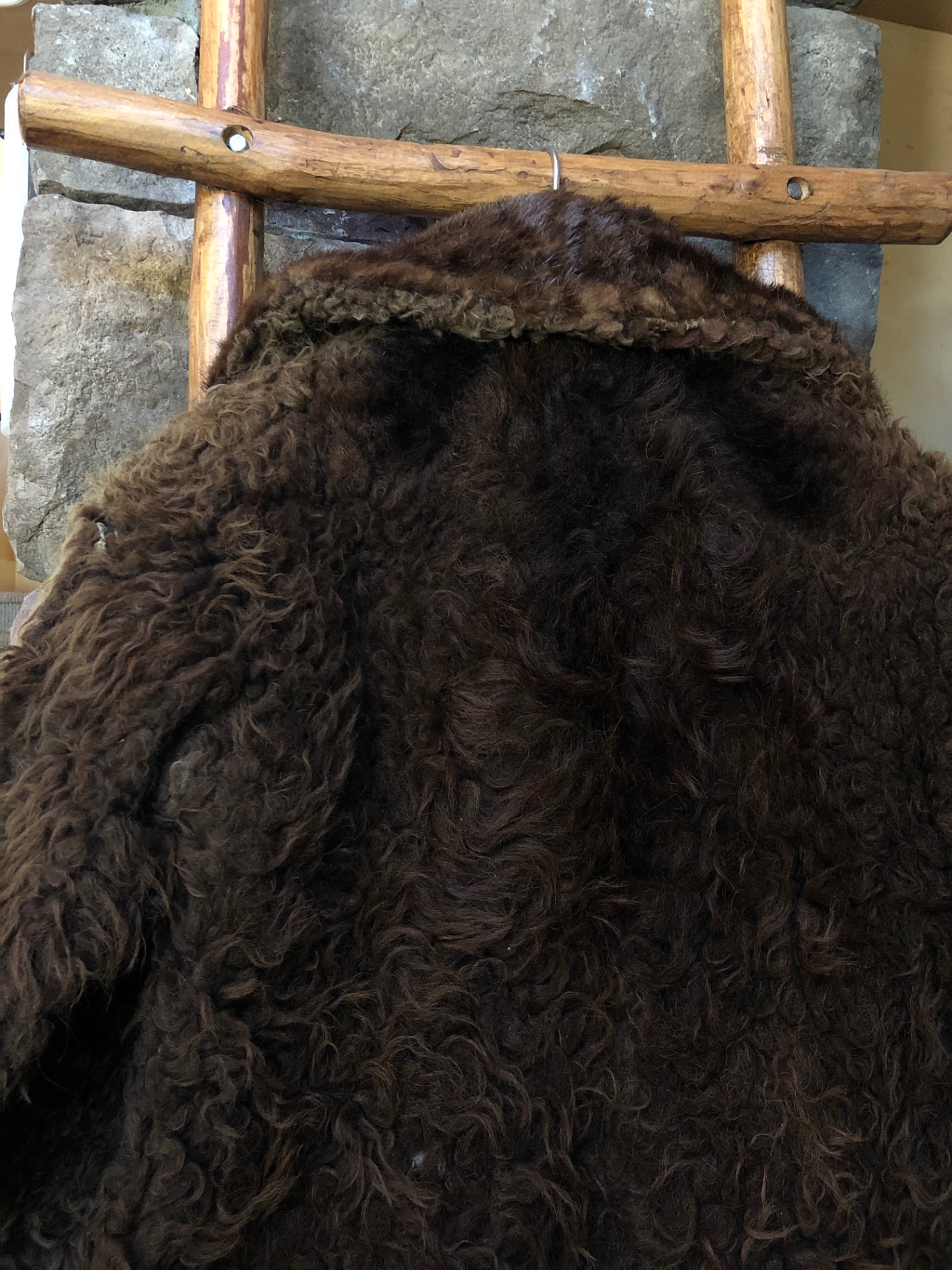
On the northern Plains in the 1870s and 1880s, a garment like this was not a coat in any modern sense. It was survival equipment. The Plains fur overcoat, sometimes documented as a "buffalo ulster," a "Plains coat," or simply a "fur coat" in the period mail-order catalogs, was the standard cold-weather kit of stagecoach drivers, U.S. cavalry troopers on winter patrol, railroad surveyors, hunters, ranchers, and homesteaders who needed to be outside in twenty-below weather and stay alive doing it. Examples survive in the Smithsonian, the Buffalo Bill Center of the West, and the Royal Alberta Museum. Very few are in private hands.
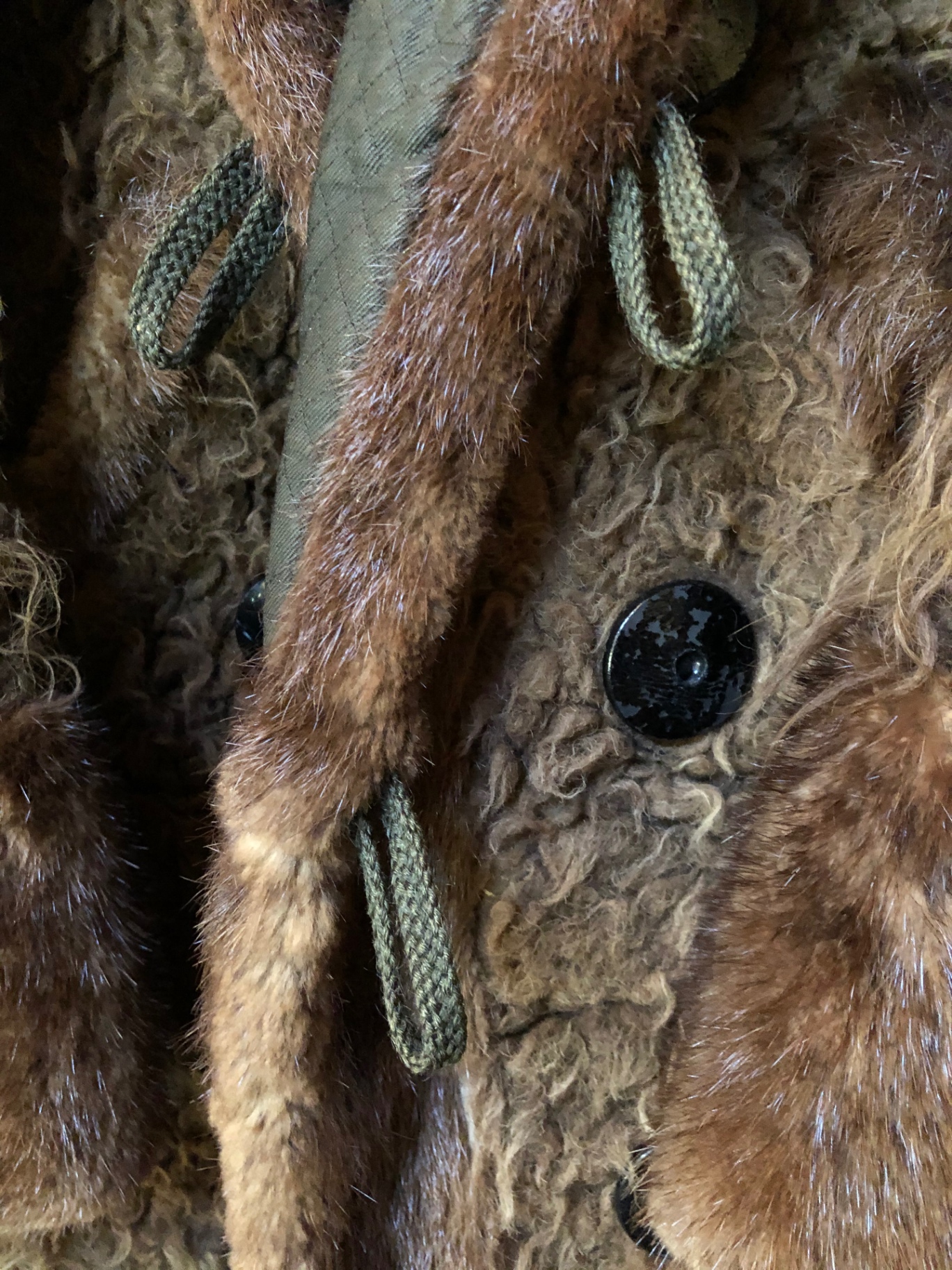
These coats were made, as a rule, from the last of the great commercial fur and buffalo harvests of the late 19th century - the southern buffalo herd was effectively gone by 1878, the northern herd by 1884, and the beaver and otter trade that supplied the trim furs was running on borrowed time too. Pelts were tanned by Native women working in long-established traditions, by Métis traders along the Missouri and the Red River, and by professional furriers in towns like St. Louis, Kansas City, Atchison, and Leavenworth who took finished hides on consignment and built the coats for the trade.
By the time Perry was wearing this one in Kansas, the animals that made it were already most of the way to extinction.
How It Came to Him
There is no receipt, no letter, no photograph of him wearing it. What there is, is the coat itself, and the line of hands that kept it.
Decades ago, my grandparents found it in a wooden box in my great-grandparents' basement. It was in poor shape by then - the kind of shape an object gets into when it spends fifty years folded in the dark with nobody quite sure what to do with it. About fifteen years ago, my uncle Dave had the coat properly restored and repaired. When my grandmother Barb died, she left it to me. She knew what it meant to me, and she left it with a charge attached: find the right way to preserve this for generations to come.
The most honest reconstruction of how it first came to Perry is also the most likely. A Union veteran in his thirties, homesteading in Washington County, Kansas, in the 1870s, would have needed exactly this kind of garment for exactly the kind of winters he was standing in. He could have traded for it at a frontier post, bought it secondhand from a freighter or stage driver who had outgrown the work, or commissioned it from a furrier in Atchison or Leavenworth - both of which were active fur markets in that period.
What he did not do was buy it as decoration. The wear on it - the seams, the way the fur has compressed at the shoulders and along the inside of the sleeves - is the wear of a working coat. It went outside. It was sat in, slept in, ridden in, and worked in.
Leavenworth
Perry Engle died on July 12, 1914, in Washington, Kansas. He was seventy-one years old. The Civil War he had volunteered for was nearly fifty years behind him; the frontier he had homesteaded on was, by then, a settled grid of section lines and grain elevators.
He was buried at Leavenworth National Cemetery, on the bluff above the Missouri River - the same federal cemetery that holds Union veterans, Buffalo Soldiers, soldiers of the Indian Wars, and the dead of every American conflict that followed his. His marker carries the unit that the back of his carte de visite carries: Co. C, 3rd Maryland Infantry.
The coat outlived him by more than a hundred years.
The Object Remembers
This vault is built around the idea that objects carry the voyages that made them. A coin is the silver of a galleon that did not arrive. A cutlass is the hand of a sailor who did. Most of what is here came up out of saltwater, or out of the ground, and reached me through a dealer or a recovery ledger.
This coat came down through my own family. It is the only thing in the collection I can touch and know, with no intermediary, that someone I am descended from touched first.
Perry Engle wore the American frontier on his back, literally, for a working lifetime on the high Kansas plains. The animal that made the coat is gone. The settlement pattern he was part of is gone. The man is gone. The coat is still here.
That is, in the end, what this whole project is about: the object that outlives the moment, and the people who choose to keep it as a witness rather than let it slide into a drawer.
I am the current steward, not the final one. My grandmother Barb left this coat to me with a charge: find the right way to preserve it for generations beyond mine. I have written to dozens of museums so far. None has been the right fit yet, for a range of reasons - condition, regional focus, scope, capacity, the simple fact that a single-family buffalo robe from a 100-days Maryland private is a hard accession to justify against a curator's mandate.
The promise is still open. Until it finds the right home, the coat stays with me, cared for, photographed, written about, and kept honest about what it is and where it came from. If you work with a collection that should be in this conversation, I would like to hear from you.