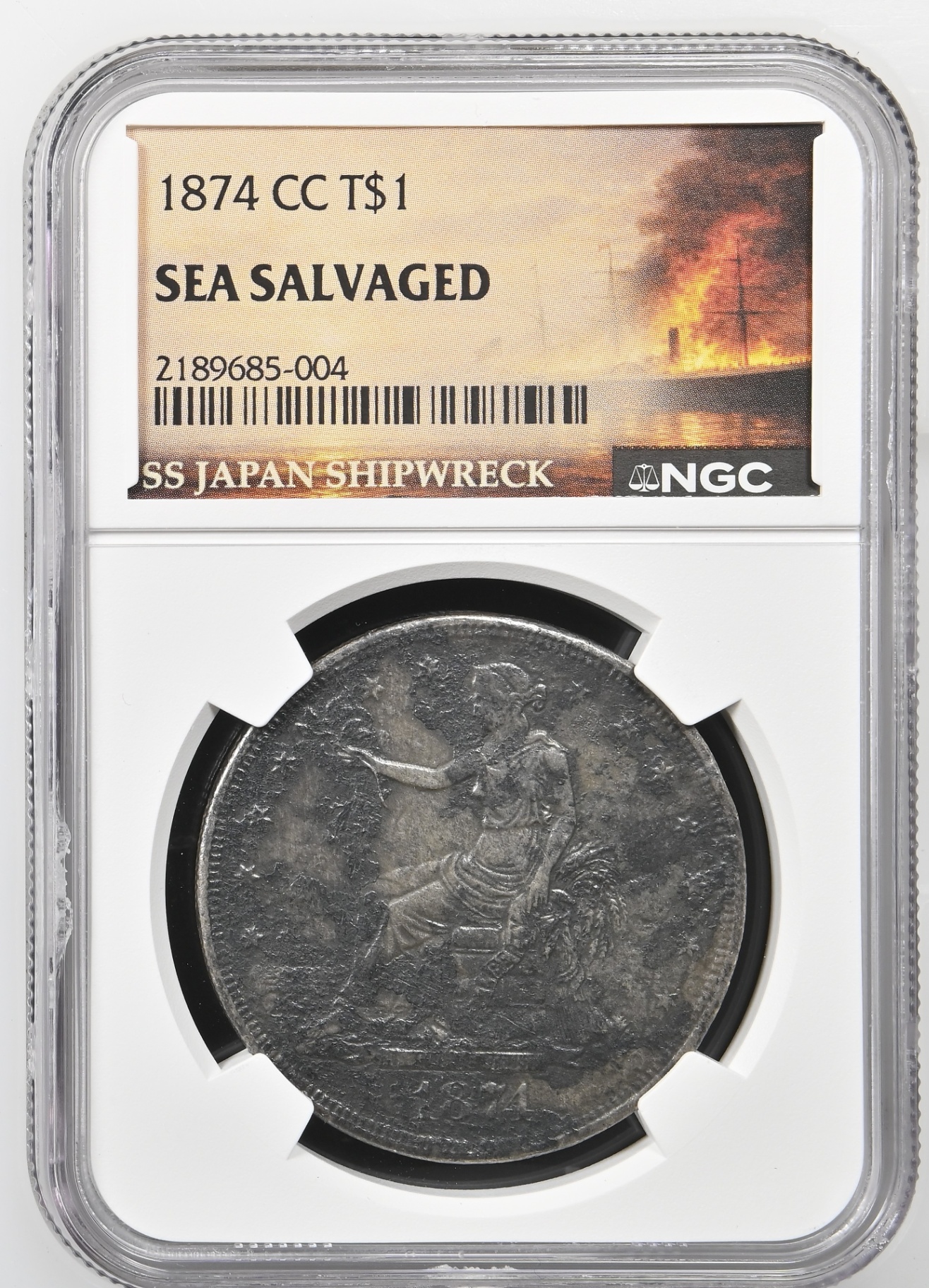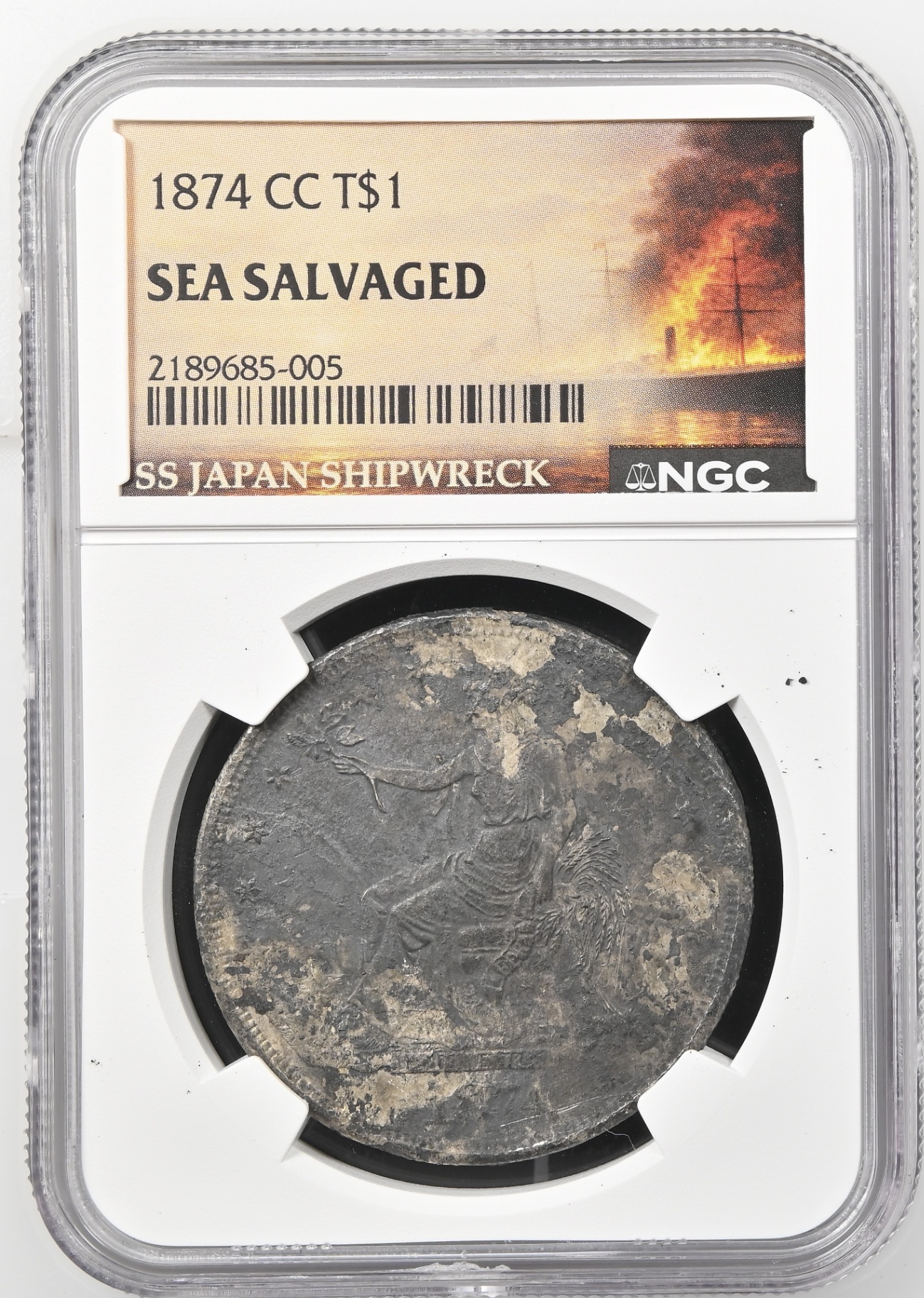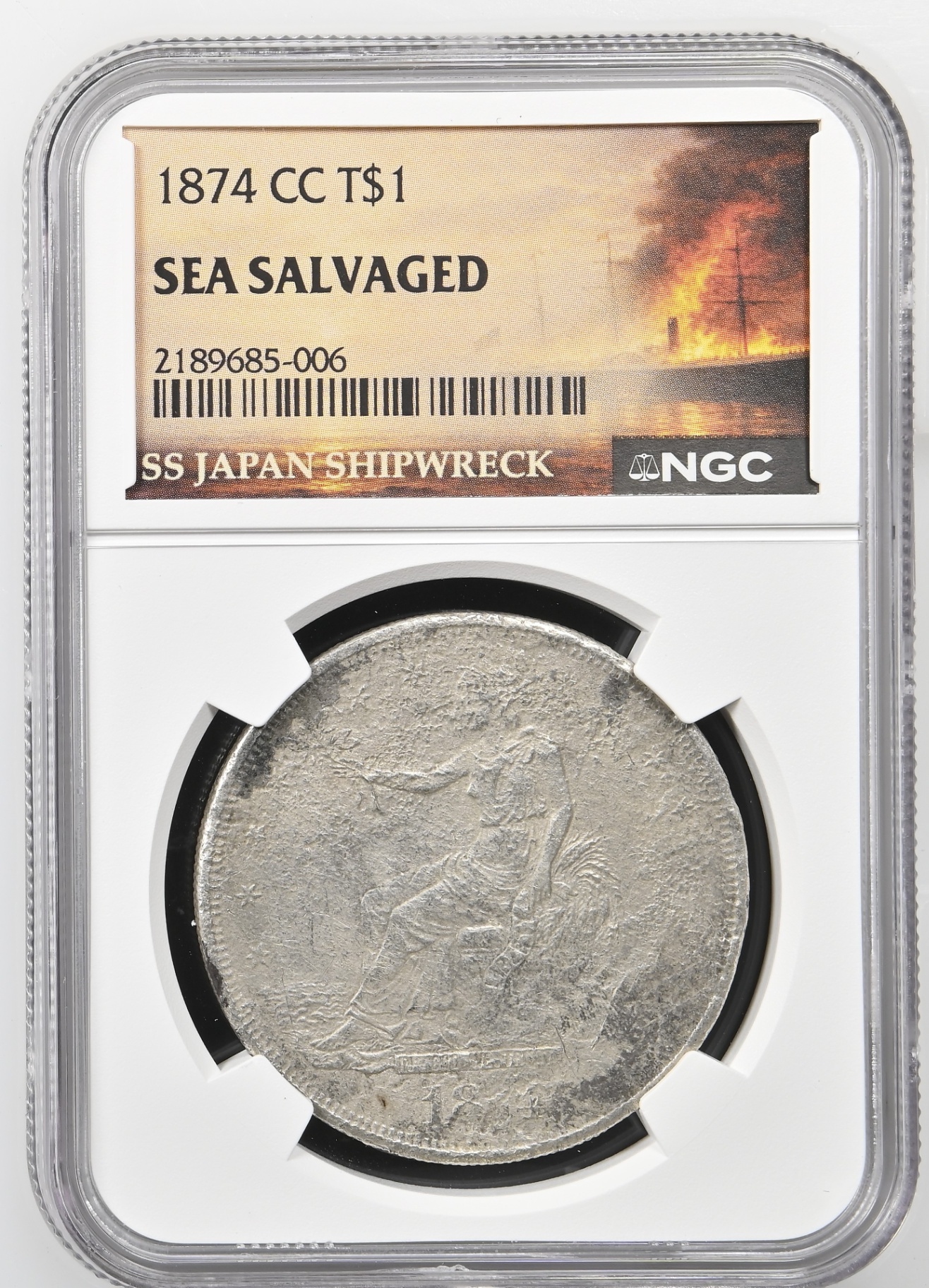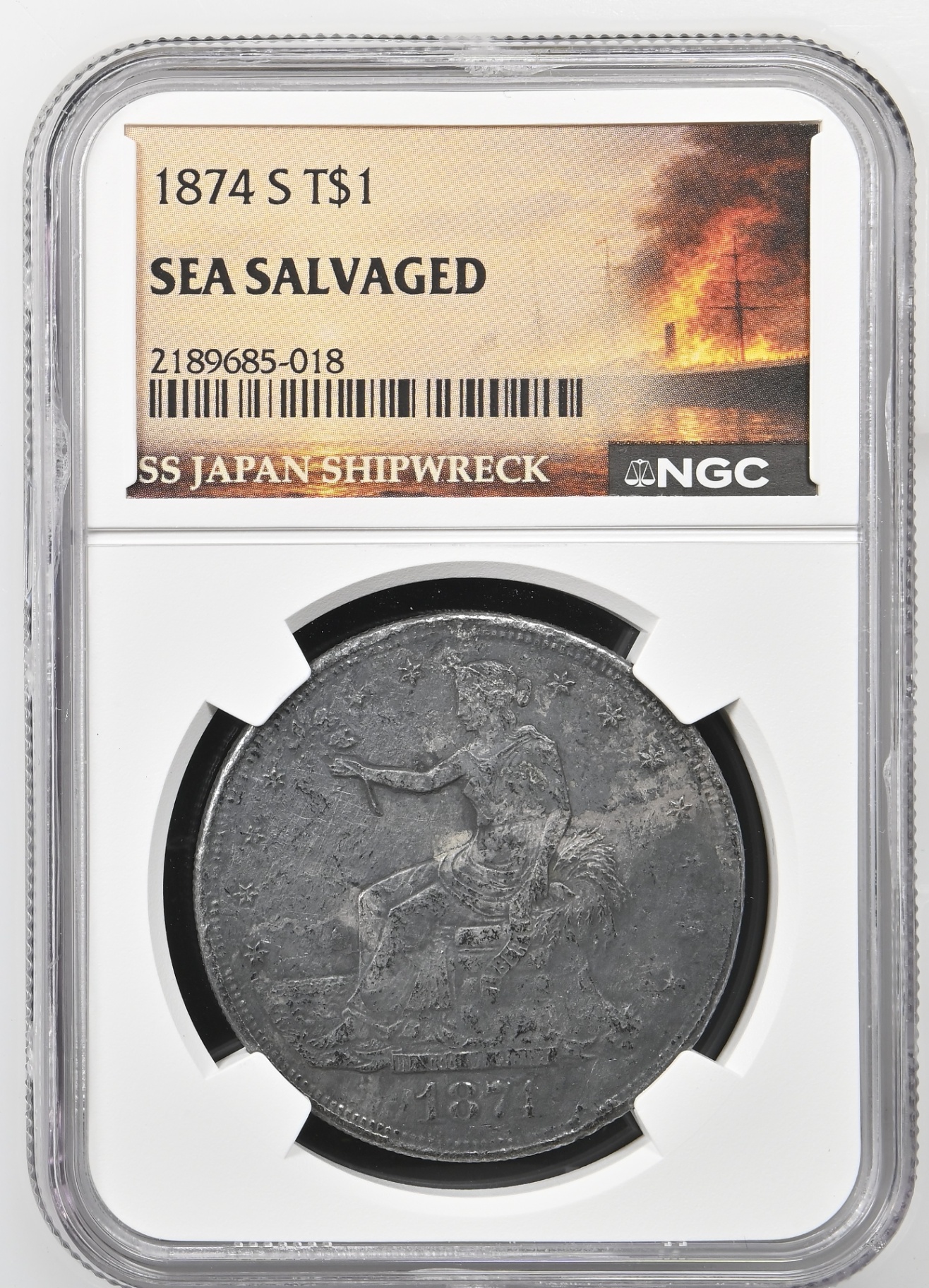
The Ship
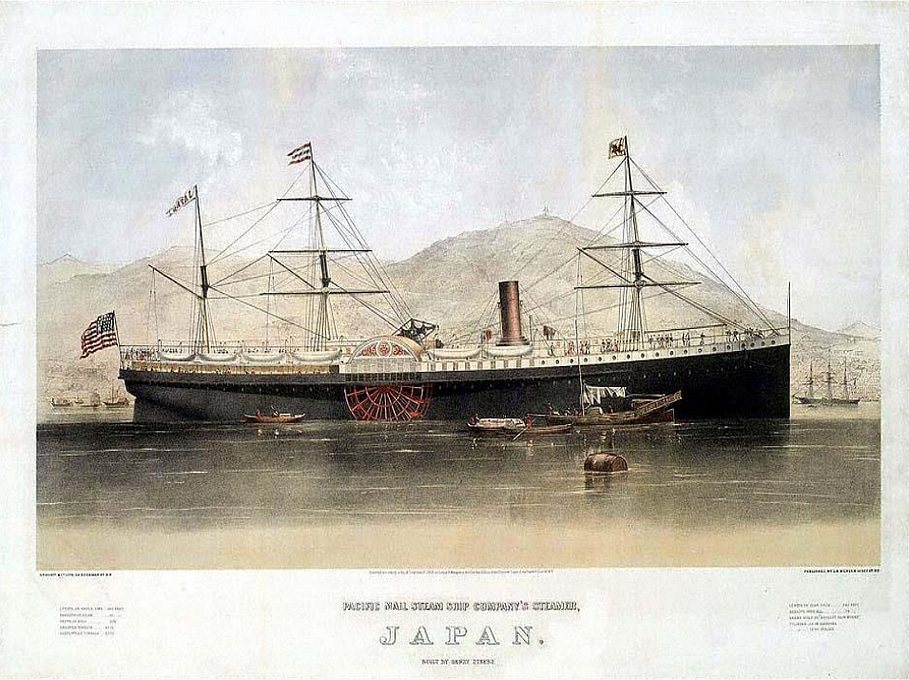
The SS Japan was one of the largest wooden-iron hybrid steamers Pacific Mail ever put to sea. Built by Henry Steers at Greenpoint, Brooklyn and launched in 1867, she ran the trans-Pacific mail and passenger route between San Francisco, Yokohama, and Hong Kong - a 17-day passage when she was new and one of the fastest crossings in the world.

She measured 360 feet on the keel, displaced more than 4,300 tons, and carried up to 1,300 passengers in three classes. Her bunkers were built for coal but her rigging still carried sail - a transitional generation of steamer, designed for a world where the wind was a backup, not the engine.

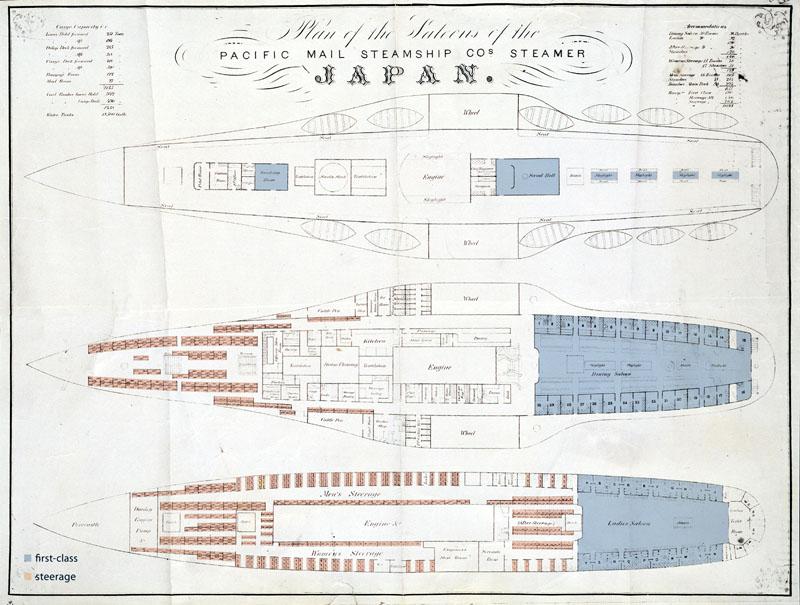
The Smithsonian's record of her plan is plain about how the ship was actually used: hundreds of steerage passengers slept in open bunks beside the engine, with no dining room and no sitting room, while fifty saloon cabins on the upper decks held merchants, missionaries, and U.S. officials in skylit comfort. The steerage trade was so profitable that the Japan routinely sailed over her legal limit - in 1873 her captain was cited for carrying 451 passengers above it on a single voyage.

The Lincoln Connection
Pacific Mail Steamship Company would not have existed on the scale it did without Abraham Lincoln. In the closing months of his presidency, Lincoln signed the federal act of February 17, 1865 authorizing a U.S. Mail subsidy for steamship service between San Francisco and the ports of Asia. The contract - awarded to Pacific Mail later that year - paid five hundred thousand dollars annually to carry the mails across the Pacific.

That subsidy underwrote a new generation of ships, and the SS Japan was the line's answer. Her keel was laid on the strength of Lincoln's signature. Every mail bag she carried, every sack of silver she moved, every passenger asleep in her cabins traced back to a Civil War-era law that opened the Pacific to American steam.

Those She Carried
The SS Japan's manifests were filled, voyage after voyage, with Chinese laborers crossing the Pacific in search of work the young American West could not fill on its own. They came through the ports of Hong Kong and Yokohama and stepped off in San Francisco by the thousands - men, and increasingly families, bound for the gold camps, the canneries, the levees of the Sacramento Delta, and above all the railroads.

It was Chinese labor that drove the Central Pacific east across the Sierra Nevada. At the urging of Charles Crocker and Leland Stanford, Pacific Mail steamers like the Japan began carrying thousands of laborers from Guangdong in 1868 expressly to build the railroad through Placer County and over the mountains. By 1867 more than ninety percent of the Central Pacific's workforce was Chinese - as many as twelve thousand men at a time, blasting the Summit Tunnel through solid granite, hand-drilling the Cape Horn ledge above the American River, and laying track through winters that buried entire camps under thirty feet of snow. Hundreds died in the avalanches, the nitroglycerin accidents, and the cold. When the rails met at Promontory Summit in May 1869, the photograph taken there did not include them.
Pacific Mail steamers like the Japan were the bridge that brought them. They were also, often, the bridge that carried their wages, their letters, and - for those who survived the work - their bones home to Guangdong for burial. The same hulls that moved silver moved a generation of Chinese labor that built the modern American West.
The bridge ran both ways below deck as well. Pacific Mail crewed its trans-Pacific liners almost entirely with Chinese sailors - only the officers were American or European - on the company president's logic that "the saving therefrom, in wages, food, and c., will be very great." On a sister ship of the Japan's class, more than two hundred Chinese crew worked every roundtrip between Hong Kong and San Francisco. The men who served the saloon, fired the boilers, and handled the mooring lines on the Japan were, in overwhelming majority, the same nationality as the steerage passengers sleeping three-high beside the engine.
The country they were building did not always want to remember them. The ship that carried them did not survive to tell it either.
Ex Parte Ah Fook
In August 1874, four months before her loss, the Japan steamed into San Francisco carrying roughly ninety Chinese women in steerage. The state Commissioner of Immigration boarded the ship at the wharf, interviewed some sixty of them, and decided - on the strength of those interviews alone - that twenty-two had been brought to California for "immoral purposes." When Pacific Mail refused to post bond, the Commissioner ordered the master of the Japan to keep the twenty-two women aboard.
They were held on the ship in San Francisco harbor while their lawyers fought for a writ of habeas corpus. A state court sided with the Commissioner. The California Supreme Court issued its own writ, brought the women ashore, then upheld the detention in Ex Parte Ah Fook, 49 Cal 402 (1874). The matter only ended when it reached the U.S. Circuit Court, where Justice Stephen J. Field discharged the petitioners and ruled California's statute beyond the state's police power.
The Japan was the venue, not the defendant - but for those two weeks the deck of a Pacific Mail steamer was the contested ground on which the United States first began to ask, in a federal courtroom, whether a state could turn its harbor into a wall. Four months later the ship herself was gone.
The Loss
The Japan left San Francisco on November 14, 1874 on her twenty-fifth trans-Pacific voyage, carrying more than four hundred Chinese passengers returning home after years in California. She made Yokohama and took on coal for the run to Hong Kong.
Just before midnight on December 17, in the South China Sea, the coal in her bunkers ignited - a spontaneous combustion fire deep in the hull, the kind of slow chemical heat that builds for days inside a damp stack and then breaks out all at once. From the first alarm to the waterline took roughly forty-five minutes. The largest American steamer in the Pacific burned down to her plating and sank, far from any coast.
More than one hundred and thirty survived. They reached Hong Kong in five lifeboats. The dead - overwhelmingly Chinese emigrants making the journey home - made the loss of the Japan the single greatest loss of Chinese emigrant life in the history of the trans-Pacific trade. The American press largely recorded it as a shipping casualty. In Guangdong it was recorded differently.
History recorded the loss. Then largely forgot it.
What She Carried
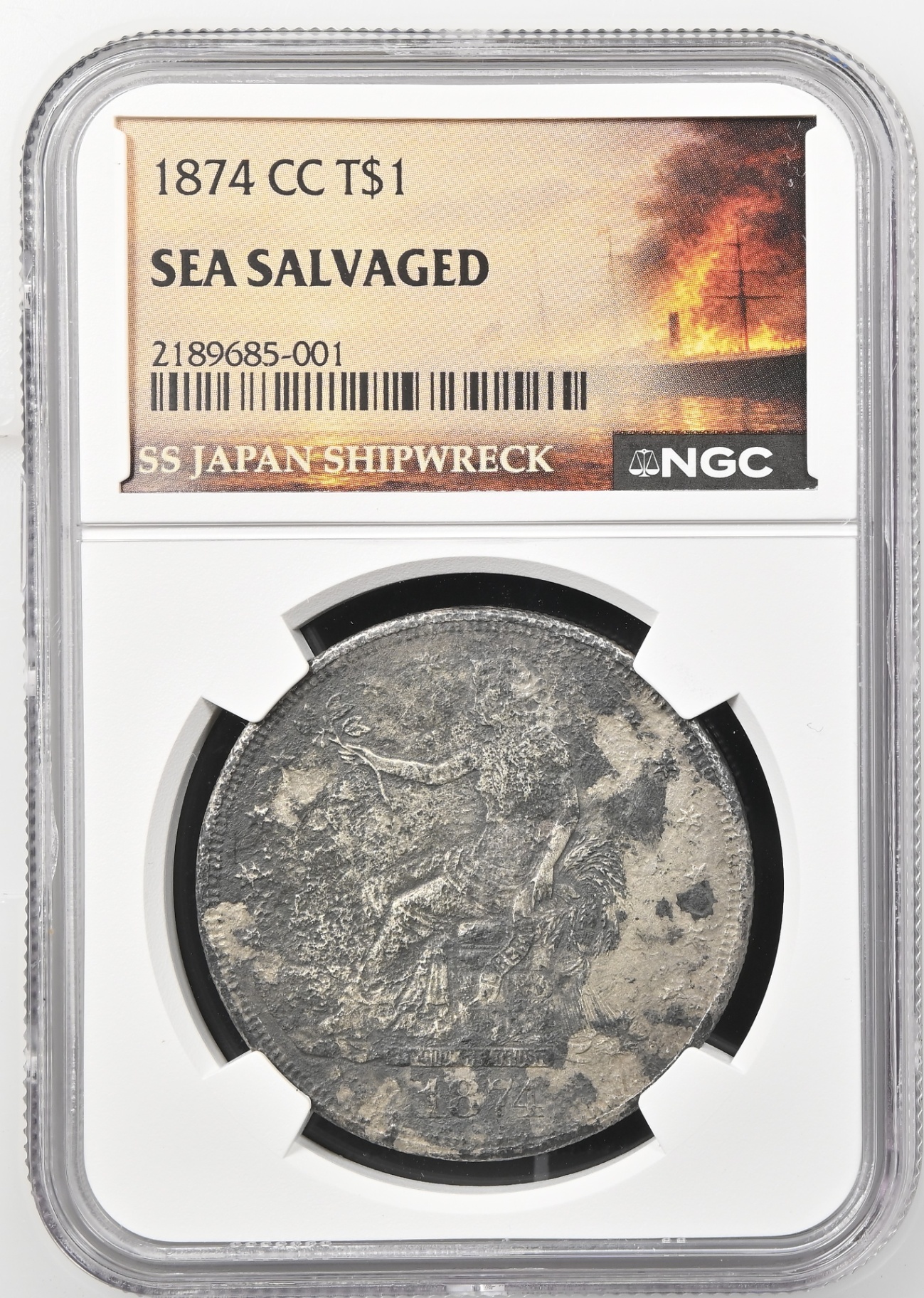
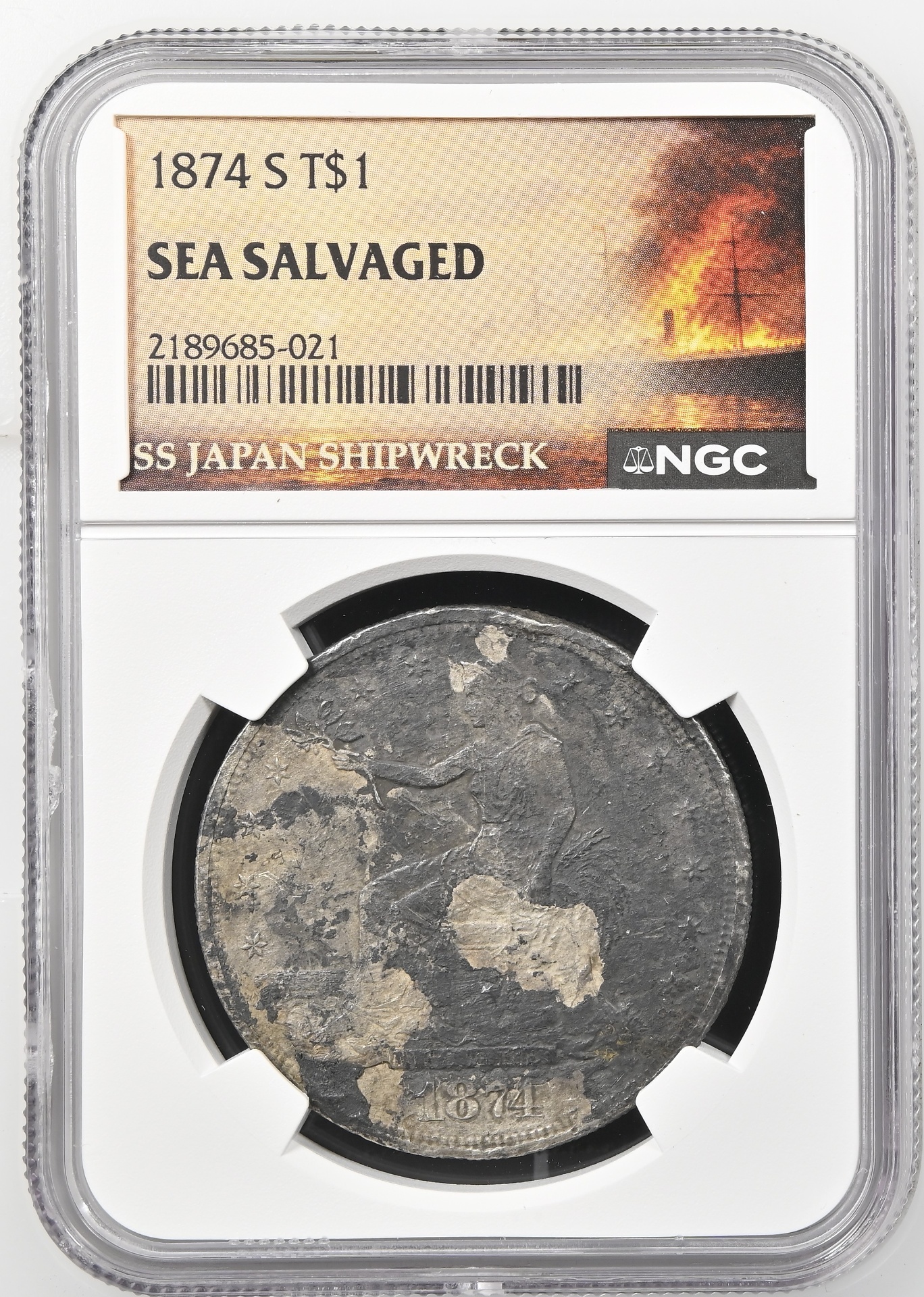
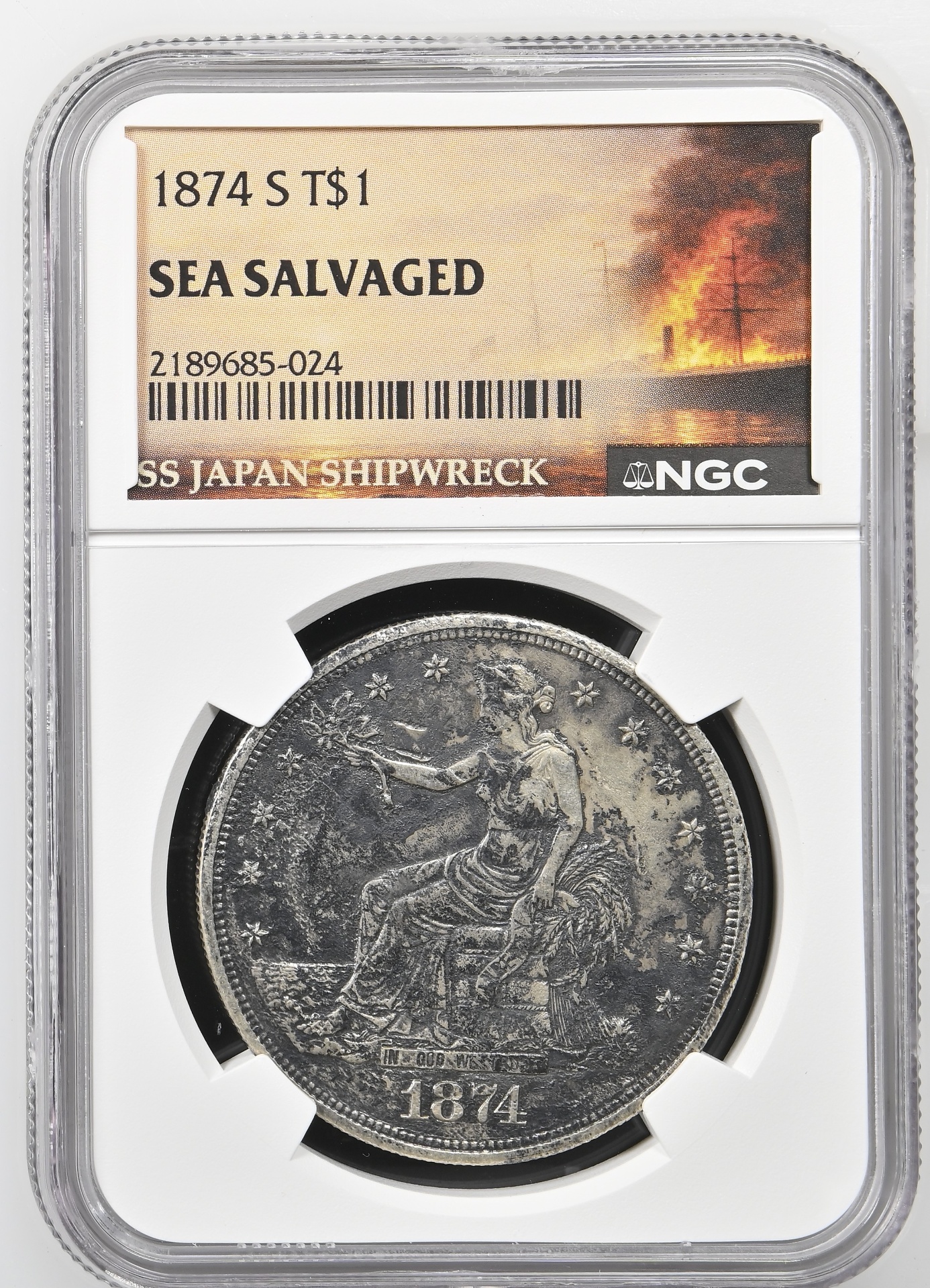
The Chinese in California had a name for the country: Gum Saan, Gold Mountain. They had a name for the coins they sent home in it, too - "yellow eagles," the U.S. gold pieces a returning emigrant tried to carry back to a village in Guangdong. The Japan moved the people. She also moved the metal. Among her cargo were United States Trade Dollars struck at the Carson City Mint in 1874 - silver coins designed expressly for commerce with Asia, heavier than the Mexican eight-real they were meant to displace. Seven pieces tied to this wreck sit in The DeepSea Numismatic Vault.