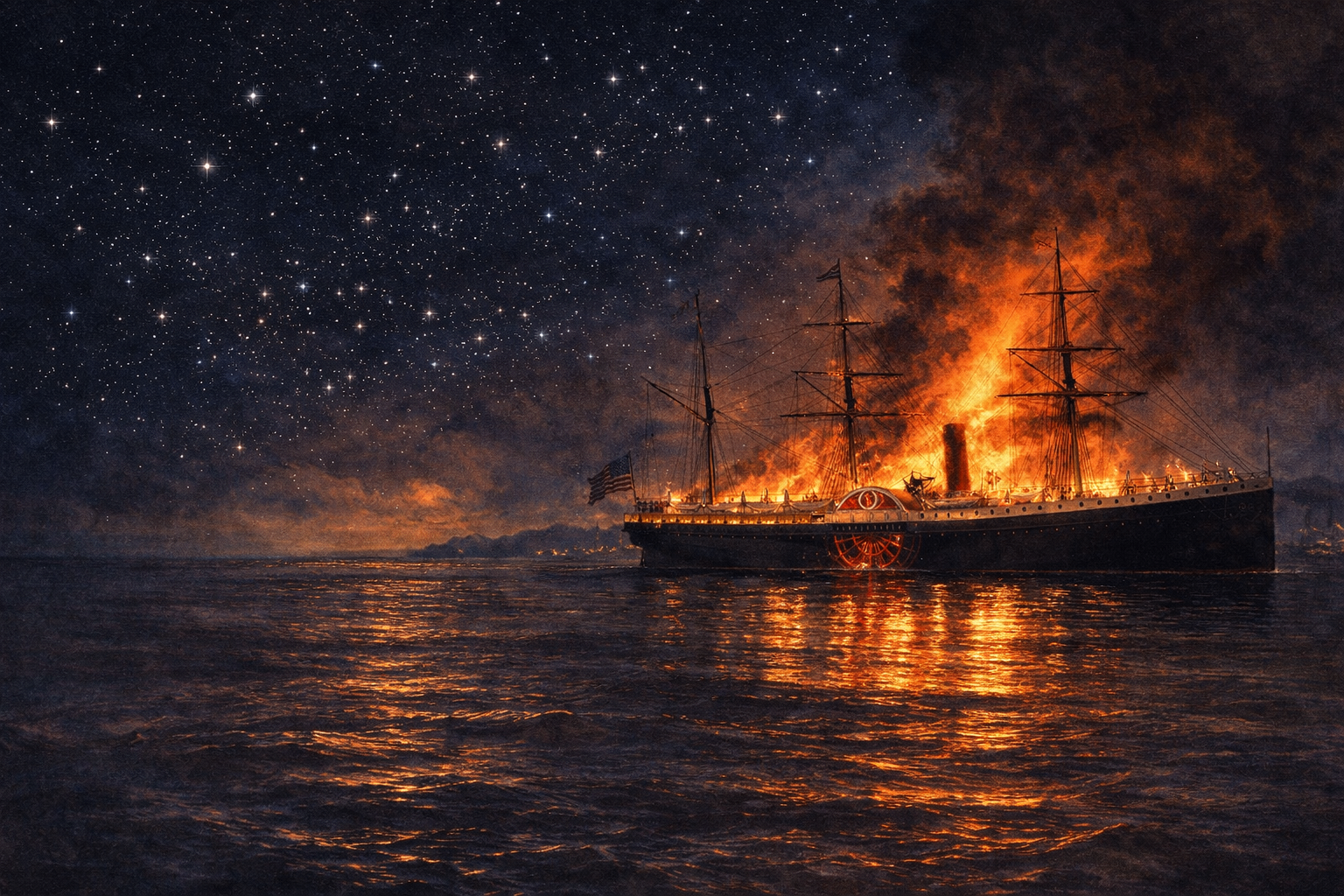
I passed on them the first time. More than a year ago, Ben Dalgleish, President of Hong Kong Colonial Coins (@hkcolonialcoins), reached out to me about a shipwreck I had never heard of. The SS Japan. A U.S.-flagged Pacific Mail steamer that burned and sank in the South China Sea on December 17, 1874, taking more than 400 Chinese emigrants down with her. Ben had already done serious work: a Numista article and a formal presentation at the Newman Numismatic Portal Symposium at Washington University in St. Louis in April 2022. He had the history. What he did not have yet was formal numismatic certification, and without that, the coins, however compelling, were still a theory. I listened. I was intrigued. And then I passed. That decision stayed with me.
The Ship That History Forgot
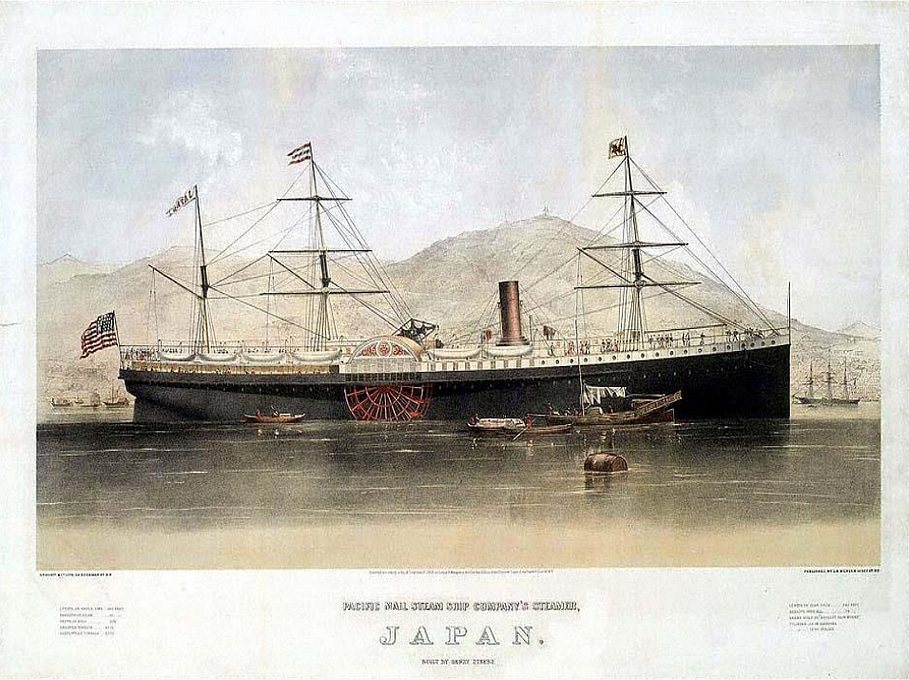
Most Americans have never heard of the SS Japan. That's not an accident of history, a consequence of the 1906 San Francisco earthquake and fire, which destroyed most of the Pacific Mail Steamship Company's records and much of the documentary evidence of the trans-Pacific Chinese emigrant trade. What survived was scattered across naval archives, immigration ledgers, and old newspaper clippings that nobody had yet taken the time to piece together. The ship itself was extraordinary. One of four massive side-wheel steamships authorized by President Abraham Lincoln, signed into law just six weeks before his assassination in April 1865. The SS Japan was built in Greenpoint, Brooklyn, and was the largest wooden passenger vessel in the world at the time of her loss. Mark Twain, who visited San Francisco during the ship's first arrival, called her "a perfect palace of a ship."
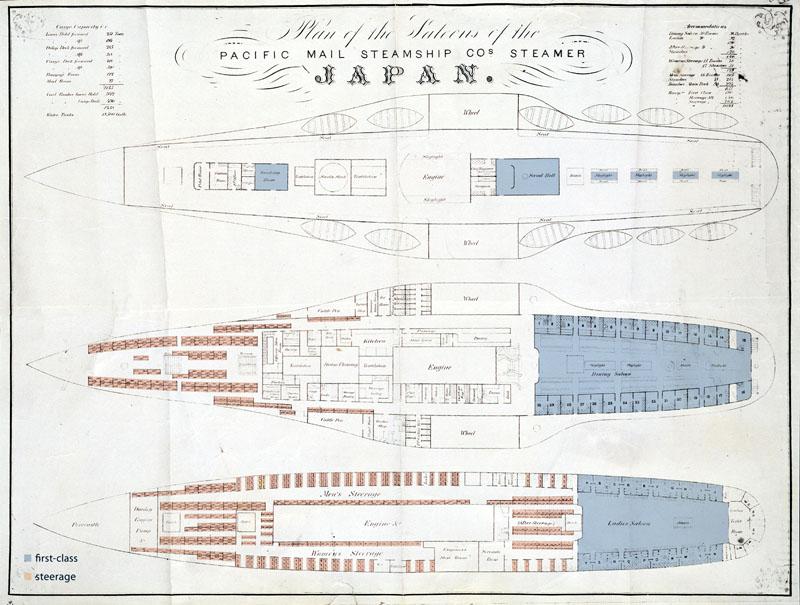
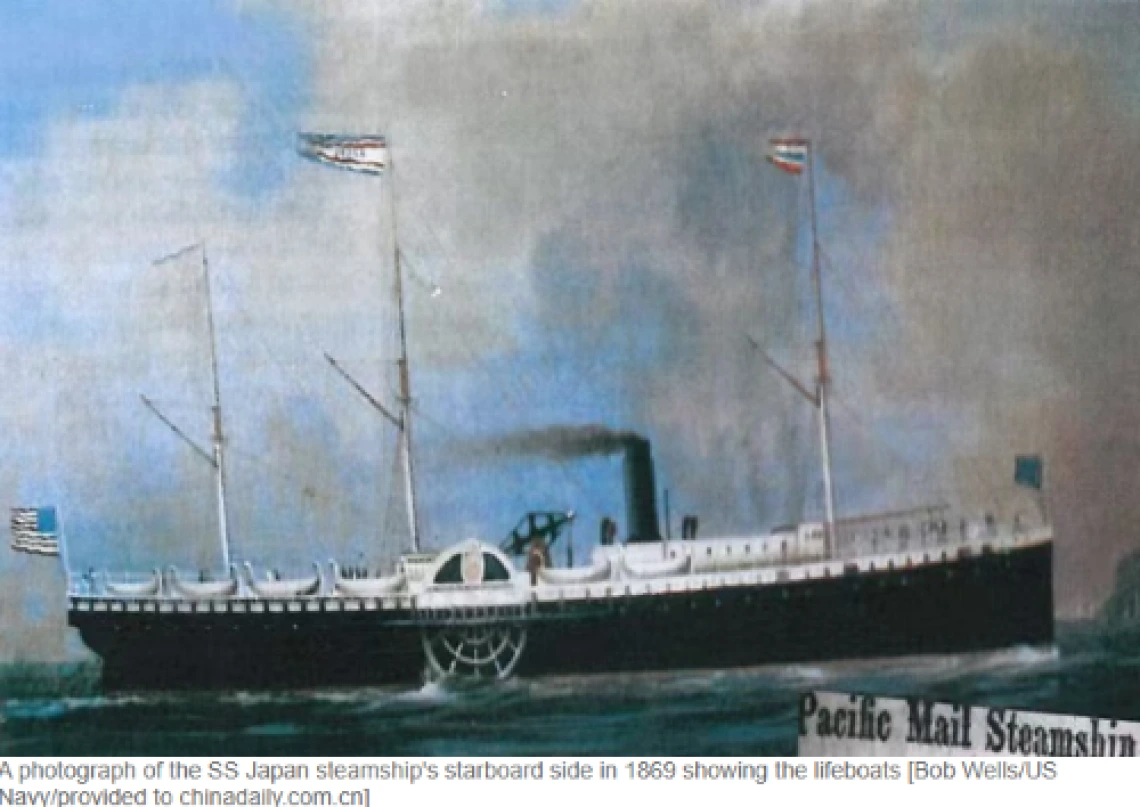
Lincoln's vision, embedded in the bill he signed, was sweeping: establish trans-Pacific mail service as a first step toward a trans-Pacific railroad and deeper trade relations with China. The SS Japan and her sister ships, the Great Republic, the China, and the America, became the physical embodiment of that vision, transporting tens of thousands of Chinese laborers from Hong Kong and Guangdong Province to San Francisco under the Burlingame-Seward Treaty of 1868.
The men and women aboard the Japan on that final voyage had spent three to four years in America. They built the Central Pacific Railroad. They mined gold and silver. They constructed California's first irrigation system. They helped build a nation that would soon pass the Chinese Exclusion Act of 1882 and effectively erase their contribution from the national memory. On December 17, 1874, they were 20 miles from home when a coal fire erupted at midnight and consumed their ship in 45 minutes.
Unable to reach the lifeboats, cut off by the flames, hundreds jumped into the South China Sea. Many drowned, dragged down by the gold-filled money belts they had grabbed in the darkness. Their life savings became their anchors. Around 130 survived. More than 400 did not.
This is what I eventually came to understand. And once I understood it, I could not un-understand it.
The Coins That Wouldn't Let Me Go
After passing on Ben's initial offer, I started doing what collectors do when something nags at them: I researched. I bought and read Robert Wells' book, Voices from the Bottom of the South China Sea, the product of four years of archival research by a retired U.S. Navy captain who had commanded a warship in the very waters where the Japan went down. I pulled every thread I could find outside of Ben's and Robert's own presentations. I built a picture.
And then, it felt like I was seeing them everywhere.
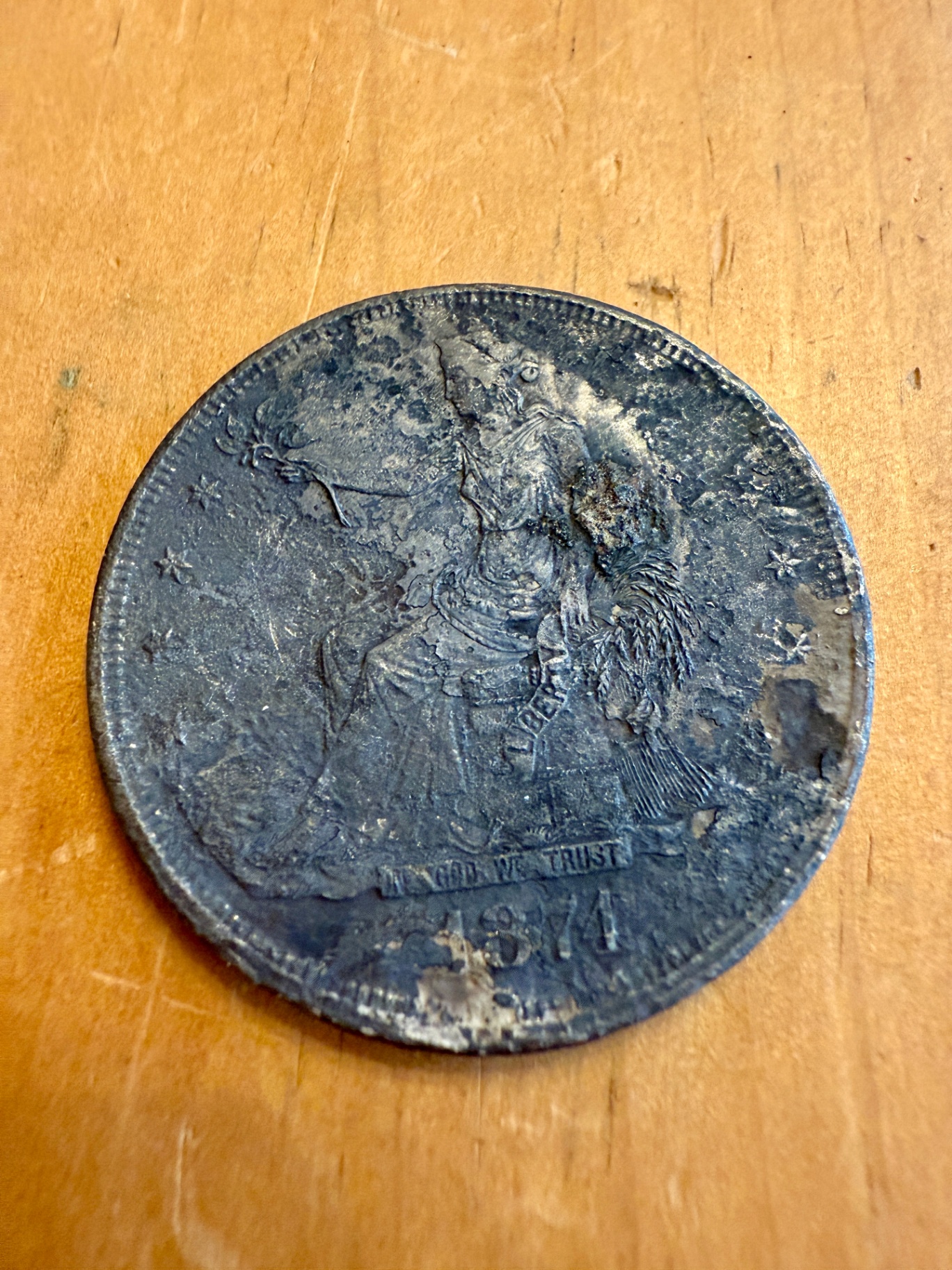
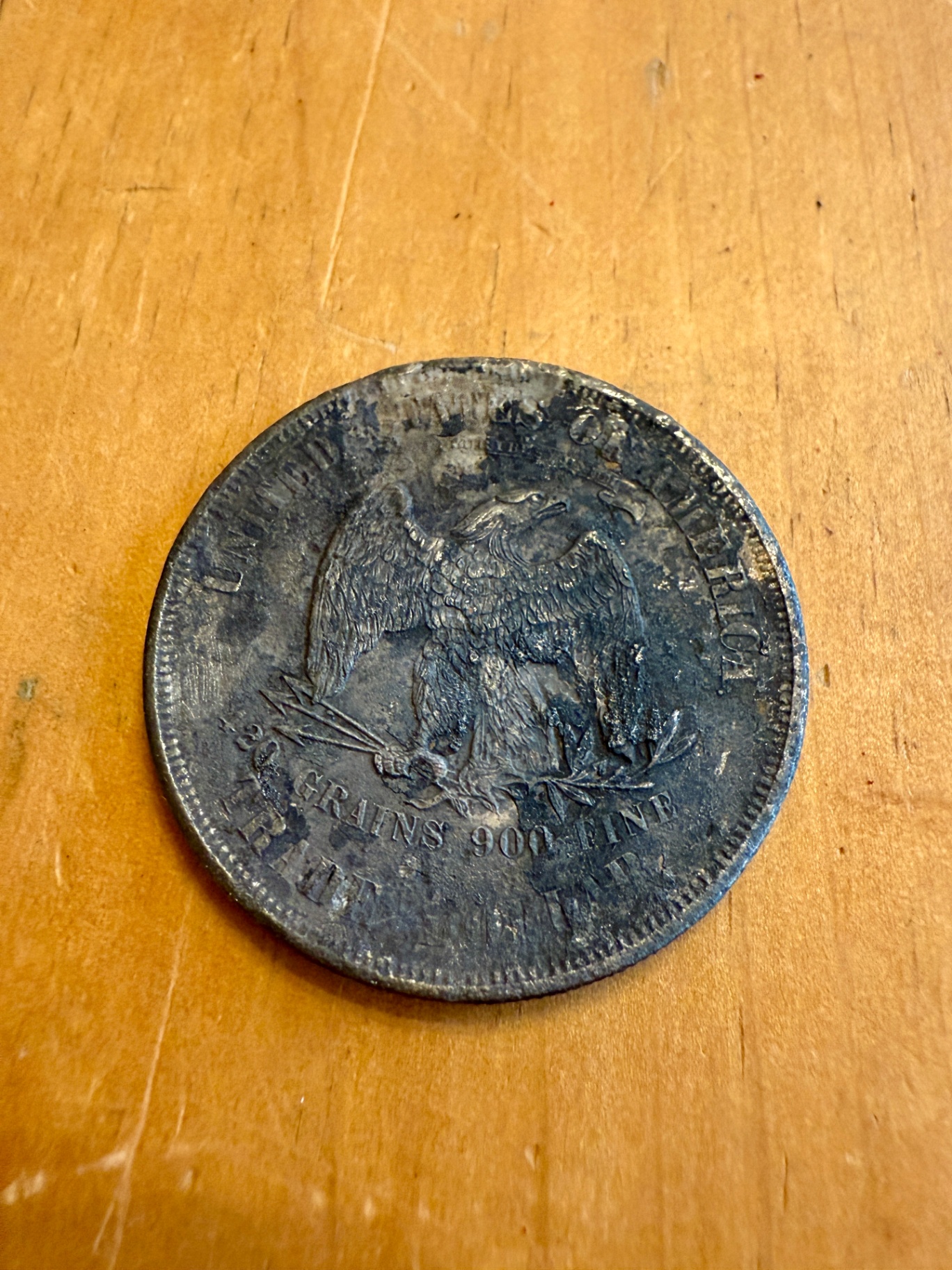
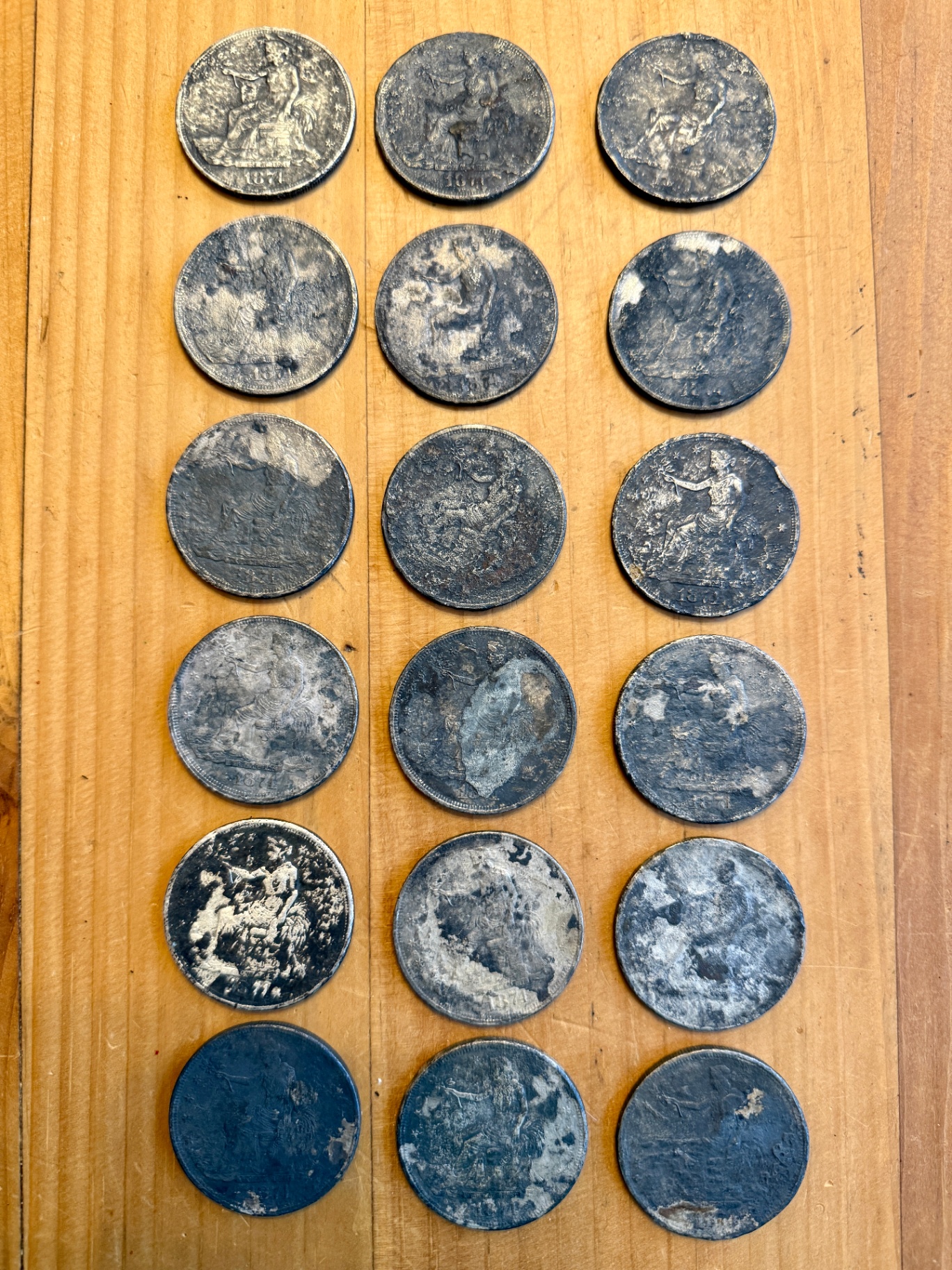
They were not labeled as SS Japan coins. There was no such designation yet. But they shared a signature I had come to recognize: all dated 1874, bearing the distinctive scars of extreme heat and prolonged saltwater exposure, most in poor to fair condition, heavily damaged in ways consistent with a vessel fire followed by 150 years on the ocean floor. They were U.S. Trade Dollars, the silver coin minted specifically for commerce in Asia. And here is what makes these coins extraordinary beyond the wreck itself: they were not the accumulated savings of the passengers. They were official U.S. government cargo. The SS Japan's treasure tank carried 168 boxes of freshly minted 1874 Trade Dollars, valued at $358,508, drawn from both the San Francisco and Carson City mints, loaded specifically for delivery to Asia. They had never been circulated. They bore no chopmarks. They went straight from the mint into the treasure tank, and from the treasure tank to the ocean floor. That distinction matters enormously to numismatists: the 1874-CC Trade Dollar had a mintage of over 1.3 million, nearly all exported to China, yet its survival rate has been called infinitesimal. A significant portion of that missing population may have gone down with this ship.
I started buying every one I could find. Quietly, methodically. Loose examples and encapsulated alike, watching for the distinctive markers: 1874 dates, fire scarring, the particular saltwater patination that comes from 150 years on the ocean floor. Ben had broken the story open as far as he could from Hong Kong. But there was a wall between his findings and the formal numismatic record, and I wanted to help bring it down.
More than deserved. It needed to be told. I felt obligated to tell it.
On February 26, 2026, I reached out to Robert Wells directly. I introduced myself, laid out what I had been quietly assembling, and explained what I believed could be done if the right people came to the table. His response moved me. He told me how eager he had been, for years, to see his research used to work with the major grading companies, NGC chief among them, to formally certify coins from the wreck. He committed every page of his research, every archival lead, every unpublished note to the effort. He thanked me for my enthusiasm and made clear he was all in.
That conversation fanned the fire. With Robert's depth of research behind us, the path forward was suddenly clear.
Rallying the Troops
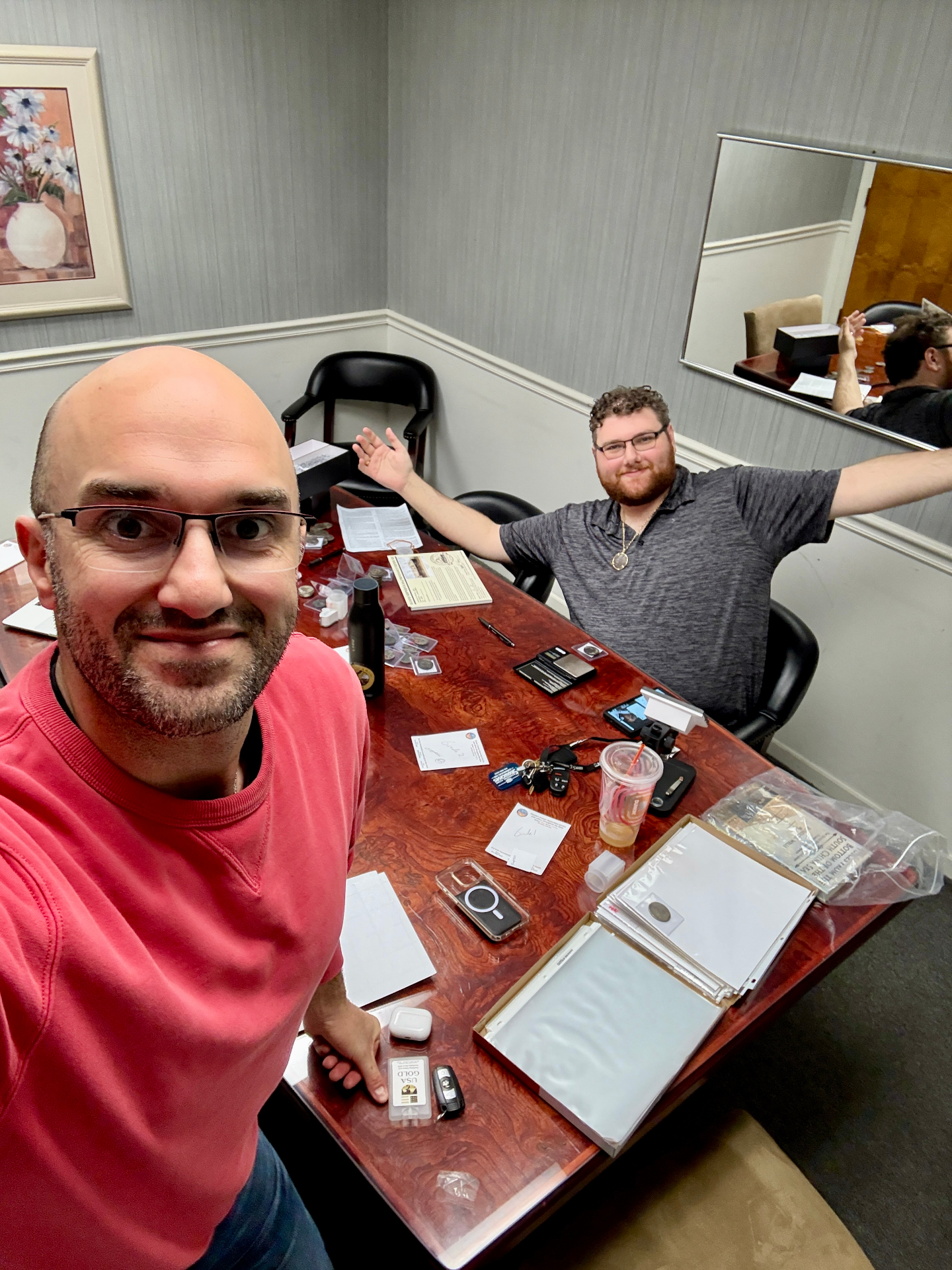
Conviction without collaboration is just a theory. I knew I needed partners who could bring credibility, expertise, and reach to what I was building. I brought in Matthew Tavory to help navigate the NGC submission process.
As a former NGC grader and world-coin specialist, he was the right person to advise on how the submission should be structured and presented.
Two days later, he called me back.
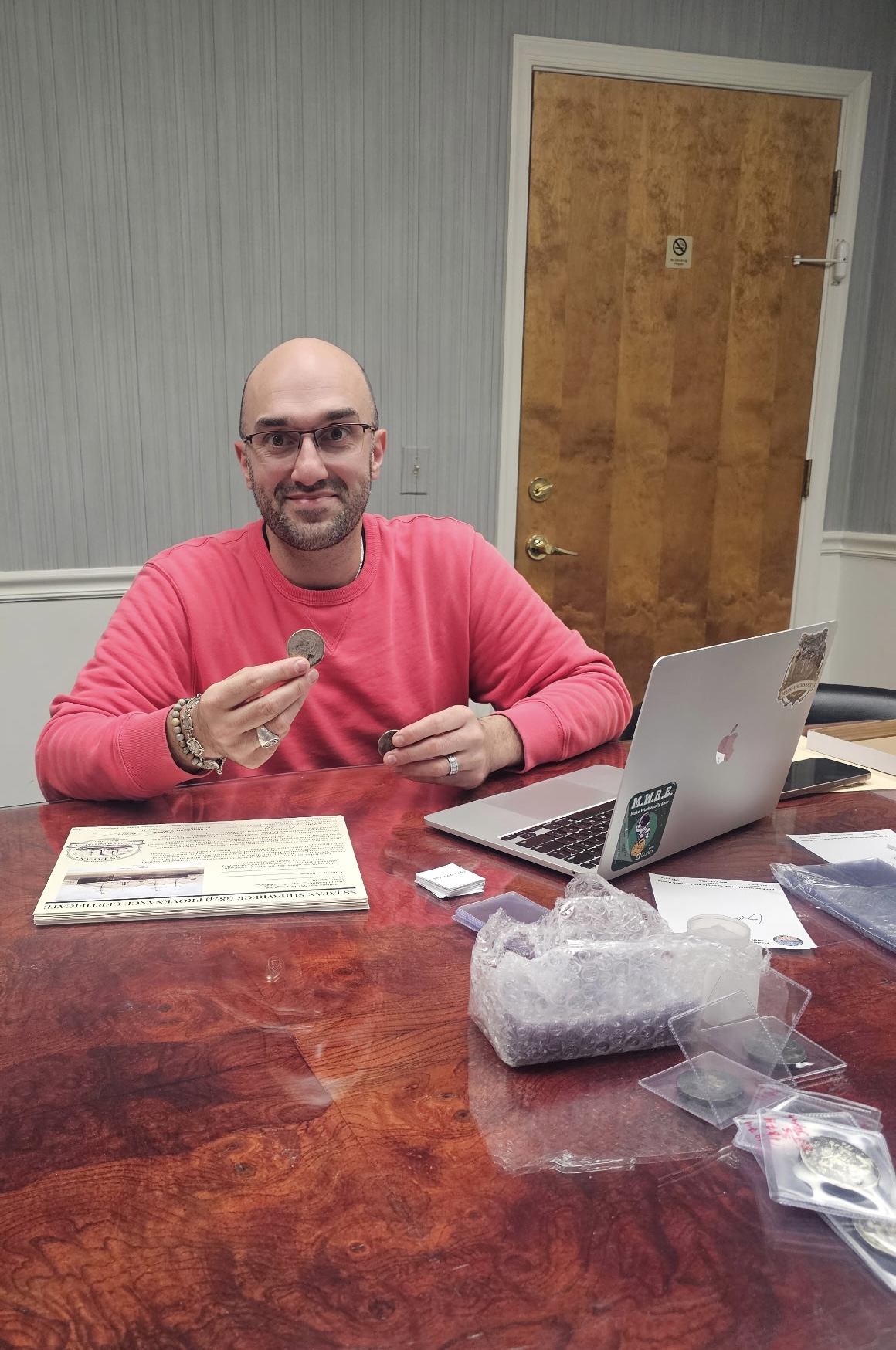
It turned out he knew Ben as well - he had had the same opportunity to acquire coins from the Japan years earlier and had also passed. The convergence was too significant to ignore. We both knew we were onto something real.
I connected Matt with Robert, and the three of us went to work. Robert shared additional research that he had not yet published, material that deepened the historical picture and strengthened the case for the coins' origin. Together, Matt and I compiled everything we had and drafted a detailed presentation to the leadership at NGC. We outlined the historical record, the physical characteristics of the coins, the archival evidence, and what a certification would mean, not just for collectors, but for history.
We sent it. And we waited.
The Moment at the Winter Fun Show (2026)
Matt and I were both exhibiting at the Winter Fun Show in Orlando when the response came in. NGC had reviewed all of our materials. Their numismatic experts had examined the evidence. Their conclusion: these coins were, in their determination, from the SS Japan, and NGC was prepared to certify them as such.
I will not pretend we handled this news with composure.
We both shot out of our chairs. Behind our separate booths, in the middle of a busy show floor, two grown professionals made an absolute scene. Other exhibitors turned to look. We didn't care. After more than a year of quiet, patient, solitary work, after the research, the coin hunting, the phone calls, and the waiting, the validation had arrived. These coins were real. The wreck was real. The story was real.
And now it was time to tell it.
What These Coins Mean
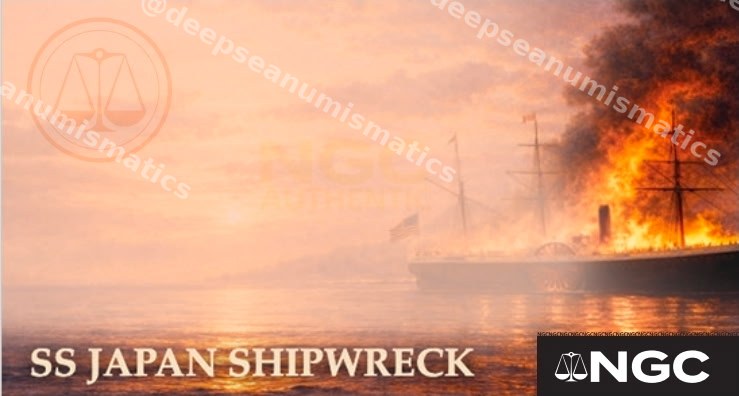
NGC's certification transformed these Trade Dollars from interesting artifacts into documented historical evidence. Each coin is now a verified piece of the SS Japan, physical proof of the wreck, the lives aboard her, and the world those men and women inhabited. The coins validate the wreck. The wreck validates the coins. The relationship is symbiotic and, in numismatic terms, unprecedented.
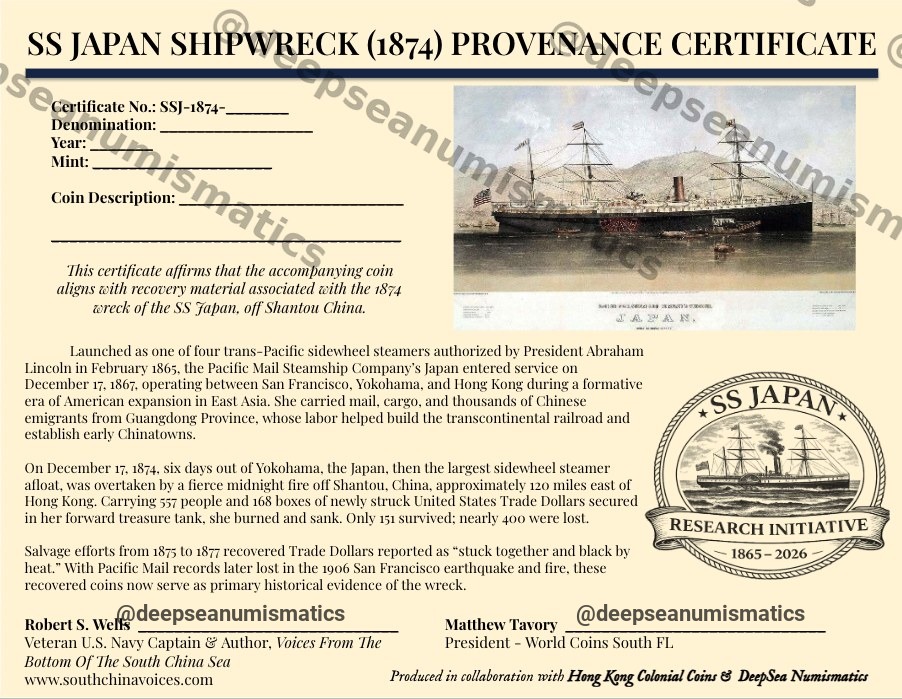
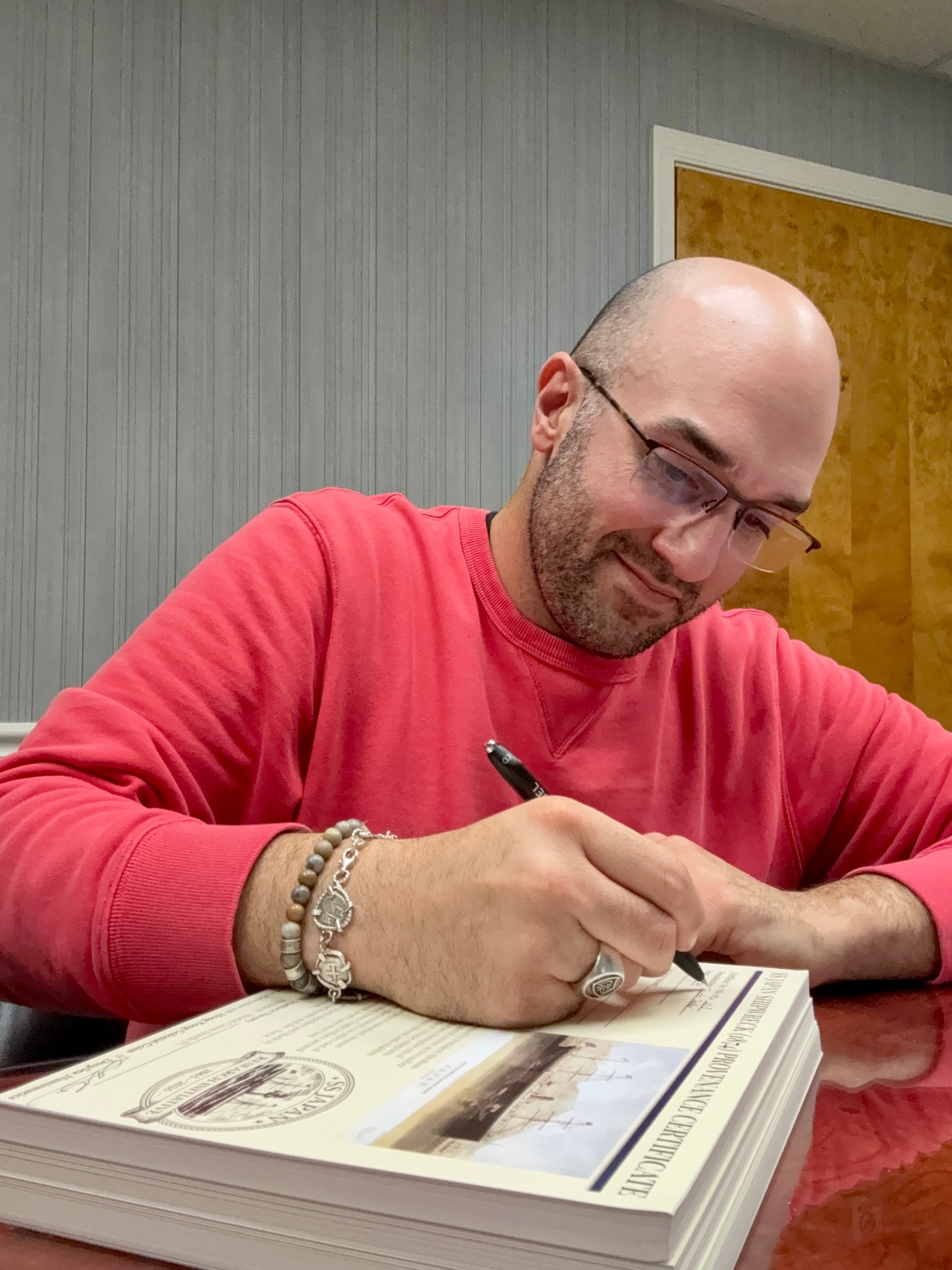
I personally designed the custom NGC label that each coin now bears, a label that tells the story in the few square inches available to it, linking each coin to its origin, its date, and its significance. I designed a certificate of provenance that accompanies the collection: a document bearing Robert's signature as the historian and author who rediscovered this story, Matthew's signature as the certifying numismatist, and my own. Ben, who remains in Hong Kong, would have been the fourth signatory had geography permitted.
Matthew, meanwhile, had quietly acquired a significant number of additional examples, purchasing them from a dealer who had bought directly from Ben years earlier and had been holding them. Fewer than 100 coins from this wreck have been documented in total. The collection we assembled together is the most significant and only known concentration of SS Japan Trade Dollars in existence.
I flew to Florida to meet Matt, where we catalogued every coin together, graded and prepared each one for submission, and sent the full collection to NGC.
The Historical Weight
I want to be clear about what this story carries, because it is easy to get lost in the numismatic drama and miss the human weight beneath it.
More than 400 people died 20 miles from home. They had built American railroads and mined American gold and were returning to families who had been waiting years for them. They carried their earnings in silver and gold on their bodies. When their ship burned, they jumped into the sea, and the weight of what they had earned pulled them under.
In Confucian and Taoist tradition, a soul cannot ascend to heaven unless its remains rest in China. These men and women, as Robert Wells has documented, made it home. The wreck rests in Chinese waters. There is a profound, if tragic, comfort in that. Their story can now be told from where they rest.
The SS Japan also sits at the intersection of some of the most consequential moments in American history. The ship was Lincoln's creation, one of his final legislative acts. It was the vessel that brought Chinese emigrants under the Burlingame Treaty, connecting the two largest economies on earth during a critical decade of relationship-building. It carried the women whose Supreme Court case, Chy Lung v. Freeman (1875), became a landmark ruling on federal immigration authority and the 14th Amendment's equal protection clause. And it predates by only eight years the Chinese Exclusion Act, the only piece of U.S. legislation ever to ban immigration by a single named nationality.
These coins are not just shipwreck artifacts. They are evidence of a chapter of American history that the 1906 earthquake tried to erase.
What Comes Next
DeepSea Numismatics, in partnership with Robert Wells, retired U.S. Navy Captain and author of Voices from the Bottom of the South China Sea, will officially unveil the SS Japan Trade Dollar collection at the FUN Show in Orlando in July 2026. It will be the first public presentation of NGC-certified SS Japan coins, and the first time this story has been brought formally to the numismatic community.
We are working to present the collection and its historical significance to the National Numismatic Collection at the Smithsonian Institution, the Lincoln Presidential Library and Museum, and the Chinese Historical Society of America. These coins belong not only in private collections, but in the permanent record of American and Chinese history, and it is our intention to make sure they get there.
I passed on them the first time. I will not make that mistake again, and I intend to make sure that no one who cares about this story has any reason to.
The voices from the bottom of the South China Sea deserve to be heard. I am privileged to have played a part in making sure they are.