Most of what a wreck leaves behind is silence. The ship burns, the guns go quiet, the sea takes what is left. The cargo goes to the bottom. The men go wherever men go. And for a very long time, nothing moves.
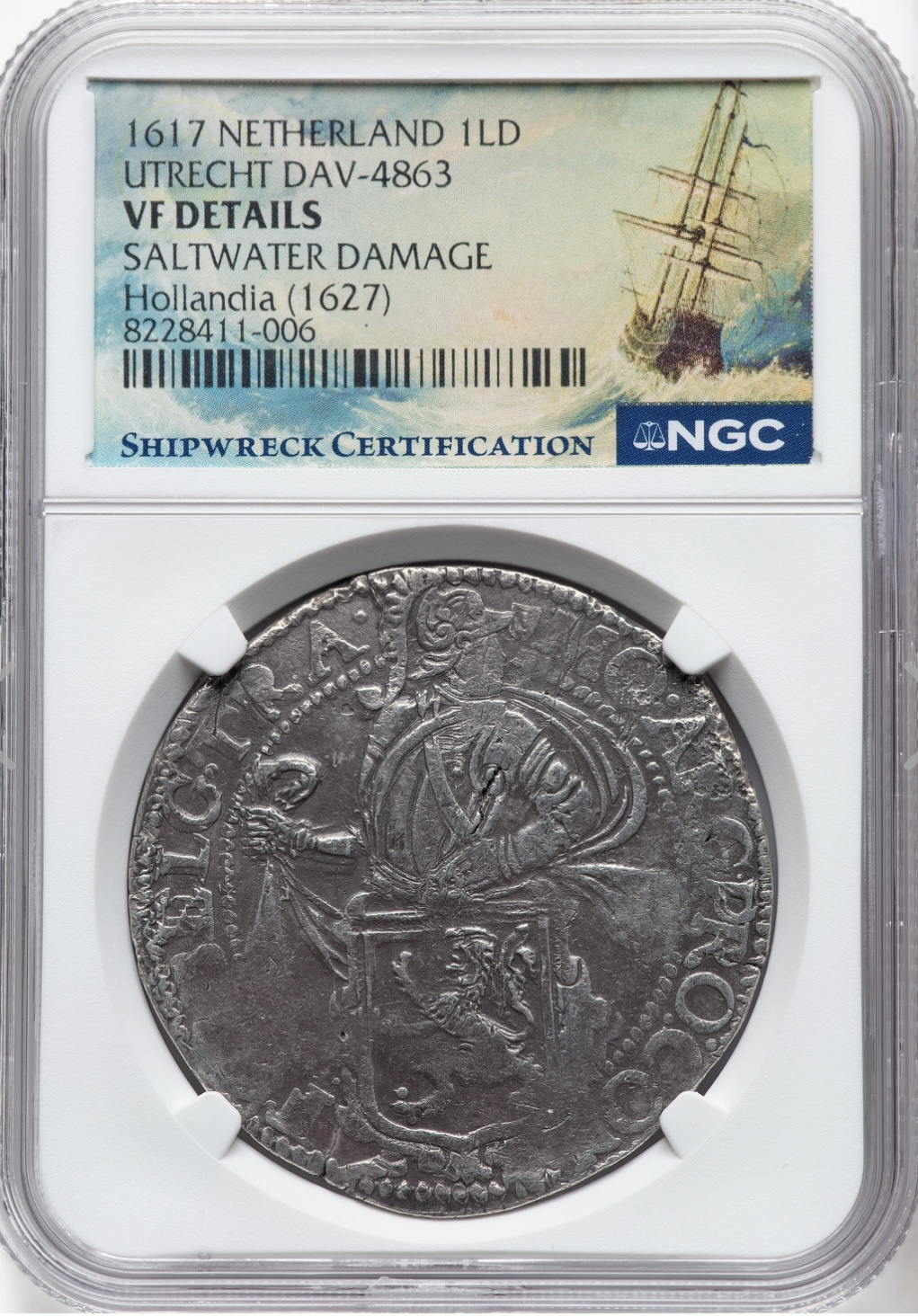
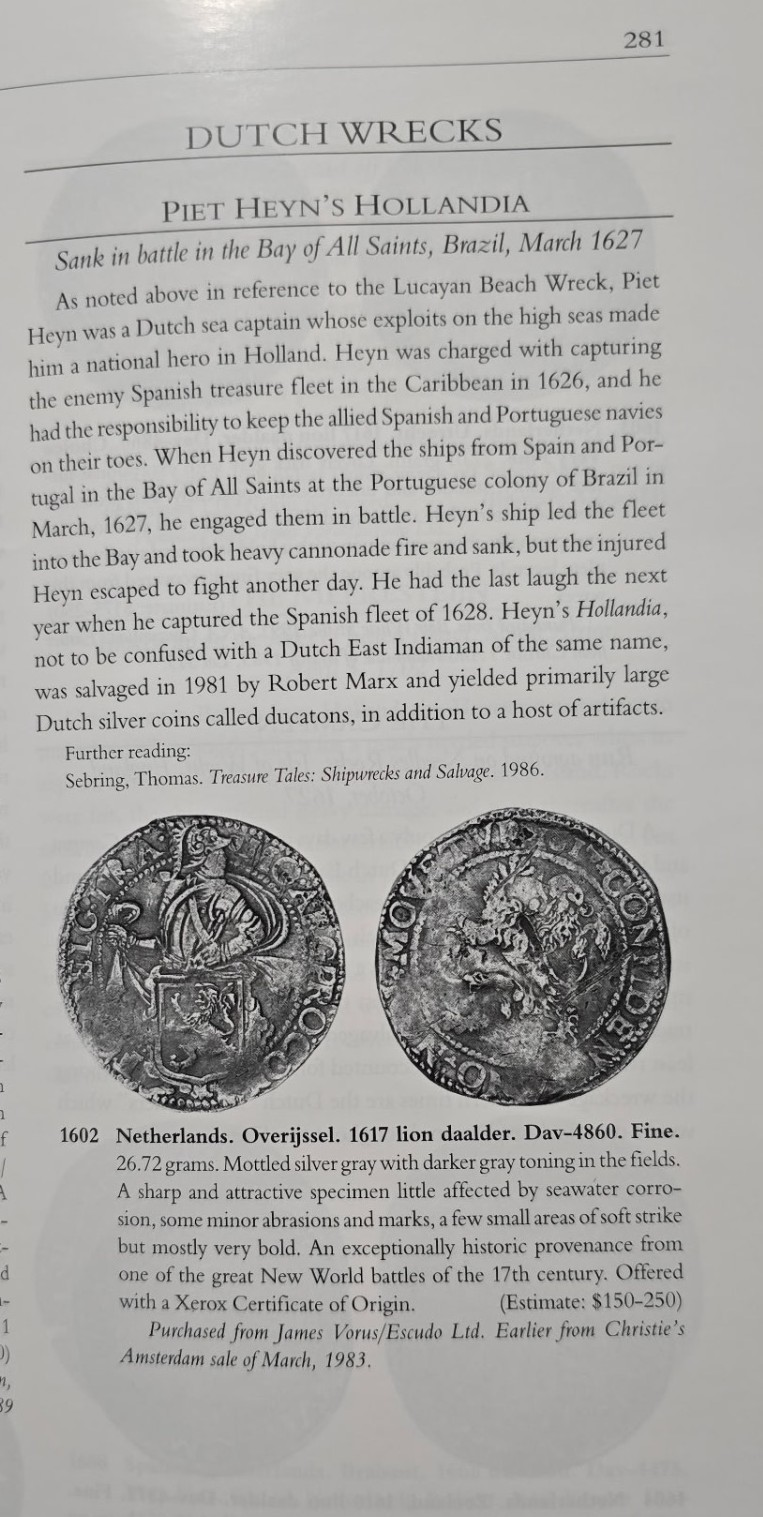
What I hold is a silver coin - a 1617 Utrecht Lion Daalder - that spent 354 years on the floor of the Bay of All Saints, off the coast of Brazil, beneath the burned timbers of Piet Heyn's warship Hollandia. It was minted a decade before the battle that sank the ship. It entered the sea in March of 1627. It came back into the world in 1981, passed through Christie's Amsterdam in 1983, and is now NGC-certified under the shipwreck program, certificate of authenticity number 0541.
It is one of at most 29 such coins ever documented from this wreck.
The Admiral
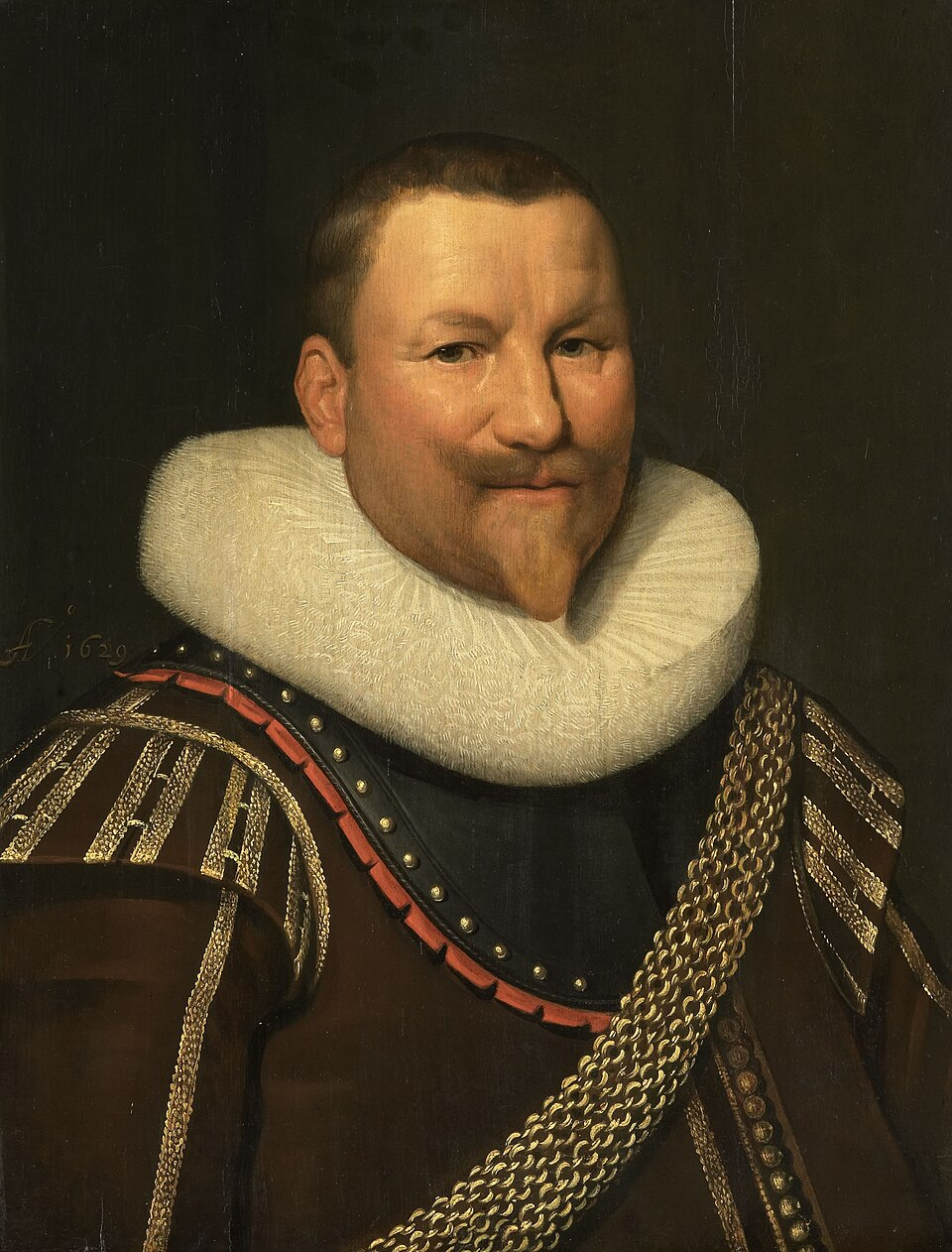
Piet Pieterszoon Heyn was born in 1577 in Delfshaven, the port town outside Rotterdam that would later become famous as the embarkation point for the Pilgrim Fathers. His father was a sailor. Heyn went to sea young, and the sea gave him the full curriculum.
He sailed to West Africa. He was captured by the Spanish in a naval engagement and spent four years as a galley slave, rowing under the lash. He was ransomed. He went back to sea. He rose, through the kind of competence that gets noticed when the margin for error is the difference between command and the bottom, to captain ships for the Dutch West India Company - the WIC, the joint-stock empire-building machine that the Dutch Republic deployed against Spain and Portugal across two hemispheres.
By 1626 he held the rank of Vice-Admiral of the WIC fleet and the most demanding assignment the Company could offer: harass the enemy in Brazilian waters, interdict their treasure lines, keep the allied Spanish and Portuguese navies too busy to consolidate their grip on a colony the Dutch were then trying to pry away. He was very good at this. He would get better.
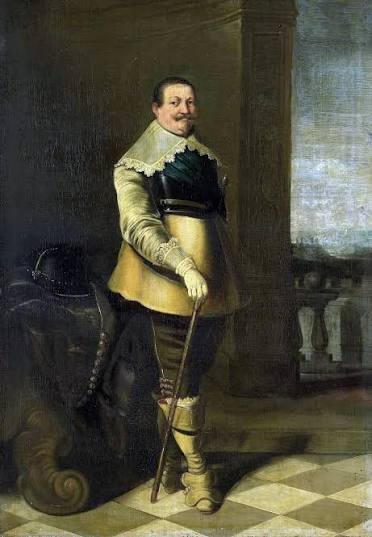
The coin in the NGC holder was already nine years old when Heyn sailed south in 1626. It had been circulating in the Dutch Republic since the Utrecht mint struck it, passing through the hands of merchants, sailors, and provisioners in a country that was in almost every sense the most commercially sophisticated nation on earth. Heyn himself may never have touched it. But it ended up on his ship.
The Ship
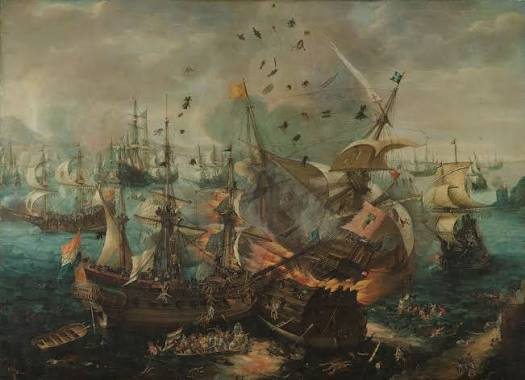
The Hollandia was a Dutch West India Company warship, purpose-built for the kind of work the WIC needed done in contested colonial waters. Gunned heavily enough to fight, crewed by men who understood the difference between a merchant voyage and a war.
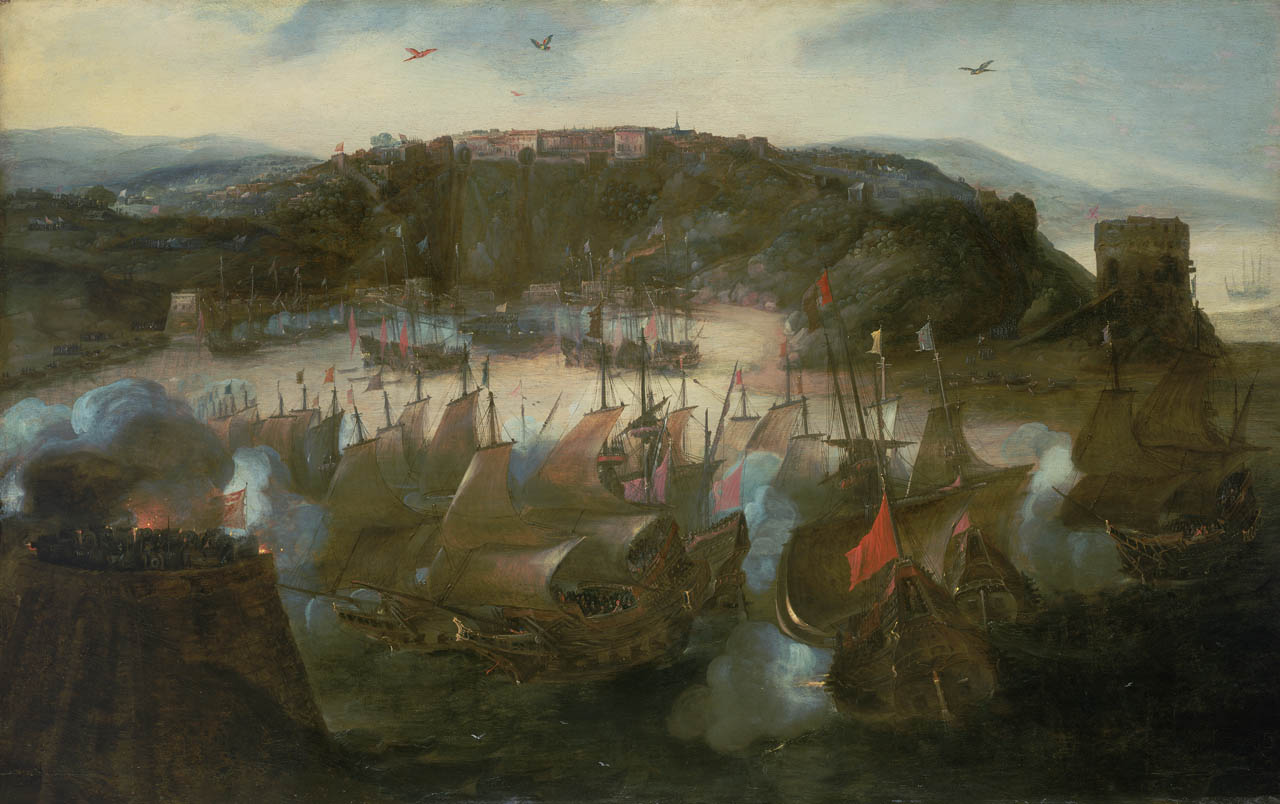
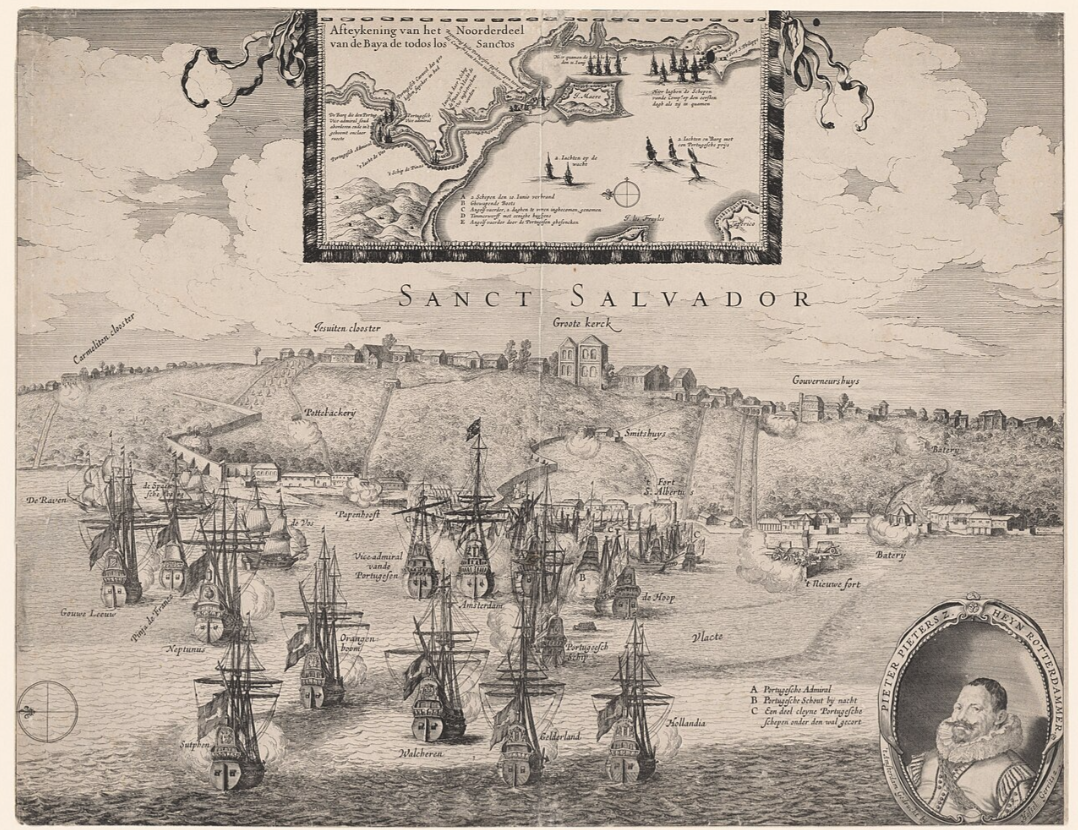
In early 1627 Heyn led his fleet into the Bay of All Saints. The allied Spanish and Portuguese navies were sheltering in the harbor off Salvador, the capital of Portuguese Brazil and one of the busiest ports in the Atlantic world. Heyn had orders to engage. He gave the order to enter the bay.
What followed was a catastrophe that was simultaneously a tactical success. The Dutch fleet attacked. The allied fleet fought back from the harbor. The Hollandia took cannonade - over 500 shot, by subsequent account, punching through her hull before the day was done. She was set ablaze. She sank in the Bay of All Saints in March of 1627.
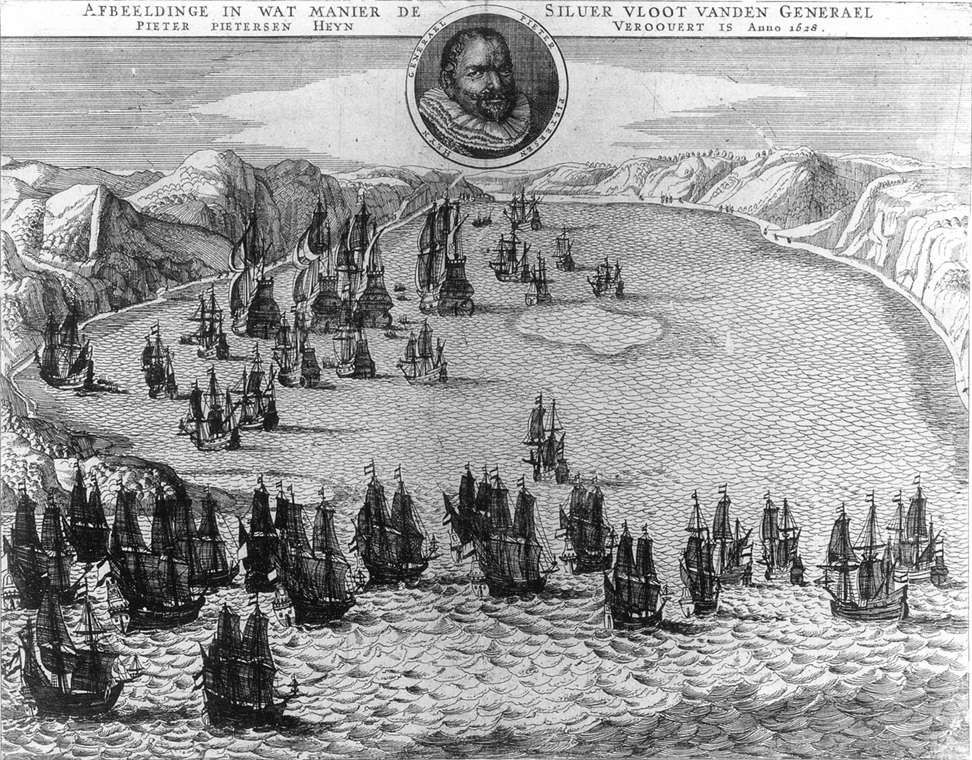
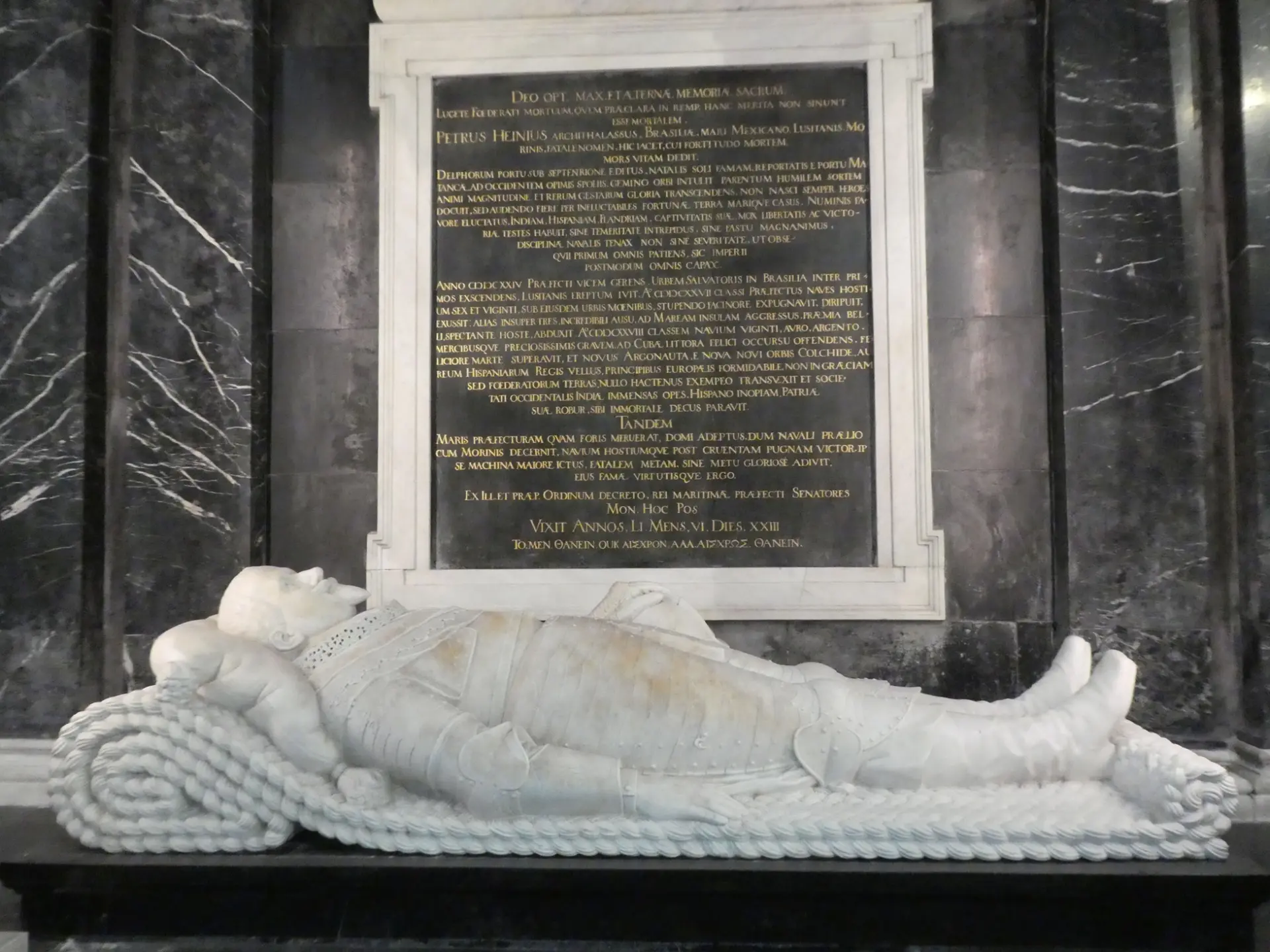
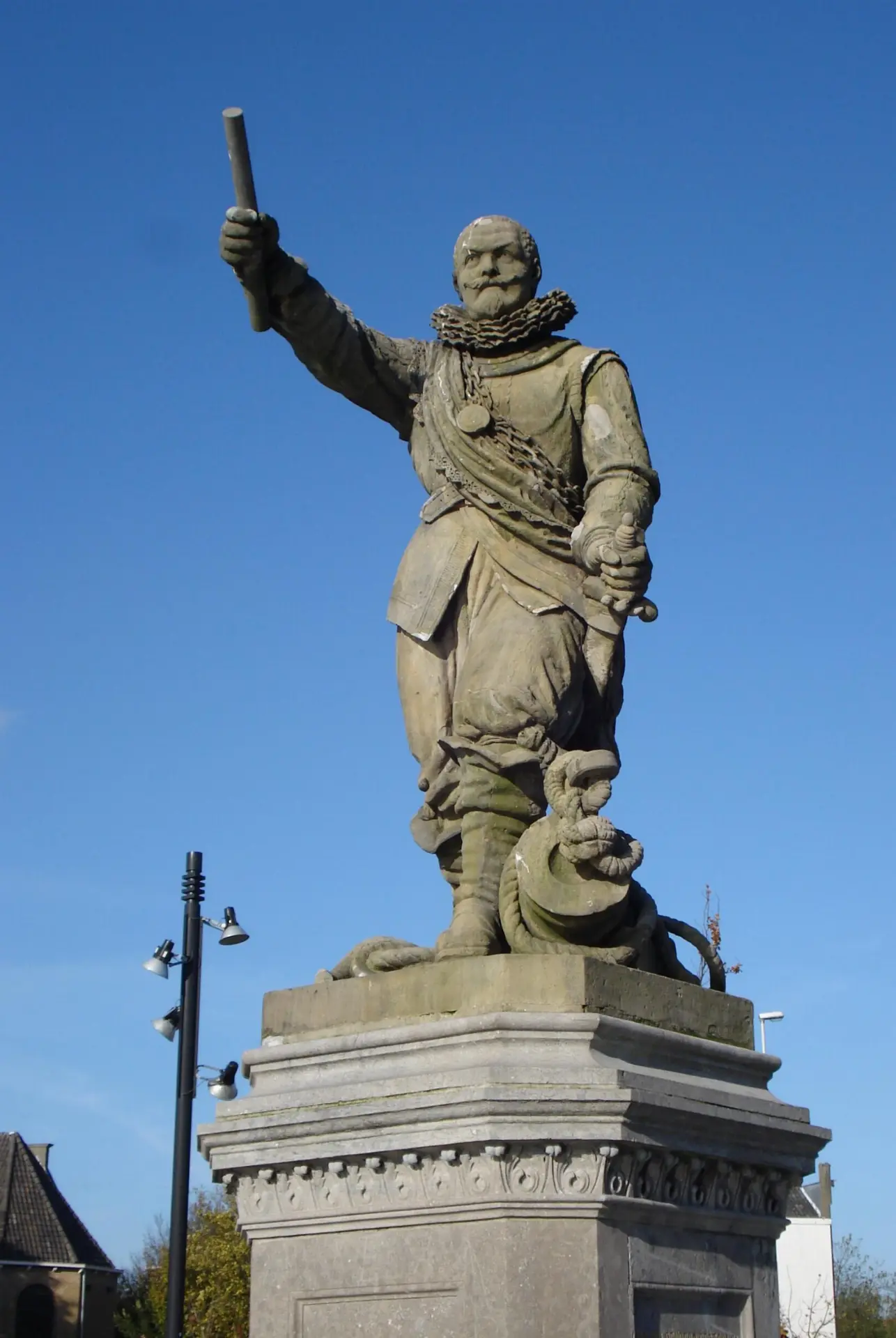
Heyn escaped. Injured, but alive. He went on to his most famous achievement the following year: the capture of the complete Spanish silver fleet in the Bay of Matanzas, Cuba, in 1628 - the only time in history a Dutch admiral took an entire Spanish treasure convoy intact. He became a national hero. He died in 1629, killed in a North Sea engagement, the Patria's darling cut down before he could enjoy the legend.
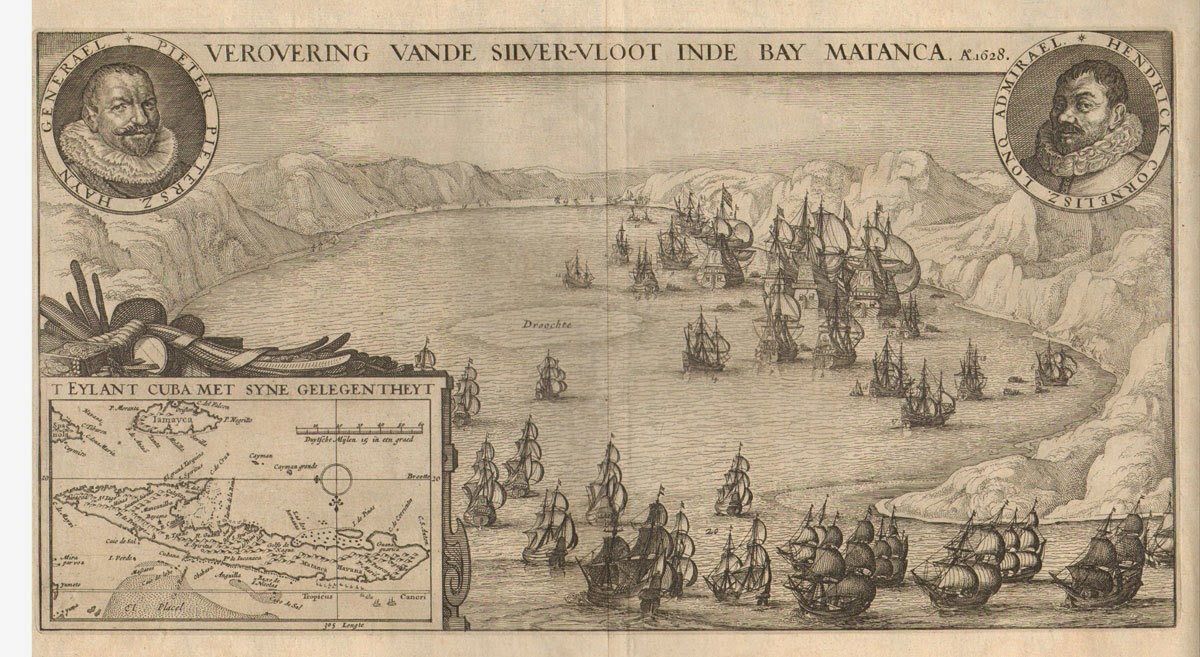
When the Twelve Years' Truce ran out in 1621, the newly chartered West India Company was handed a monopoly on Dutch trade in West Africa, South America, the Caribbean and North America. Delft, Rotterdam and Dordrecht ran a joint chamber, each city with its own office, and one of the directors at Rotterdam was a captain and merchant out of Delfshaven named Piet Heyn. Seven years later, as an admiral of that same Company, he took a treasure fleet homeward bound from Mexico by way of Cuba. The haul came to eleven million guilders. It made him a national figure overnight.
The Hollandia stayed where she had sunk. The men who did not make it off the burning deck stayed too. The coin on the bottom did not move for 354 years.
The Coin Before the Sea
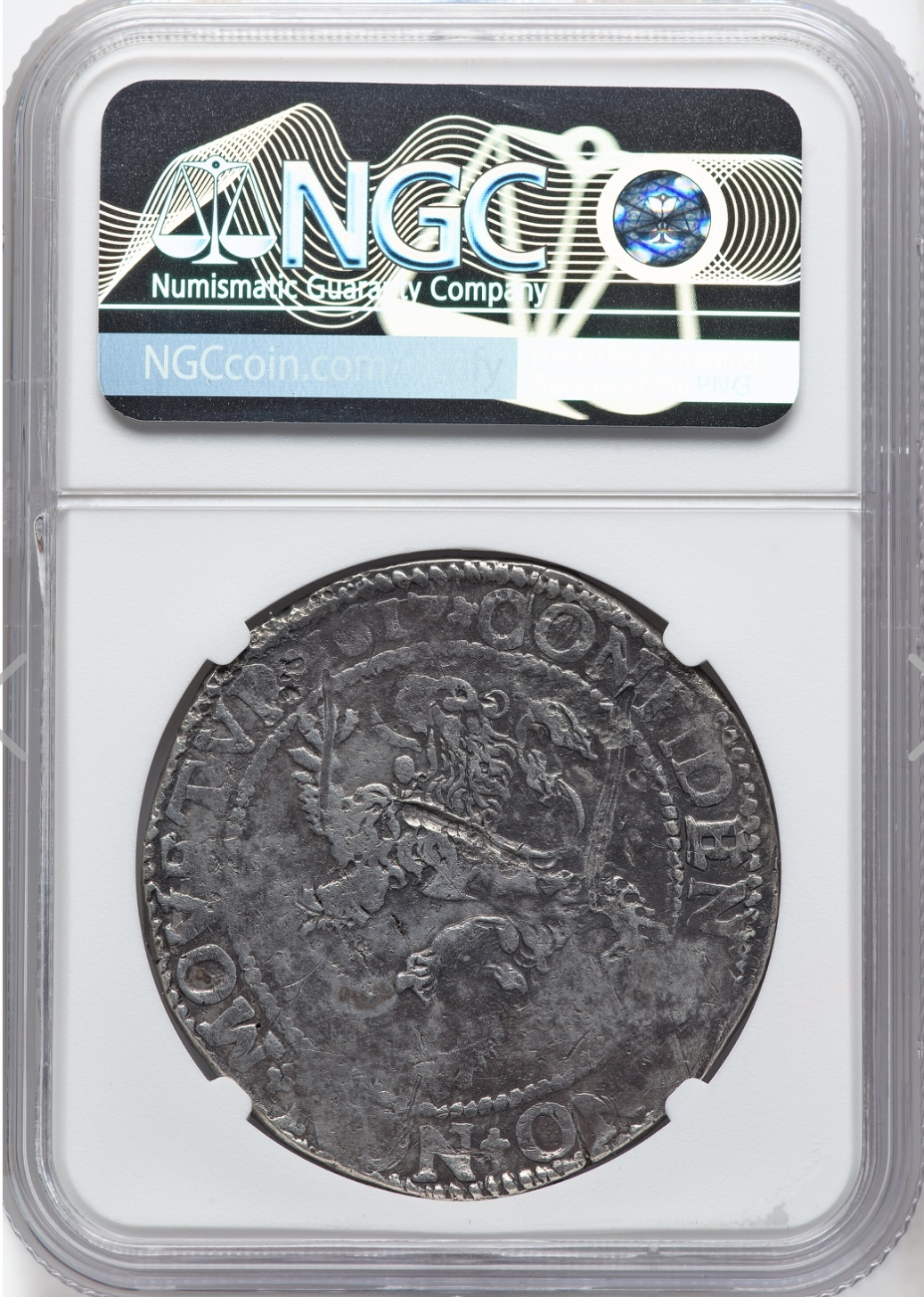
The Lion Daalder is a distinctive coin. One face carries an armored knight in profile, standing behind a shield charged with a lion. The other carries the crowned lion rampant of the Dutch provinces. The legend is in Latin. The silver is heavy and the strike, when the dies are fresh, is crisp.
This example was struck at the Utrecht mint in 1617, classified by numismatists as Dav-4863. Utrecht was one of the seven sovereign provinces of the Dutch Republic, and each province operated its own mint with its own marks and quality standards. Utrecht's Lion Daalders of the early 17th century are well documented; they circulated widely in the Republic and throughout the Dutch overseas trade network, and they became one of the great trade coins of the Atlantic and the Levant.
In 1617 the coin entered circulation in a Dutch Republic still operating under the Twelve Years' Truce with Spain, a breathing space in a conflict that had been running since 1568 and would resume, with full violence, in 1621. The WIC itself would not be chartered until that year. Piet Heyn, forty years old in 1617, was already a sea captain, already tested by captivity and survival.
How this particular coin came to be aboard the Hollandia a decade later is not recorded. It may have been ship's stores - ready coin for provisioning and pay, the kind of working capital a warship's purser kept in a strongbox below decks. It may have been personal property, in the chest or the pocket of someone who did not make it off the burning hull. What is certain is that it was aboard in March of 1627, and it went to the bottom with the ship.
The Long Silence
The Hollandia lay on the floor of the Bay of All Saints for 354 years. In that time the colonial world that built her passed through wars, revolutions, and the long dissolution of the empires that had fought over Brazilian waters. The Dutch West India Company, bankrupted by overextension and military failure, dissolved in 1791. The Portuguese colony of Brazil became an empire in 1822. The Bay of All Saints, ringed by the growing city of Salvador, became one of the busiest commercial harbors in South America.
At some point in the 19th century a British merchantman sank in approximately the same location, depositing her own hull on top of what remained of Heyn's flagship. The Hollandia lay buried under two layers of maritime history, in water too dark to see through, in a harbor too busy to look.
Above, the world reinvented itself several times over. Below, in the sediment of the bay, the coin did not move.
Robert Marx and the Recovery
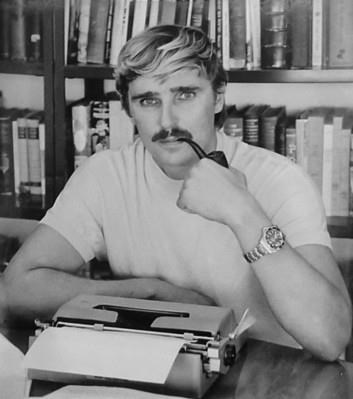
Robert F. Marx was the most productive and most controversial underwater archaeologist of the 20th century, a man whose career exists in a permanent argument about where treasure recovery ends and where scholarship begins. He found things. He also moved them.
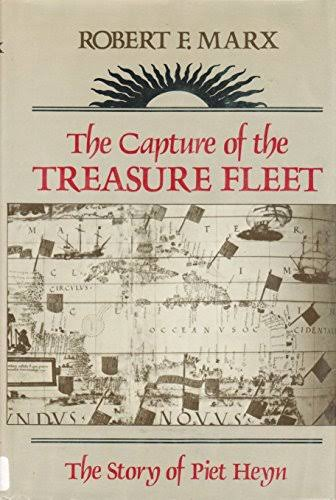
He also wrote the book on the admiral himself. The Capture of the Treasure Fleet: The Story of Piet Heyn was Marx's own telling of the Matanzas raid, published years before he went looking for the wreck of Heyn's flagship in Brazilian water. The research came first; the excavation followed.
In 1979 Marx located the Hollandia site in the Bay of All Saints. The British merchantman was what gave it away: an anomaly in the harbor floor that resolved, under excavation, into the older Dutch hull beneath it. He secured an agreement with the Brazilian Naval Museum in Rio de Janeiro - recovered artifacts would go to the museum, in exchange for permission to excavate.
The formal excavation ran from November 1980 through March 1981. What came up included bronze cannon, ship's hardware, glass fire grenades - the military kit of a 17th-century Dutch warship - and silver coins. Lion Daalders, dated between 1616 and 1623, corroded and concretion-encrusted after three and a half centuries in saltwater, emerging into air and light for the first time.
Then the agreement began to unravel. In 1984-85 the Brazilian government charged Marx with contraband, specifically that he had not declared all recovered artifacts to the Naval Museum as required. The Christie's auction catalogue from 1983 was entered as evidence against him: items that had reached the commercial market, the government alleged, exceeded what had been declared. Brazil banned Marx from all further underwater exploration in their waters.
The full extent of what came off the Hollandia has never been publicly reconciled. The site, when a parallel Dutch WIC wreck in the same bay was surveyed decades later, was found "heavily looted and salvaged," with disturbed ballast piles and scattered hull remains. No rigorous archaeological survey of the Hollandia specifically has been conducted since Marx's 1981 work.
What got out, got out in 1981. This coin was part of that recovery.
Christie's Amsterdam, March 1983
On March 16, 1983, Christie's Amsterdam offered a sale under a title that carried the weight of the whole enterprise: the sale of important gold, silver, jewellery and artifacts recovered from the wrecks of the Hollandia, Utrecht, Slot ter Hooge, Nuestra Señora de Esperanza, the Standing Cannon Wreck, and H.M.S. Athenienne.
Among the lots: 29 Dutch Lion Daalders, all dated between 1616 and 1623, specifically attributed to the Hollandia. These were the first coins from this wreck to enter the open market. They remain the only group of Hollandia Lion Daalders ever formally and publicly documented.
Twenty-nine is the floor, not the ceiling. What the total recovery actually amounted to - between what went to the Naval Museum, what passed through Christie's, and what the Brazilian contraband investigation implies may have moved through other channels - was never reconciled on the public record. The 29 coins at Christie's are what can be proven. Everything else is inference from a gap.
This coin - a 1617 Utrecht Lion Daalder, NGC shipwreck certified, COA #0541 - is consistent in date and type with the 1983 Christie's group, and later passed through the Thomas H. Sebring Collection. Its provenance is clean. Of the documented output of that wreck, this is as rare as it gets.
The Object
The coin grades VF Details under NGC's standards, with the expected effects of its time on the seafloor: mottled silver-gray with darker toning in the fields, seawater corrosion across parts of the surface, minor abrasions and marks, a few small areas of soft strike. The knight is clear. The lion is readable. The date, 1617, sits where it always has.
What the auction catalogue described as an exceptionally historic provenance from one of the great New World battles of the 17th century is not marketing language. It is a material fact. This coin was on a warship that fought in the Bay of All Saints under one of the most famous naval commanders in Dutch history. It went to the bottom with the ship. It spent 354 years there. It came back in 1981 under the hands of a diver with a complicated legacy.
The shipwreck certification is not a grading shortcut. It is a documentation chain - from the site, through the recovery, to the certification - that establishes, as clearly as any object in this collection can be established, that what you are looking at is what it claims to be. COA #0541. Utrecht mint. 1617. Hollandia. Bay of All Saints.
What the Object Carries
Every coin carries a voyage. Most numismatic coins carry the voyage of commerce: struck, circulated, saved, forgotten, found. Their story is economic, a trace of the markets and hands that moved them. That is a real story. It is just not the only one.
This coin carries something different. It carries a battle. It carries the specific morning in March of 1627 when more than 500 cannon shot punched through the hull of the Hollandia and the ship began to take water and burn and Piet Heyn, injured, still commanding, gave whatever orders there were to give before the deck went under.
The men who did not make it off that hull are gone without names in most records. Heyn himself died two years later on a different sea, the nation's hero cut down at 51. The WIC dissolved into financial ruin before the century was out. The colonial contest over Brazil was settled by Portugal. The Bay of All Saints today is ringed by Salvador, one of the great Afro-Brazilian cultural centers of the hemisphere, a city built in part on the labor and the violence of the trade that ships like the Hollandia were there to contest.
The wreck still sits in that bay. The site is heavily disturbed - by Marx's own excavation, by what came after, by the centuries of sedimentation and harbor traffic and the weight of the 19th-century British hull that sat on top of her before Marx found them both. No one has gone back to survey it with modern methods. What remains is a ballast mound and scattered planking, buried in the floor of a working harbor, with no marker and no visitor center and no interpretation panel.
This coin got out before the site was fully gone.
That is what this collection is about: the object that survives the moment, and the chain of human decision - by the die-cutter in Utrecht, by whoever packed it for the voyage, by the diver who pulled it from the silt, by the auction house that offered it, by every hand since - that kept it in the world long enough to be held now, and held honestly, and written about.
It is not the silver that matters. It is what the silver was there for. And what happened to the ship that carried it, in a bay named for all the saints, on a morning in 1627 when the guns did not stop.