Most pieces in this vault are tied to the sea by what they are - coins pulled from the hulls of Spanish galleons, VOC East Indiamen, WWII cargo ships. This one is tied to the sea by blood.
The Oakland, Brooklyn & Fruitvale Railroad Company token, dated 1871, is a copper transit fare from a neighborhood in the East Bay of California. It is not a shipwreck coin. It does not carry salt or coral or the particular patina of the ocean floor. What it carries is something rarer: a direct line to a voyage made by my own family - 24,000 miles, around Cape Horn, in the winter of 1846.
My 3rd great-grandfather, Isaac R. Goodwin, was on that ship. His family helped build the community this token came from. And in a collection defined by the relationship between objects and the vessels that carried them, there may be no piece here with a more personal cargo.
The Token
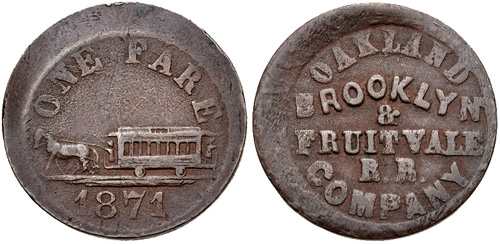
The piece itself is modest by numismatic standards. A copper one-fare transit token, stamped on the obverse with a horse-drawn car and the year 1871. The reverse reads in a circular die: OAKLAND BROOKLYN & FRUITVALE R.R. COMPANY. Plain. Functional. The kind of coin a working man pressed into the conductor's hand on a Tuesday morning without looking at it twice.
The Oakland, Brooklyn & Fruitvale Railroad Company was incorporated in the early 1870s to connect the emerging residential and commercial neighborhoods of the East Bay - Brooklyn, Temescal, and Fruitvale - with the Oakland waterfront and ferry landing. Horse-drawn cars ran the line. The fare was one token. A city was being built.[2]
That city had been seeded, a quarter century earlier, by 238 souls who arrived by sea.
The Ship Brooklyn
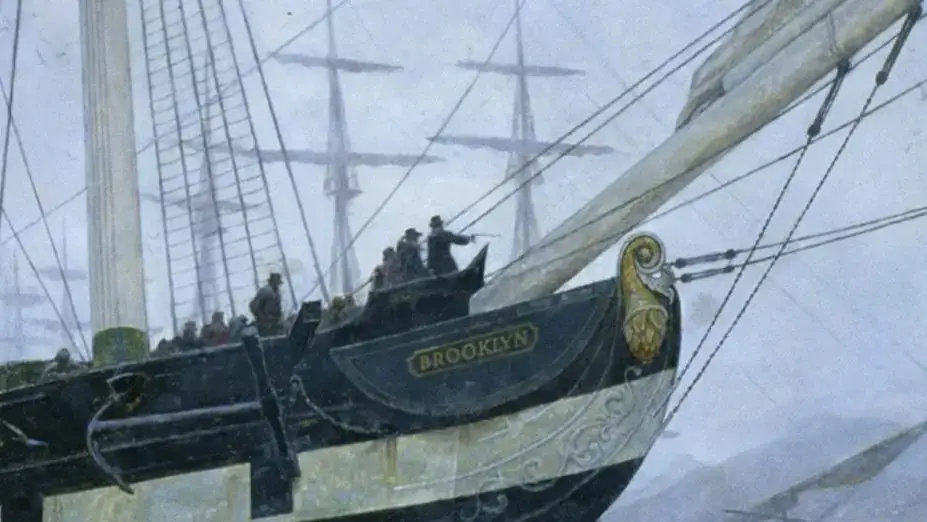
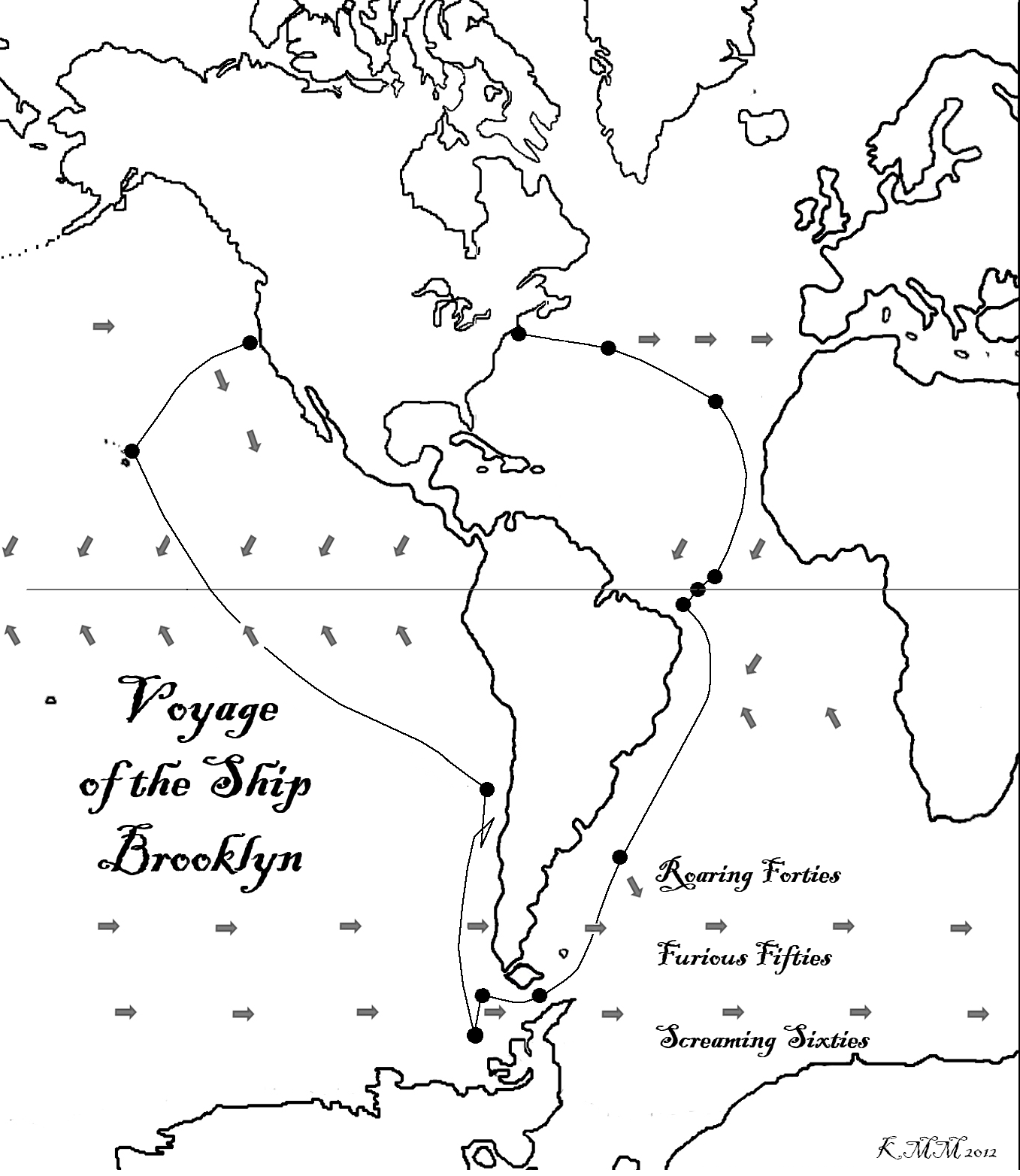
On February 4, 1846, a worn three-masted sailing vessel called the Brooklyn was towed from her berth on the East River in New York City and pointed south. She carried 238 passengers - 70 men, 68 women, and 100 children, sixty more souls than her legal limit. She was 445 tons, 125 feet long, 28 feet wide, with staterooms that barely cleared five feet overhead. Wooden bunks lined the walls. A long table with benches served every purpose - meals, schooling, meeting, prayer.
Her captain was Abel W. Richardson, 48 years old, part-owner of the ship, described by expedition leader Samuel Brannan as "one of the most skillful seamen sailing out of New York." He would need to be.
The passengers were members of The Church of Jesus Christ of Latter-day Saints - converts from New England and the Eastern Seaboard who had neither the means nor the overland route to follow Brigham Young westward across the plains. Brannan had been called to lead them by sea. Their destination was vague. California, somewhere. West, where the main body of Saints would eventually gather.
They did not know it would take six months. They did not know the passage would kill eleven of them. They did not know they would arrive, on July 31, 1846, the same morning American forces raised the flag over Yerba Buena - that they would sail into a harbor that had just, hours before, become United States territory.
They knew only that they were going, and that God had a plan for their efforts. Three cheers echoed from the pier. The Saints cheered back, some wiping tears, as New York fell behind them.[1]
The Goodwins
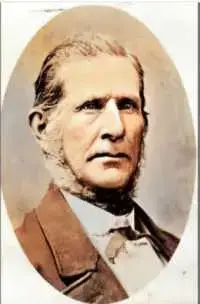
Among those 238 passengers were Isaac R. Goodwin, his wife Laura, and their seven children.
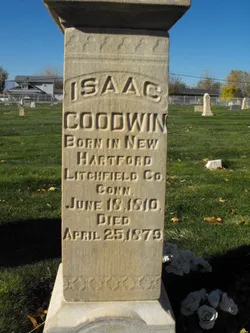
Isaac was 35 years old, a mason by trade, born June 18, 1810, in New Hartford, Connecticut - a descendant of the Ozias Goodwin family who had settled in Connecticut in 1632, whose roots in America ran back more than two centuries before the voyage. He had converted to Mormonism under the preaching of Elder Elisha Davis, and by 1846 was, in the words of a family account, "so thoroughly imbued with the Latter-day Saint spirit" that when the call came to move west, he sold his property in New Haven for almost nothing and booked passage on the Brooklyn.[1]
His eldest child was thirteen years old. His youngest was two. Laura Hotchkiss Goodwin, his wife, was 33. She was pregnant.
Passage cost $75 per adult, $37.50 per child. The Goodwins carried what they could below deck - tools, clothing, the things a mason's family takes when it has no idea what it is building toward. They joined 50 other families making the same impossible calculation: sell everything, trust the ship, trust the faith, sail into the unknown.
Isaac helped the other men batten down the hatches when the first storms hit. He sang hymns in the dark below deck when the captain came down and told the passengers he had done everything he could - that unless God intervened, the ship would go down. He was there when a passenger called back: "We were sent to California, and we shall go there."
The captain returned to his post and said, quietly: "These people have a faith that I have not got."
Around the Horn
The voyage does not need to be romanticized. The records are enough.
Eleven passengers died before the Brooklyn reached California. Smallpox. Tuberculosis. Dehydration. The particular cruelty of watching children go first. Hardtack and salt junk for meals. Unbearable heat north of the equator. The cold that came off Cape Horn like a wall. Days near the tip of South America where there were only a few hours of daylight and the wind never stopped.
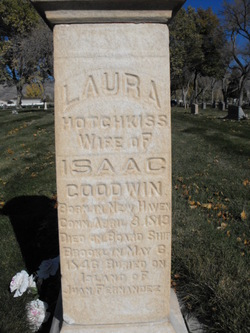
Laura Goodwin died on May 6, 1846.
During a storm, she was thrown down the galley stairs. She was pregnant. She miscarried. The infection that followed killed her several days later, somewhere south of the equator, the ocean rolling beneath the ship, her husband and seven children around her. She was 33 years old.[3]
She had one last request: to be buried on land, not at sea.
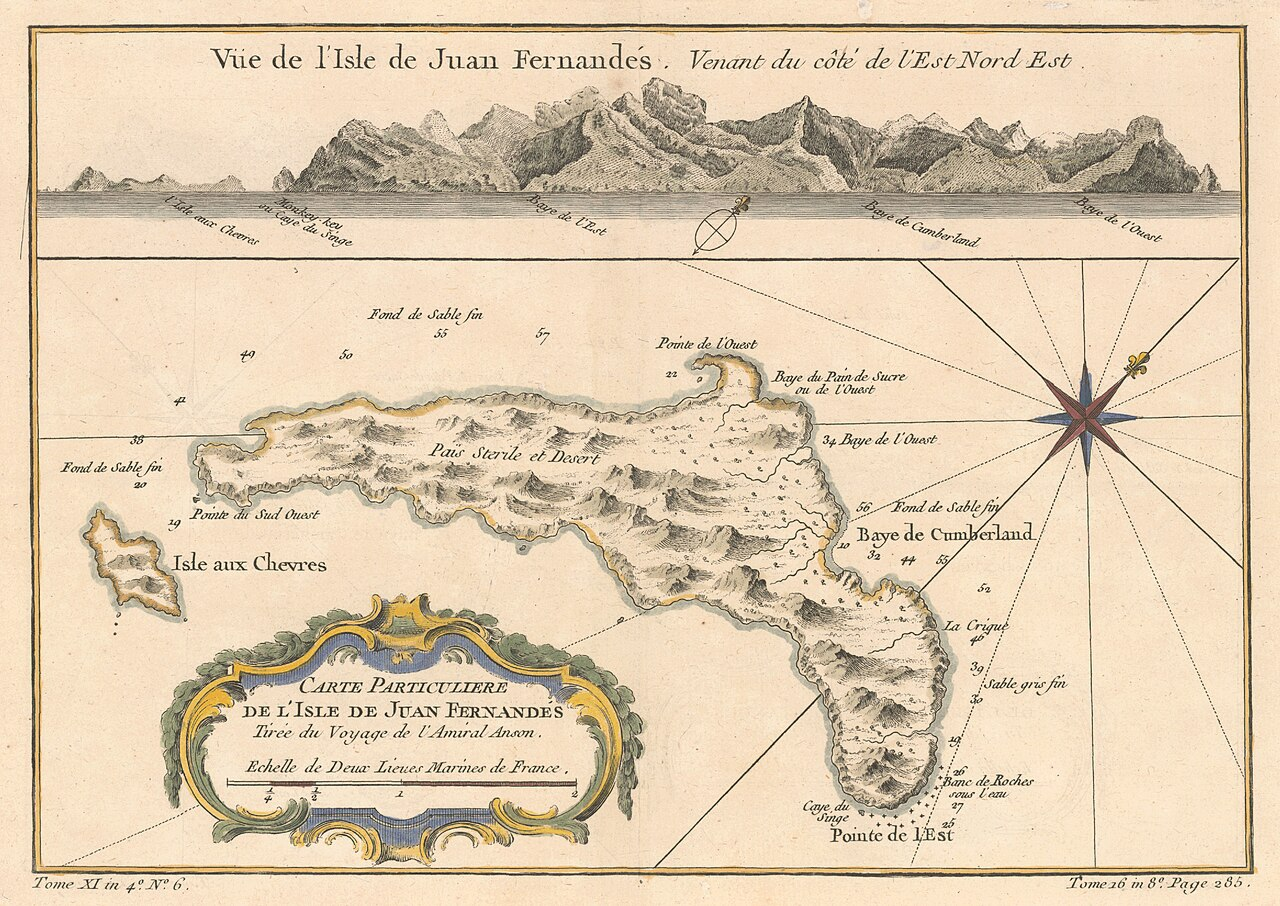
On May 4 - two days before she died, when the crew could already see she would not recover - Captain Richardson made for Mas a Tierra in the Juan Fernandez Islands, an archipelago off the coast of Chile, the same remote island chain where the sailor Alexander Selkirk had been marooned a century and a half earlier and inspired the story of Robinson Crusoe. He anchored off Goat Island. When Laura Goodwin died, she was carried ashore.
She is the only passenger from the entire voyage to have been buried on land.[3]
Isaac Goodwin continued the journey with seven motherless children, the eldest of whom was now solely responsible for helping him manage the rest. The Brooklyn sailed on - north to Honolulu, then northeast across the Pacific - and arrived in San Francisco Bay on July 31, 1846, after five months and twenty-seven days at sea.
Yerba Buena
The harbor they sailed into was barely a city. Yerba Buena - "good herb," named for a wild mint that grew on the hills - had fewer than 200 residents before the Brooklyn dropped anchor. The 238 passengers who stepped off the gangway more than doubled the population of what would become San Francisco.
Historian Hubert H. Bancroft would later write: "San Francisco became for a time very largely a Mormon town. All bear witness to the orderly and moral conduct of the saints, both on land and sea. They were honest and industrious citizens."[1]
They were also builders. Within their first year, more than 100 permanent structures went up. The Brooklyn Saints established San Francisco's first English-speaking school, its first library, its first bank. Samuel Brannan launched The California Star, the city's first English-language newspaper, and it was Brannan who would later ride through the streets shouting about gold - triggering the rush that would change the world.
The Brooklyn Saints helped modify the shoreline that became the Embarcadero. They planted wheat in the San Joaquin Valley. They held seats on the city council. They built the roads and ferries that connected eight new towns in the Bay Area.
Isaac Goodwin worked as a mason. He joined the New Hope agricultural colony at the confluence of the Stanislaus and San Joaquin rivers - one of roughly twenty Brooklyn Saints who planted 80 acres of wheat and erected a grain mill, trying to establish a food supply for the thousands of Saints they expected to follow overland. He raised his seven children in a California that was still figuring out what it was.
He would eventually answer the call to come to Utah - selling his California land as he had sold his Connecticut property, taking his family over the Sierras by covered wagon. He would become mayor of Lehi, Utah. He would introduce alfalfa to Utah soil, planting the first seeds in 1860 and calling each plant more precious than gold dust. He would live to 68 and die in Lehi on April 25, 1879.[4]
But he left something behind in California. They all did.
Brooklyn, California
The East Bay neighborhood called Brooklyn - bounded roughly by what is now International Boulevard and the Oakland Estuary, reaching toward Fruitvale - grew from the community the Brooklyn Saints and their descendants helped establish on the eastern shore of San Francisco Bay. By the 1850s and 1860s, the area was home to a growing population of tradespeople, farmers, and families, many of them connected by faith and by the common experience of having arrived by sea.[2]
In 1871 - twenty-five years after the Brooklyn dropped anchor - the Oakland, Brooklyn & Fruitvale Railroad Company incorporated to serve that community. Horse-drawn cars ran the line, connecting Brooklyn to the Oakland waterfront and to Fruitvale, carrying workers and merchants and ordinary families along the routes that had once been dirt roads cut by the people who came before them.
One fare. A copper token. Pressed into a conductor's hand without ceremony.
It is a small object. But consider what had to happen for it to exist: a mason from Connecticut had to sell everything he owned, board a ship with his pregnant wife and seven children, survive five months at sea, bury his wife on an island off the coast of Chile, raise those children alone in a new country, help build the first institutions of a city that would become one of the great ports of the Pacific - and then, twenty-five years later, the neighborhood that community built would be served by a railroad, and the railroad would mint a token, and that token would survive 150 years until it landed in this vault.
The Line Back
I am Isaac Goodwin's 3rd great-grandson.
That is not a phrase I say lightly in this collection. Every piece here is chosen for what it connects - to a hull, to a date, to a moment of history. The cutlass tells how men fought. The 8 reales tell what they were carrying. The coins from the 1715 Fleet tell what the sea can take in a single night.
This token tells what a family can survive, and what they can build after.
I did not acquire it because it is rare, though transit tokens from the Oakland, Brooklyn & Fruitvale Railroad are not easy to find. I did not acquire it because it is valuable in the conventional sense. I acquired it because it is the most direct numismatic evidence I own of the people I came from - of a voyage that cost my ancestor's wife her life, that tested his faith, that scattered his family across California and Utah and the American West, and that ultimately put a piece of this history in my hands.
The vault has, from the beginning, been built on one idea: that coins are not just metal. They are artifacts of the voyages that carried them. They are witnesses.
This one witnessed a city rise out of a mint-covered hillside. It is the proof that 238 LDS pioneers crossed 24,000 miles of open ocean - that they buried a wife on a volcanic island in the South Pacific, got back on the ship, and built something that lasted. And one hundred and fifty years later, it found its way home.