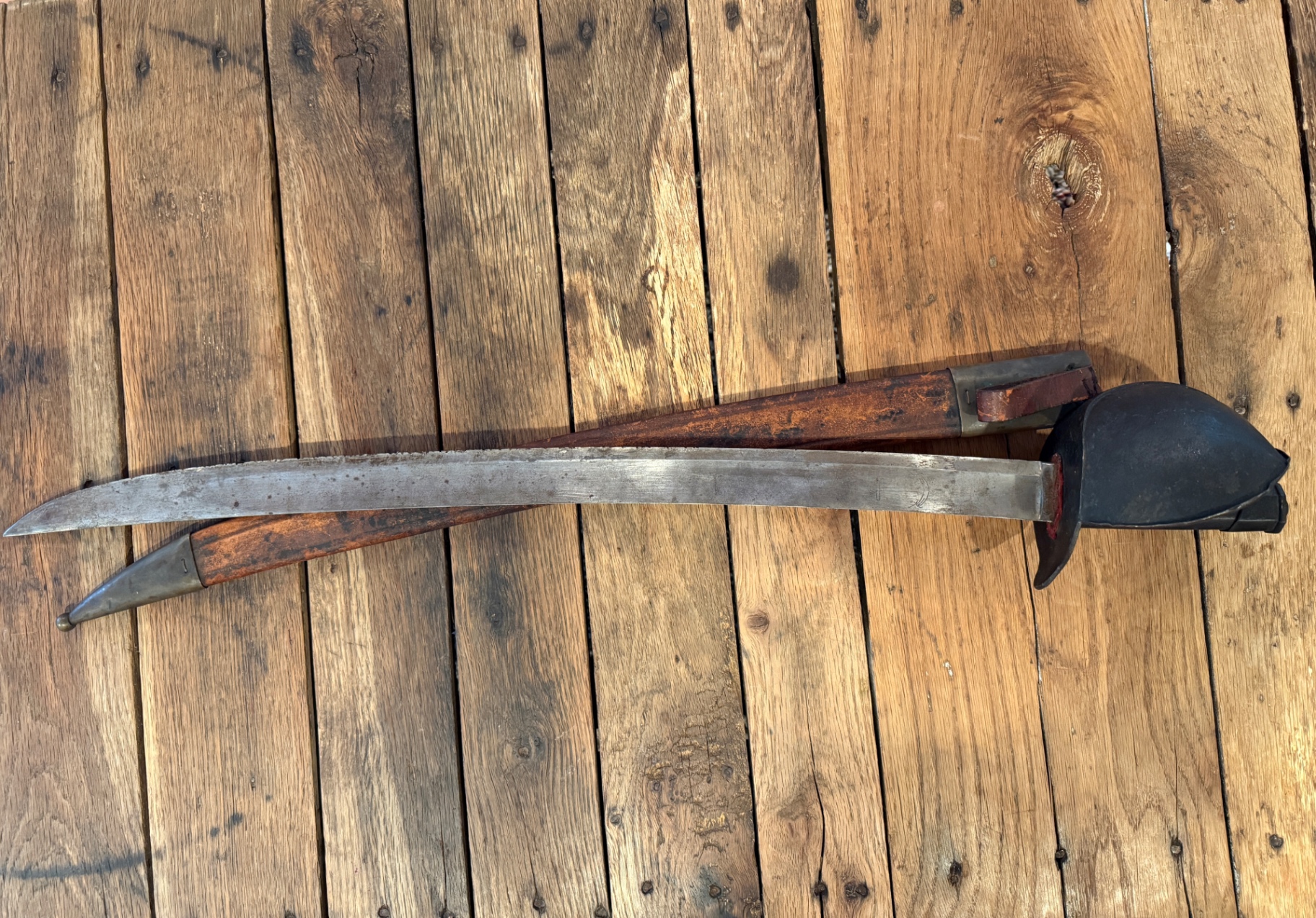
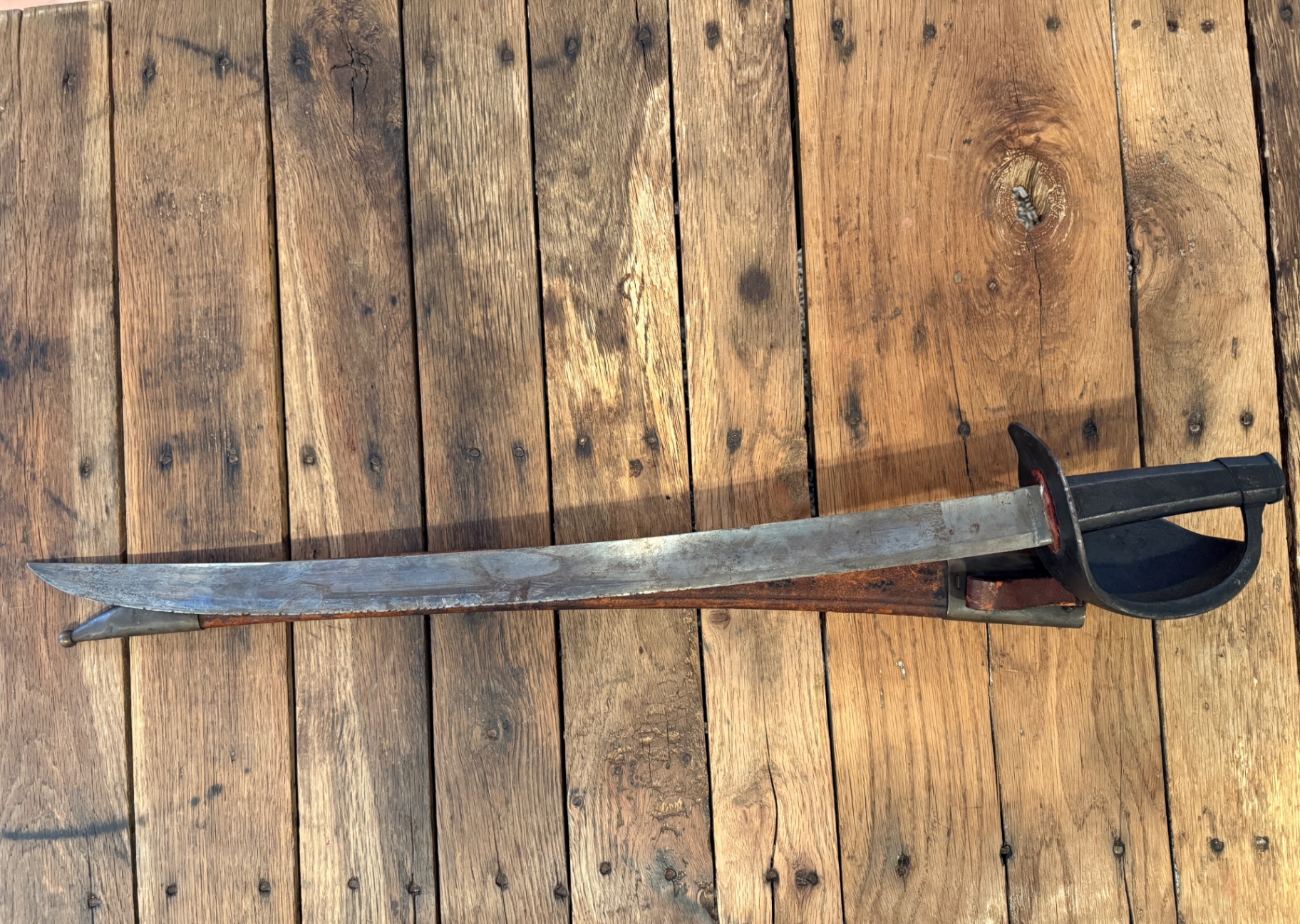
The vault just welcomed its first edged weapon. Not a coin. But every bit as much history. This is a French Naval Cutlass Model M1833 - Le Sabre d'Abordage - manufactured at the Royal Arsenal of Chatellerault in July 1841, as engraved in script on the spine of the blade. Simple. Brutal. Elegant. And, by the marks it carries, used.
The Sabre d'Abordage
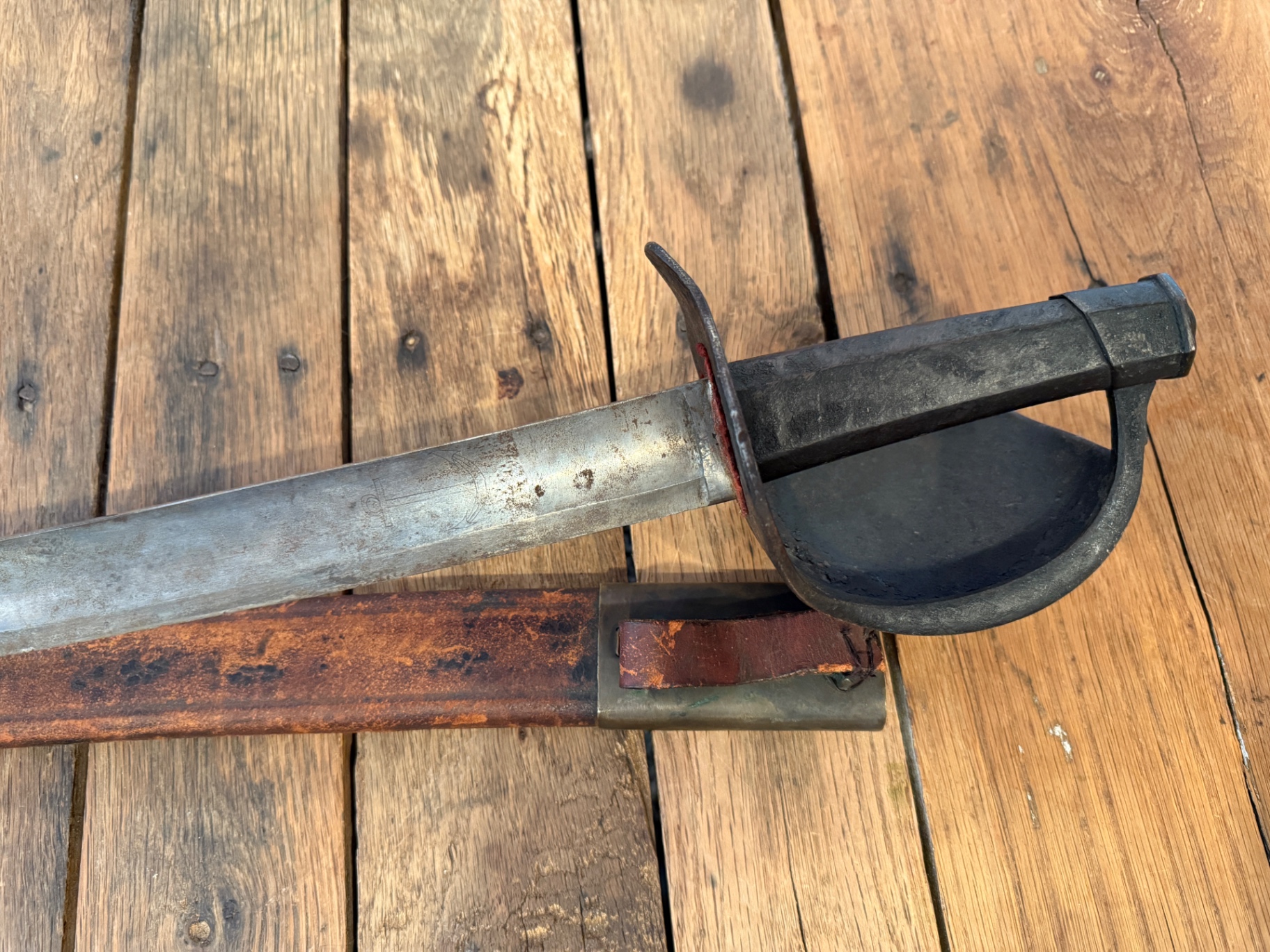
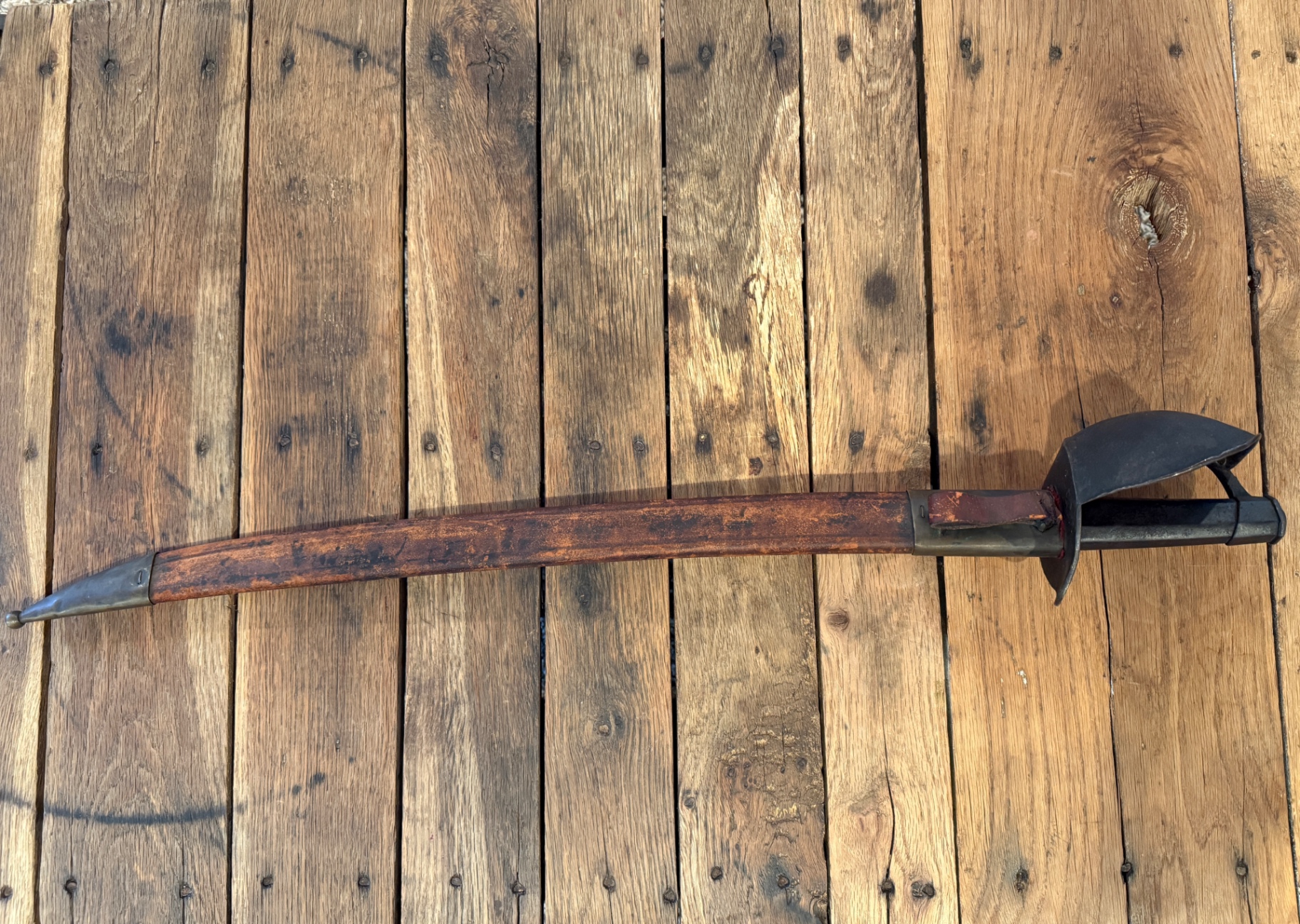
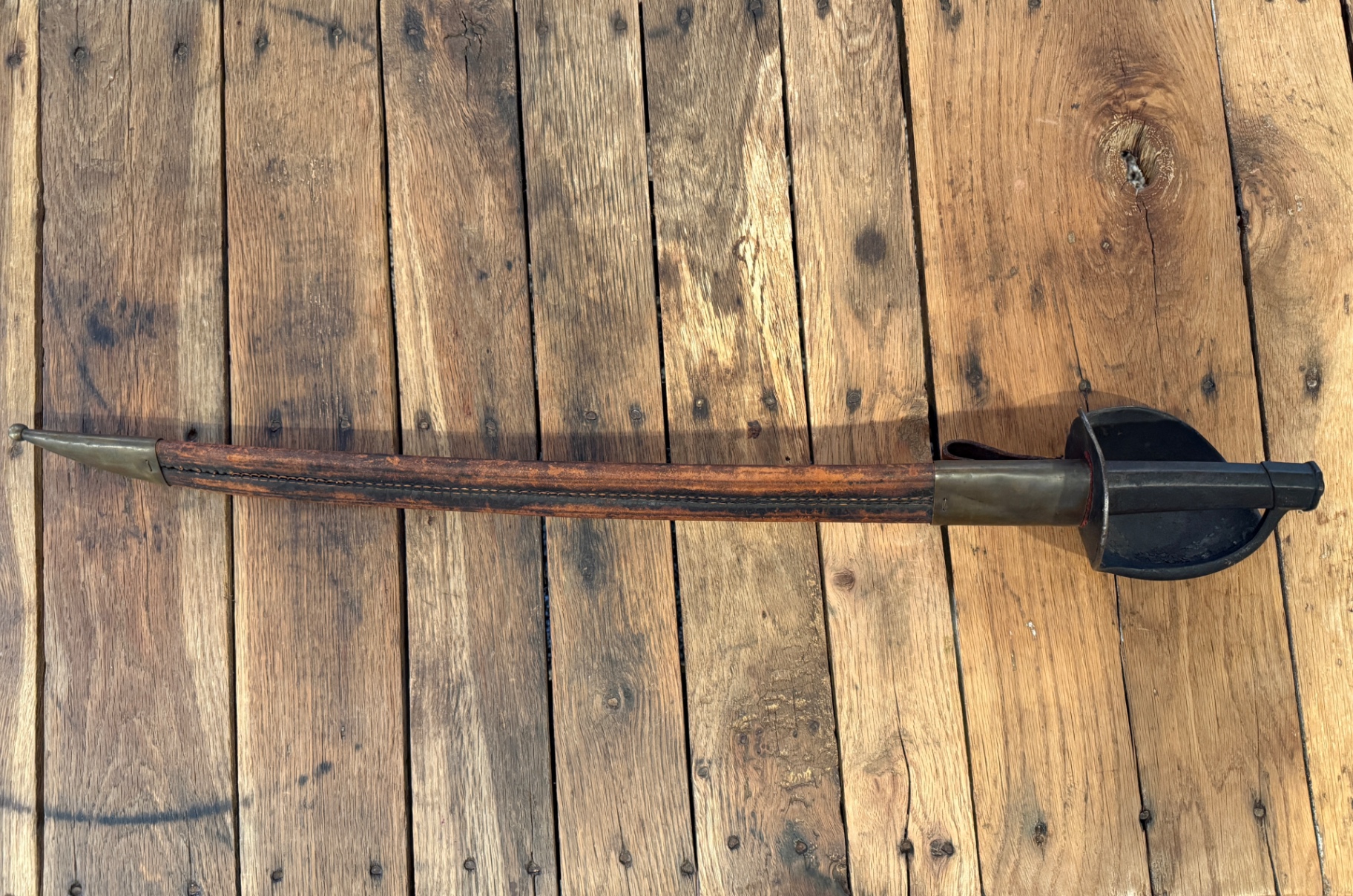
Boarding actions in the age of sail were short, brutal affairs fought in the few square feet of a heaving deck. The weapon that settled them had to do three things and do them well: clear a path, stay out of the rigging, and finish the fight before the other side could reload. The M1833 was built for exactly that. A 26.5-inch falchion blade, deeply curved for the cut, with a closed cup iron hilt japanned black and a heavy knuckle bow that turned the hand itself into a guard.[1]
It was not an officer's dress sword. Not a parade weapon. It was a working tool for the enlisted sailor - short by cavalry standards so it could be wielded in the close confines of a sailing deck, wide and thick in the blade so a single cut would settle the matter. Roughly three pounds in the hand, beautifully balanced, with that unmistakable upturned falchion shape that every pirate movie ever made has since borrowed.[1]
A Lineage Going Back to the First Republic
The M1833 did not appear out of nowhere. It was the third generation of a design that traced back to the An IX pattern of 1801 - "An IX" meaning the ninth year of the First Republic, when France was still counting time from the Revolution. The earliest examples came out of the Royal Manufactory of Klingenthal in Alsace and were stamped Manufacture royale du Klingenthalon the spine.[1]
Production later shifted to the Royal Manufactory of Chatellerault, which forged edged weapons for the French military from 1819 until 1968. Cutlasses passed through Chatellerault by the tens of thousands, each one stamped, dated, and inspected before it was issued. The spine of this blade carries that record in script: the arsenal name and the month and year it left the shop. July 1841 - still under King Louis-Philippe, still under the word Royale. Seven years later, after the Revolution of 1848, the same engraving on every new blade would read Republique instead.[1]
Both sides of the blade carry the French naval anchor, lightly stamped about three inches below the ricasso - the unmistakable mark of military issue, in use on every M1801 and M1833 since 1803.[1] This was government property, drawn from a naval armory, intended for a French warship. Where it served, and on which deck, the blade has not yet told us.
The Most Copied Cutlass in History
What France built at Chatellerault in 1833, the rest of the world's navies copied for the next half century. With the exception of England, almost every European navy adopted a duplicated version of the French boarding cutlass for its own enlisted sailors.[1]
The United States Navy borrowed it twice. The American M1841 Naval Cutlass was modeled directly on the M1833, and at the outbreak of the Civil War the U.S. Navy went back to the same French pattern when it commissioned the M1860 Cutlass from the Ames Manufacturing Company. More than 24,000 M1860s were produced, and the design stayed in U.S. naval service for over eighty years.[1] The Confederate States Navy is believed to have purchased the French originals as well - after the war, surplus M1833s turned up in U.S. Navy warehouses alongside other captured militaria.[1]
The French Navy lost its dominance at sea after Trafalgar in 1805 - and the vault holds a coin from that story too. But it never lost its edge in weapons design. A generation after Nelson, the French were still setting the standard for the boarding cutlass.[1]
The Marks of Use
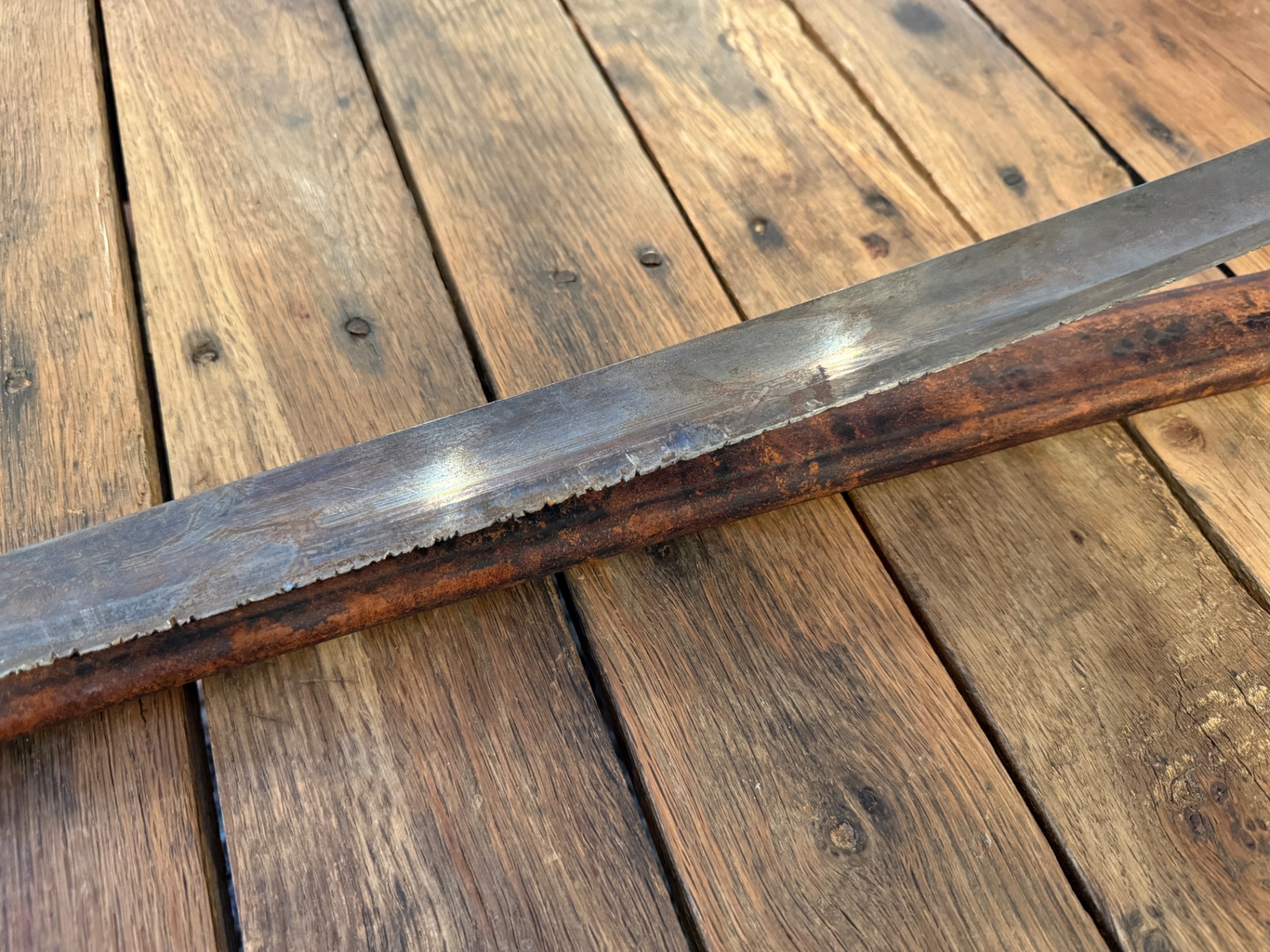
What sets this particular example apart is written on the steel itself. Heavy V-shaped indentations run along the edge of the blade - the unmistakable signature of blade-on-blade combat. Steel does not bite itself like that on a rack or in a scabbard. It happens when two edges meet, hard, repeatedly, with a man's weight behind each blow.
This sword was not a parade weapon. It was not a collector's piece. It was used. Someone held this hilt in the chaos of a boarding action, on a deck slick with seawater, and fought with it. Whether they walked off afterward, the blade does not say.
If only this steel could tell its story.
The Scabbard
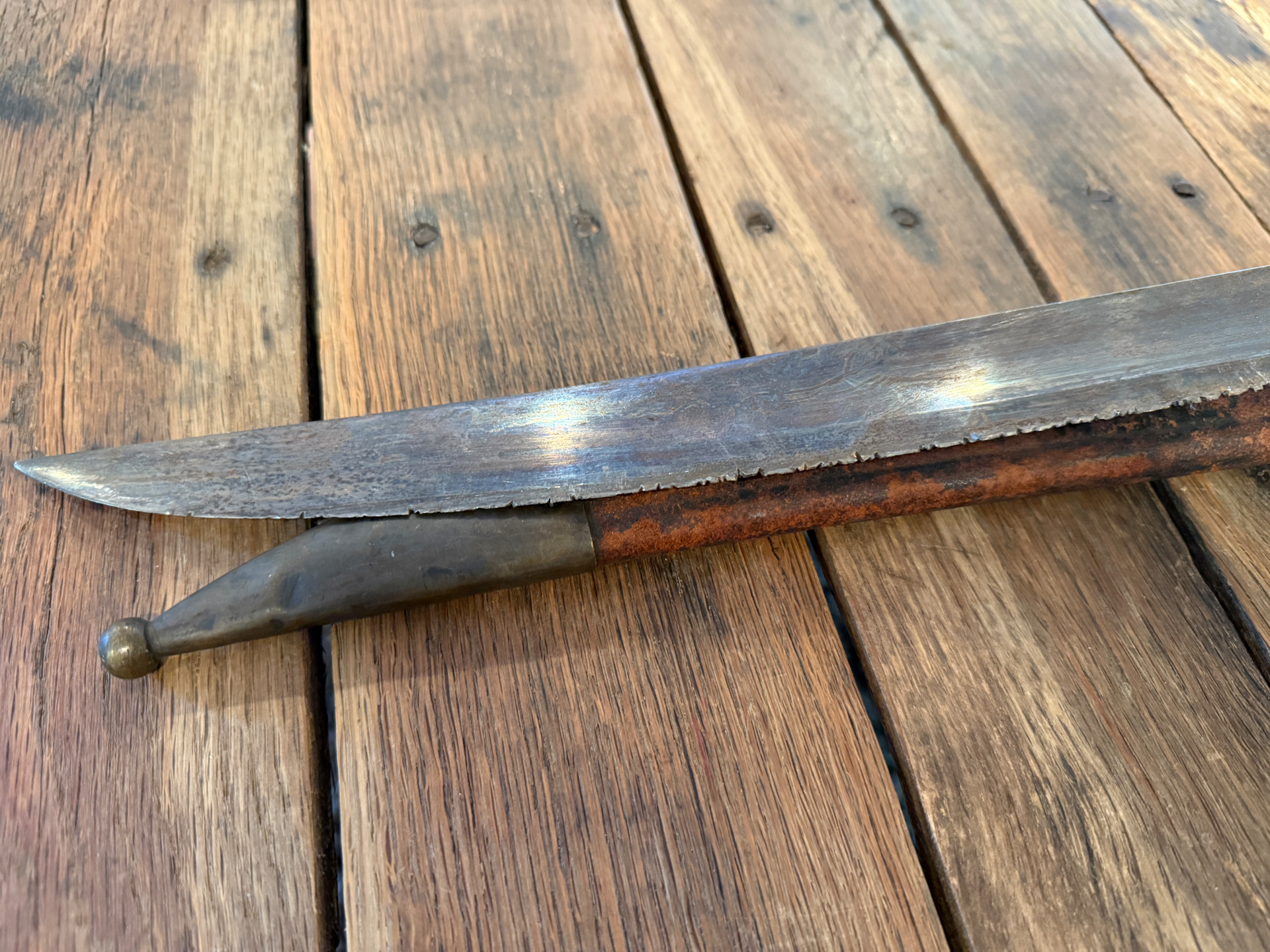
The scabbard is leather over a wood core, stitched along the spine, with brass at the throat and chape and a frog stud for the belt - the standard 27 1/8 inch pattern that accompanied every M1833 out of the arsenal.[1] The leather has darkened to a deep oxblood and the brass has taken on the dull patina that only comes from a century and a half of being drawn, carried, and put away again. It belongs with the blade, and the two have clearly travelled together for a long time.
The Coins and the Blade
The vault has, for a decade, been built around one idea: that the coins recovered from the world's shipwrecks are not just silver and gold, but artifacts of the voyages that carried them. Every piece in the collection is tied to a hull, a captain, a cargo, a date.
The coins tell the story of what these ships were carrying. The cutlass tells the story of how they fought to keep it. The two sit together now in the same vault, and the collection is better for it.
A huge thank you to Marc Anthony - historian, salvor, armory collector, and owner of Spanish Main Antiques in St. Augustine - for making this piece possible.